 Bellingham Roofing
 Roof Replacement Built for South Hill's Weather, Not a Generic Climate
South Hill sits close enough to Bellingham Bay that salt-laden air is a real factor in how roofing materials age here, and it sits on a slope with mature tree cover that keeps shingles shaded and damp for longer stretches than homes out in the open. Add Whatcom County's long, wet fall-through-spring season and you get a specific set of conditions: driving rain that finds its way under poorly lapped flashing, moss and lichen that take hold anywhere sun doesn't reach, and metal fasteners that corrode faster near the water than they would twenty miles inland. A roof replacement done right on South Hill accounts for all three of those things at once, not just one of them.
We're not describing a different roof system than what's used anywhere else in Western Washington. We're describing the same core assembly — decking, underlayment, flashing, roofing material, ventilation — installed with attention to the details that actually fail first in this particular microclimate.
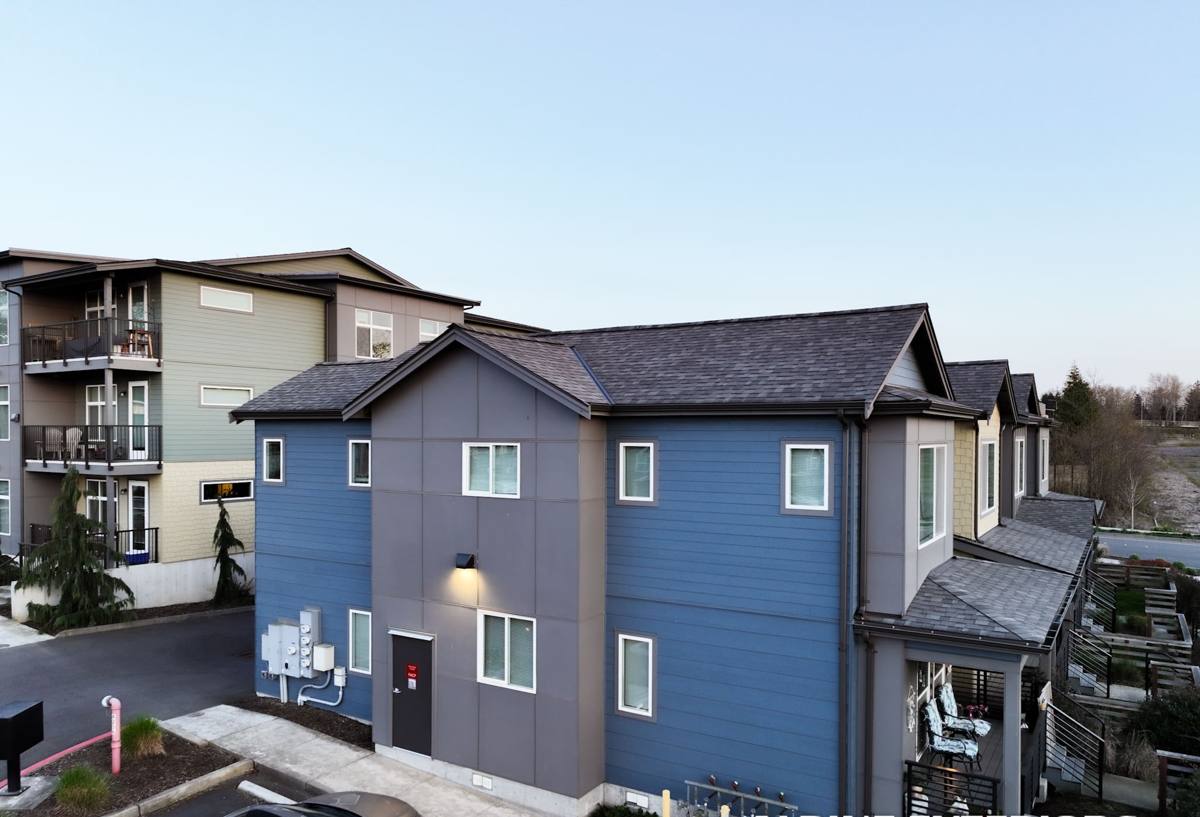
Signs a South Hill Roof Needs Replacing, Not Just Another Repair
Plenty of roofs get patched for years past the point where patching still makes sense. The honest answer isn't always "replace it" — sometimes a targeted repair is the right call and we'll say so. But there are signs that reliably point toward full replacement rather than another round of spot fixes:
- Granule loss heavy enough that you can see bare, shiny patches on multiple slopes, not just one weathered section
- Shingles that are cupping, curling at the edges, or cracking when walked on — a sign the asphalt has lost its flexibility
- Moss or lichen that keeps returning within a season or two of cleaning, especially on north-facing or shaded slopes
- Soft or spongy decking felt underfoot during inspection, which usually means water has been getting into the plywood or OSB
- Daylight visible through the roof deck from inside the attic, or staining on rafters near multiple penetrations
- A roof approaching or past its material's expected service life, combined with any of the above
If a roof is showing one or two of these in isolation, repair is often still reasonable. When several show up together, or when the decking itself is compromised, replacement is the more honest recommendation — patching a failing deck just delays a bigger bill.
What a Correct Roof Replacement Actually Involves
Tear-Off and Deck Inspection
A proper replacement starts with a full tear-off down to the deck, not an overlay. Overlaying a new layer on top of old shingles traps moisture, hides deck damage, and shortens the life of the new roof — it's a shortcut we don't take. Once the old material is off, every square foot of decking gets inspected. Any plywood or OSB that's soft, delaminating, or water-stained gets cut out and replaced before anything new goes down. This step is where a lot of the real value in a replacement happens, and it's also the step that's easiest for a rushed crew to skip.
Underlayment and Water Protection
Given how much driving rain this area sees, underlayment choice matters more here than in drier climates. Synthetic underlayment handles prolonged wet exposure during installation better than old-style felt, and self-adhered ice-and-water membrane goes in at the eaves, valleys, and around every penetration — the spots where wind-driven rain is most likely to work its way backward under standard shingle laps.
Ventilation
Attic ventilation gets checked and corrected as part of the job, not treated as a separate project. Poor intake or exhaust ventilation traps moisture in the attic, which shortens the life of the deck from underneath and can accelerate moss growth on the roof surface itself by keeping the underside of the sheathing cool and damp. Balanced intake at the eaves and exhaust at the ridge is the standard we build to.
Flashing and Roof-to-Wall Details
Flashing around chimneys, skylights, dormers, and roof-to-wall transitions is where most leaks actually originate — far more often than the open field of shingles. All flashing gets replaced with new material during a full replacement rather than reused, and step flashing at wall intersections gets properly integrated with the siding, not just caulked over.
Material Options for South Hill's Conditions
There's no single "best" roofing material — the right choice depends on budget, the home's style, and how much long-term maintenance an owner wants to take on. Here's an honest comparison of the main options we install in this area:
| Material | Typical Lifespan | How It Handles This Climate | Maintenance |
|---|---|---|---|
| Architectural asphalt shingle | 25–30 years | Good performance with algae-resistant granules to slow moss and lichen buildup | Periodic moss treatment and gutter cleaning |
| Standing seam metal | 40–50+ years | Sheds rain and moss very well due to smooth, steep-pitched surface; corrosion-resistant coatings matter near the bay | Low; occasional fastener and seam check |
| Synthetic composite (cedar-look) | 30–50 years | Resists moisture absorption better than real wood shakes while keeping a similar appearance | Low to moderate |
| Cedar shake | 20–30 years with upkeep | Attractive but absorbs moisture readily and needs consistent upkeep to resist moss and rot in a wet climate | High |
We steer most South Hill homeowners toward algae-resistant asphalt shingle or metal for exactly this reason: both hold up against sustained dampness with a manageable maintenance load. Cedar shake can still be the right call for a homeowner who values the look and is committed to the upkeep it requires — that's a legitimate trade-off, not a wrong choice, and we'll install it correctly if that's the direction you want to go.
Our Process, Start to Finish
Inspection and Estimate
We walk the roof, check the attic from the inside, and look at flashing, ventilation, and deck condition before writing anything down. The estimate reflects what we actually find, not a generic per-square rate.
Permitting and Scheduling
Roof replacements in the City of Bellingham typically require a permit, and we handle that as part of the job. We also plan around the weather — a South Hill installation gets scheduled with enough buffer to avoid starting a tear-off right before a multi-day rain system moves in.
Installation Days
Tear-off, deck repair, underlayment, flashing, and material installation happen in sequence, with the deck never left exposed overnight without protection if weather is uncertain. Most single-family roof replacements take one to three days depending on size, pitch, and material.
Final Walkthrough and Cleanup
We walk the finished roof and the property with the homeowner, check gutters and downspouts are clear and properly tied in, and do a magnetic sweep of the yard and driveway for stray nails before calling the job done.
Why a Crew That Already Works South Hill Matters
A lot of what separates a good roof replacement from a mediocre one has nothing to do with the shingles themselves — it's local familiarity. A crew that regularly works South Hill's older housing stock knows what decking condition tends to look like under original roofs from certain eras, understands how the neighborhood's tree canopy affects moss return rates, and has already dealt with the City of Bellingham's permitting process enough times to move through it without delay. That kind of familiarity shows up as fewer surprises mid-project and a more accurate estimate up front, because the crew isn't guessing at conditions they've never encountered before.
What Affects the Cost of a Roof Replacement
Every roof is priced individually, but the same factors move the number up or down on nearly every job we quote:
- Total roof square footage and the number of distinct planes or slopes
- Roof pitch — steeper roofs take longer and require more safety setup
- Number of penetrations: chimneys, skylights, vents, and dormers each add flashing work
- Extent of deck repair needed once old material is torn off
- Material choice, from standard asphalt shingle up through metal or synthetic composite
- Accessibility of the property, including how equipment and debris disposal reach the roof
- Whether existing ventilation needs to be upgraded or corrected
We'd rather walk a homeowner through these factors during the inspection than quote a number sight unseen — it's the only way the estimate holds up once the tear-off actually starts.
Living With Whatcom County's Moss Season After Replacement
A new roof doesn't make moss and lichen impossible, especially on shaded South Hill lots — it makes them slower to take hold and easier to manage. Algae-resistant shingle granules and metal roofing both help, but a bit of ongoing attention still pays off: keeping gutters clear so water isn't sitting against the eaves, trimming back branches that shade a slope for most of the day, and having moss treated gently before it builds up rather than after. None of this is heavy maintenance, but skipping it entirely tends to shorten the roof's effective life in this particular climate.
Warranty and What to Expect Afterward
Manufacturer material warranties and our workmanship warranty are two different things, and we explain both clearly before the job starts rather than burying the distinction in fine print. Material warranties cover defects in the shingles or metal panels themselves; workmanship warranty covers our installation. Keeping documentation of the install and any maintenance performed afterward matters if a warranty claim ever comes up, and we leave homeowners with what they need for that.
If your South Hill roof is showing its age, or you just want an honest read on whether repair still makes sense, we're happy to come take a look. The estimate is free, there's no pressure attached to it, and you can use the form below to get started.