 Bellingham Roofing
 Building a Deck That Actually Holds Up in Sunnyland
Sunnyland homeowners know their outdoor living space works harder here than it would in a drier climate. Bellingham's proximity to the water means salt-tinged air moves through the neighborhood year-round, and Whatcom County's long wet season keeps wood surfaces damp for months at a stretch. A deck built with generic, one-size-fits-all methods will show it within a few seasons — soft spots at the ledger, moss creeping across the boards, fasteners bleeding rust streaks into the decking. A deck built for this specific climate looks and performs the same way in year eight as it did in year one.
This page covers what that actually means in practice: the materials, fasteners, and structural details that matter for a Sunnyland deck, how our process works from first visit to final walk-through, and what to expect in terms of upkeep once it's built.
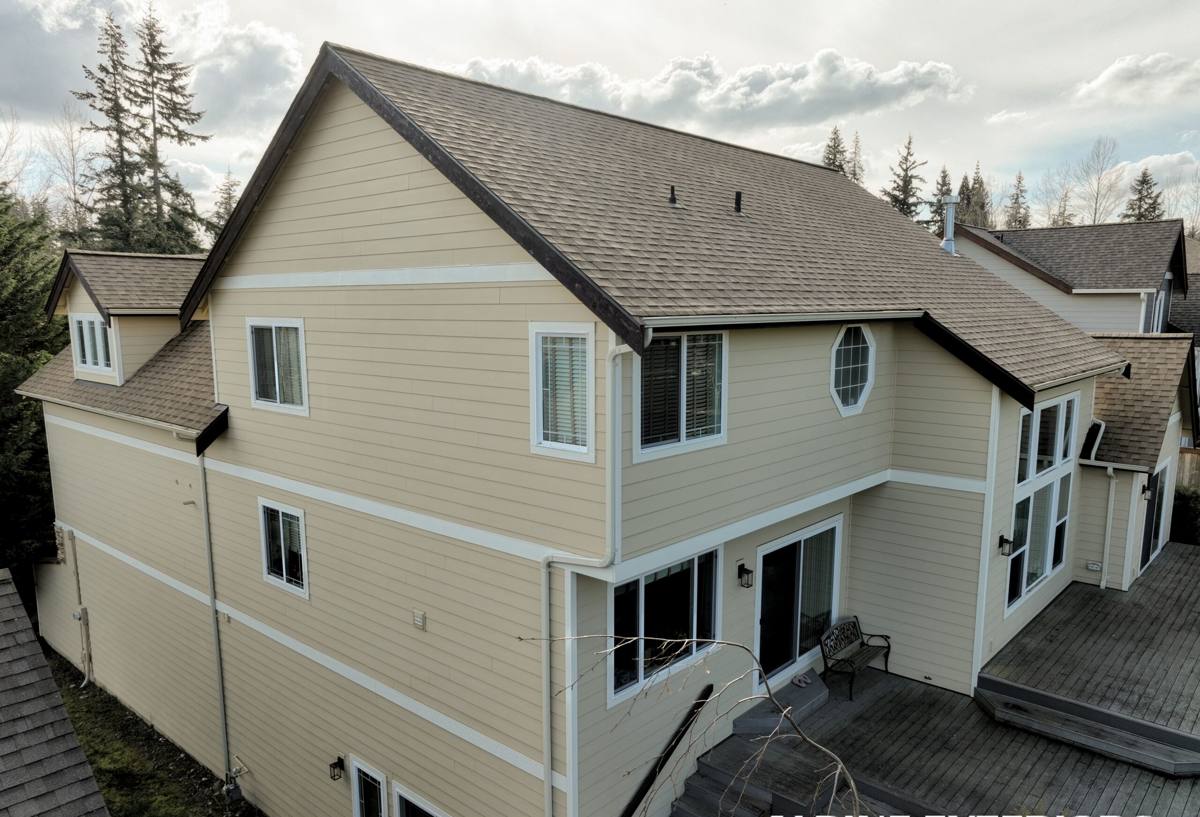
What Bellingham's Climate Does to an Ordinary Deck
Three conditions do most of the damage to decks in this part of Whatcom County, and they compound each other over time.
Driving Rain and Standing Moisture
Bellingham gets long stretches of steady rain rather than short heavy downpours, which means deck surfaces and structural framing stay wet for extended periods instead of drying quickly between storms. Any spot where water can pool — a ledger board without proper flashing, decking laid too tight, a post base sitting in standing water — becomes a rot or corrosion point.
Salt Air
Air carrying salt moves inland from Bellingham Bay and settles on exposed metal. Standard fasteners and hardware that aren't rated for coastal exposure corrode faster here than the same products would in an inland climate, which is why hardware selection matters more in this area than most manufacturers' baseline recommendations account for.
Moss and Algae Season
Shaded, moisture-holding surfaces in this region grow moss for a large part of the year, not just in deep winter. On a deck, moss isn't just cosmetic — it holds moisture against the board surface, and on wood decking it can accelerate softening and slip hazards on stairs and walking surfaces.
What a Correctly Built Deck Needs Here
Ledger Attachment and Flashing
The ledger board — where the deck attaches to the house — is the single most common failure point on decks in wet climates, and it's almost always a flashing or fastener problem rather than a design problem. Done right, this means proper metal flashing integrated behind the siding or trim (not just caulked over the top), a gap or drainage plane behind the ledger so water can't get trapped against the house, and corrosion-resistant structural screws or bolts rated for the load. Skipping or shortcutting this step is invisible on installation day and expensive to fix once it fails.
Fasteners and Hardware
We use fasteners and structural hardware rated for coastal and high-moisture exposure — typically stainless steel or heavy-duty coated fasteners for anything load-bearing, rather than standard galvanized hardware that's adequate in drier inland areas but corrodes faster under Bellingham's combination of rain and salt air. This is a small cost difference at build time and a major difference in how the structure looks and performs a decade out.
Footings and Post Bases
Footings need to be sized and set below frost depth per code, but just as important in this climate is keeping posts out of standing water. We set post bases on elevated hardware rather than embedding wood directly in or near grade, so the post end-grain isn't sitting in the wettest part of the yard through the winter.
Board Spacing and Airflow
Decking that's spaced correctly and framed with enough airflow underneath dries faster between storms, which directly slows both rot and moss growth. This is a detail that's easy to shortcut for a slightly tighter, "cleaner" look — but in this climate it costs the homeowner maintenance headaches within a couple of years.
Choosing a Decking Material for a Sunnyland Yard
There's no single right answer here — it depends on budget, how much upkeep you want to do, and the look you're after. Here's how the main options actually compare under Bellingham conditions.
| Material | Upfront Cost | Moisture & Moss Resistance | Maintenance | Realistic Lifespan Here |
|---|---|---|---|---|
| Pressure-treated wood | Lowest | Fair — needs sealing to perform well | Annual cleaning and re-sealing recommended | 10-15 years with upkeep |
| Cedar | Moderate | Good natural resistance, still needs care | Periodic cleaning and finish maintenance | 15-20 years with upkeep |
| Composite decking | Higher | Very good — doesn't absorb water like wood | Occasional washing, no sealing/staining | 25+ years |
| PVC / capped composite | Highest | Excellent — fully synthetic surface | Lowest maintenance of the options | 25-30+ years |
We'll walk through this trade-off honestly during your estimate rather than steering everyone toward the most expensive option. A well-built pressure-treated deck with a good maintenance routine can serve a family for well over a decade. Composite and PVC cost more up front but make sense for homeowners who want to spend their weekends using the deck instead of maintaining it — a real consideration given how much of the year Bellingham weather actually allows outdoor use.
Our Process for a Sunnyland Deck Project
- On-site visit: We look at your yard's drainage, sun/shade pattern, existing structure (if replacing a deck), and how you actually want to use the space.
- Design and material selection: We talk through decking material, railing style, and layout, with honest cost and maintenance trade-offs for each.
- Permitting: We handle the permit application and inspection scheduling required for the project — see the section below for specifics.
- Framing and structural work: Footings, posts, beams, ledger flashing, and joist framing built to hold up under this region's wet load and freeze-thaw cycles.
- Decking, railing, and finish work: Boards, railings, stairs, and any lighting or built-ins are installed and finished.
- Final walk-through: We go over care and maintenance specific to the material you chose before we consider the job done.
Permits and Local Code Considerations
Most custom deck projects in Bellingham require a building permit, and the specific requirements — setbacks, height, guardrail specs, footing depth — depend on your lot and whether the deck is attached to the house or freestanding. Requirements can also differ slightly depending on whether a property falls under City of Bellingham jurisdiction or unincorporated Whatcom County. We handle the permit process as part of the job rather than leaving it to the homeowner to sort out, and we build to the inspected structural requirements rather than cutting corners that would fail inspection or create liability down the road.
Maintenance That Actually Matters in This Climate
Every deck needs some maintenance; the amount depends on the material you chose. Here's a practical checklist for keeping a Sunnyland deck in good shape through the wet months:
- Sweep leaves and debris off the surface regularly in fall — trapped wet leaves are one of the fastest ways to stain or soften decking
- Wash the deck surface at least once or twice a year to clear moss and algae buildup before it takes hold
- Check and clear gaps between boards so water keeps draining freely instead of pooling
- Inspect fasteners and railing hardware annually for rust streaks or looseness
- Re-seal or re-stain wood decking on the schedule recommended for that product — don't wait until it's visibly gray and dry
- Keep an eye on the ledger flashing area where the deck meets the house, since this is the most common hidden failure point
- Trim back overhanging branches or shrubs that keep sections of the deck shaded and damp longer than the rest
Why It Matters That We Already Work in Sunnyland
A crew that builds decks across a range of climates has to guess at what a given region needs. A crew that works Sunnyland and the surrounding Bellingham neighborhoods regularly already knows how this specific combination of rain, salt air, and moss season behaves on a deck over time — which ledger details fail first, which fasteners actually hold up, which materials are worth the extra cost here versus a drier market. That local pattern recognition is the difference between a deck that's built to a generic spec sheet and one that's built for what Whatcom County weather will actually do to it.
If you're planning a new deck or replacing one that's showing its age, we're happy to come take a look and talk through honest options for your yard. Reach out for a free, no-pressure estimate using the form below.