 Bellingham Roofing
 Sunnyland's Siding Challenge
Sunnyland sits close enough to Bellingham Bay that homes here deal with a specific combination of punishment most inland neighborhoods don't: salt-laden air drifting off the water, driving rain that comes in sideways during winter storms, and a long, shaded moss season that can run from October well into spring. Add in the mature tree canopy common on many Sunnyland lots, and you get siding conditions that are damp far more of the year than they're dry.
None of that is exotic — it's ordinary Pacific Northwest weather. But it means siding installed without real attention to moisture management and material choice tends to show problems years before it should: soft spots at the bottom courses, paint that won't hold, moss and algae staining on north-facing walls, and trim that swells or rots at the joints. A correct siding installation in this neighborhood has to be built around those realities from the start, not patched around them later.
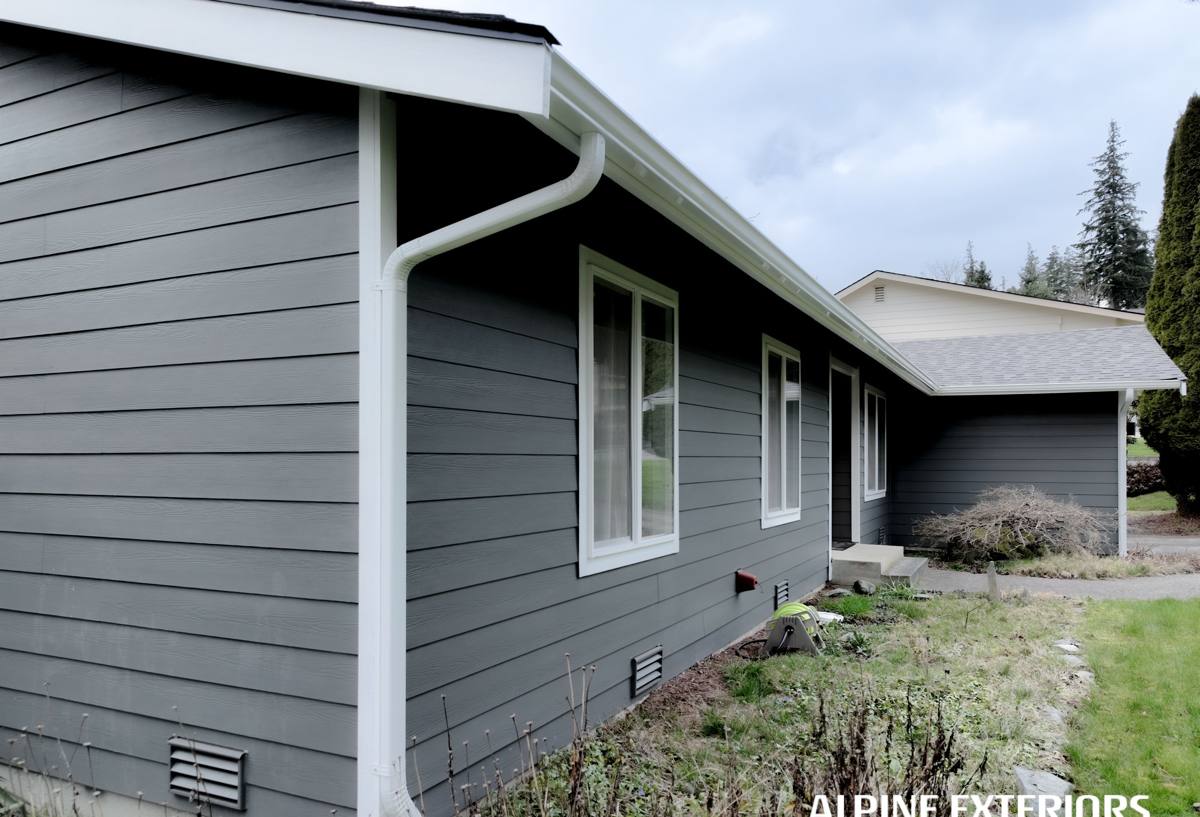
What Sunnyland Homes Actually Need From Their Siding
Sunnyland's housing stock includes a mix of older cottages and bungalows alongside newer infill construction, which means every siding job here starts from a different baseline. Some homes still have original wood siding that's been painted over for decades. Others have vinyl or older fiber cement that was never installed with today's moisture-barrier standards. What they all need, regardless of age, is the same short list:
- A siding material that doesn't rely on paint film alone to stay watertight
- A drainage plane behind the siding so any water that gets past the surface has somewhere to go besides the sheathing
- Flashing detail at every horizontal transition — windows, doors, decks, roof-to-wall intersections
- Enough bottom clearance and proper caulking joints to resist moss and mildew buildup where shade and moisture linger
- A finish that can take salt air and UV without chalking or fading unevenly within a few years
Whatcom County's building code and the region's climate zone both push toward the same conclusion: siding here is a system, not just a surface material. Get the system wrong and even a good-looking install will fail early.
Why We Only Install James Hardie Fiber Cement
We install James Hardie fiber cement siding exclusively. We don't install vinyl, LP SmartSide, Cemplank, Allura, or primed wood species like spruce or cedar, and that's a deliberate standard, not a sales pitch.
Vinyl is inexpensive and low-maintenance in mild climates, but it's a petroleum-based product that expands and contracts significantly with temperature swings, can crack in cold snaps, and has seams and J-channels that give moisture a path inward if installation isn't precise. Engineered wood products like LP SmartSide use real wood fiber, which means they still depend on an intact factory coating to keep moisture out — any breach at a cut edge or fastener hole can lead to swelling. Other fiber cement brands like Cemplank and Allura are reasonable products on paper, but we've standardized on one manufacturer so our crews install to one spec, one warranty structure, and one set of climate-engineered products, rather than juggling different install requirements across jobs. Primed cedar and spruce siding require ongoing paint maintenance that most homeowners underestimate, and in a climate this wet, gaps in that maintenance schedule show up fast as rot.
James Hardie fiber cement is non-combustible, doesn't expand and contract the way vinyl or wood does, and comes factory-finished with ColorPlus technology — a baked-on finish that holds color far longer than field-applied paint and doesn't require the homeowner to repaint on a five-year cycle. Hardie also makes HZ5 product specifically engineered for wetter, harsher climate zones, which is the right call for a bay-adjacent neighborhood like Sunnyland. Backed by a strong, transferable manufacturer warranty when installed to spec, it's the product we're comfortable standing behind on every home we work on.
What a Correct Siding Installation Involves
Moisture Management Basics
The siding itself is the last layer in a system that starts with the weather-resistive barrier applied directly to the sheathing. Behind every panel, there should be a drainage gap or rainscreen strategy that lets incidental moisture drain and dry rather than sit against the wall. Every window, door, and roof-to-wall intersection needs proper flashing installed in the correct shingle-lap order — water always has to move down and out, never toward a seam.
The Details That Get Skipped
Most siding failures we're called out to inspect aren't material failures — they're installation shortcuts. Common ones include face-nailing where blind-nailing is specified, fastener placement too close to panel edges, missing or undersized clearance at the bottom of the wall (soil, decking, and roofing all need a gap), butt joints that aren't properly caulked or flashed, and trim installed without back-priming the cut ends. Any one of these can turn a well-built product into a moisture problem within a few winters. Correct installation means following the manufacturer's fastening schedule, clearance requirements, and joint treatment exactly — not "close enough."
Our Process for a Sunnyland Siding Project
- Assessment: We inspect the existing siding, sheathing, and trim to find moisture damage, check for soft spots, and confirm what's driving the need for replacement.
- Tear-off and sheathing check: Old siding comes off and we look at the sheathing underneath before anything new goes up — this is where hidden rot or past moisture intrusion gets caught and repaired.
- Weather barrier and flashing: A new weather-resistive barrier goes on, followed by correctly sequenced flashing at every penetration and transition.
- Hardie installation: Panels or lap siding are installed to manufacturer fastening and clearance specs, with attention to butt joints, corners, and trim details.
- Finish and cleanup: Caulking, touch-up paint at cut edges where required, and full site cleanup, including nail and debris sweep of the property.
Cost Factors to Understand
Every Sunnyland home is a little different, but the same variables tend to drive the bulk of the cost on any siding installation. This isn't a quote — it's a guide to what actually moves the number up or down.
| Factor | Why It Matters |
|---|---|
| Tear-off complexity | Multiple layers of old siding or extensive rot behind it adds labor and disposal time |
| Home size and wall area | More square footage means more material and more install hours, the largest single driver of cost |
| Trim and architectural detail | Homes with more corners, gables, and window/door trim take longer per square foot than simple rectangular walls |
| Sheathing repair | Rot found during tear-off has to be repaired before new siding goes on — this is discovered mid-project, not always predictable upfront |
| Siding profile chosen | Lap siding, shingle-style panels, and board-and-batten all install differently and carry different material and labor costs |
| Access and site conditions | Tight lots, mature landscaping, or difficult staging areas can add time on many Sunnyland properties |
Why a Crew That Already Works Sunnyland Matters
A siding crew that regularly works this neighborhood isn't guessing at how the local climate behaves — they've already seen how salt air ages a north-facing wall, how moss builds up under mature trees, and which older homes in the area tend to have moisture issues hiding behind their original siding. That experience shows up in small decisions during the job: where to add extra flashing attention, which butt joints need more caulk redundancy, and how much bottom clearance to leave given the specific lot's drainage.
It also matters for permitting and code compliance — Bellingham and Whatcom County have their own permitting process for exterior work, and a crew that's pulled permits here before doesn't lose time figuring out the process from scratch. And practically, a local crew can respond faster if something needs a follow-up look after the job is done, rather than treating the neighborhood as a one-off drive-in job.
Keeping Sunnyland Siding Performing Long-Term
Correct installation is most of the battle, but a little homeowner attention keeps siding performing for decades rather than years:
- Rinse siding annually to remove salt residue and organic buildup, especially on shaded or north-facing walls
- Check caulked joints yearly for cracking or separation and have them touched up before winter rains
- Keep gutters clean and downspouts directed away from the foundation so wall-base clearance stays effective
- Trim back vegetation and tree limbs that keep siding shaded and damp longer than necessary
- Address any soft spots, staining, or paint failure promptly rather than waiting for it to spread
If your Sunnyland home's siding is showing moss staining, soft spots, failing paint, or you're simply planning ahead for a replacement, we're happy to take a look and walk you through what your home specifically needs. There's a form below for a free, no-pressure estimate.