 Bellingham Roofing
 Sunnyland's tree-lined streets and mix of older and newer homes make it one of Bellingham's most livable neighborhoods — but that same shaded, moisture-holding environment is hard on exterior siding. Between salt-laced marine air rolling in off the bay, driving rain that comes in sideways during fall and winter storms, and a moss season that can stretch six months or more, siding in this part of Whatcom County ages differently than it would in a drier inland climate. If your siding is cupping, staining, or holding moisture longer than it used to, it's worth understanding what's actually happening and what a proper replacement should involve.
What Sunnyland's Climate Actually Does to Siding
Bellingham sits in a marine climate zone, and homes in Sunnyland deal with the full combination of factors that break down siding prematurely: persistent dampness, salt-tinged air, wind-driven rain, and shade from mature tree canopy that keeps north- and east-facing walls wet longer after every storm. None of these factors are dramatic on their own, but stacked together over years, they punish siding that isn't built or installed for the job.
Salt Air
Even a few miles inland from the water, airborne salt accelerates corrosion of fasteners, trim, and any siding material that relies on paint film integrity to stay protected. Once that film is compromised, moisture and salt work together to speed up rot and finish failure.
Driving Rain
Whatcom County's rain rarely falls straight down. Wind pushes it sideways into wall assemblies, which means seams, laps, and butt joints matter more here than in calmer climates. Poor flashing or caulking that would hold up in a dry region fails faster under Bellingham's wind-rain pattern.
A Long Moss Season
Shaded lots and consistent moisture mean moss and algae have a long growing window on north-facing and tree-covered walls. Beyond the cosmetic issue, moss and algae hold water against the siding surface, which keeps wood-based products damp for extended stretches and accelerates paint and substrate breakdown.
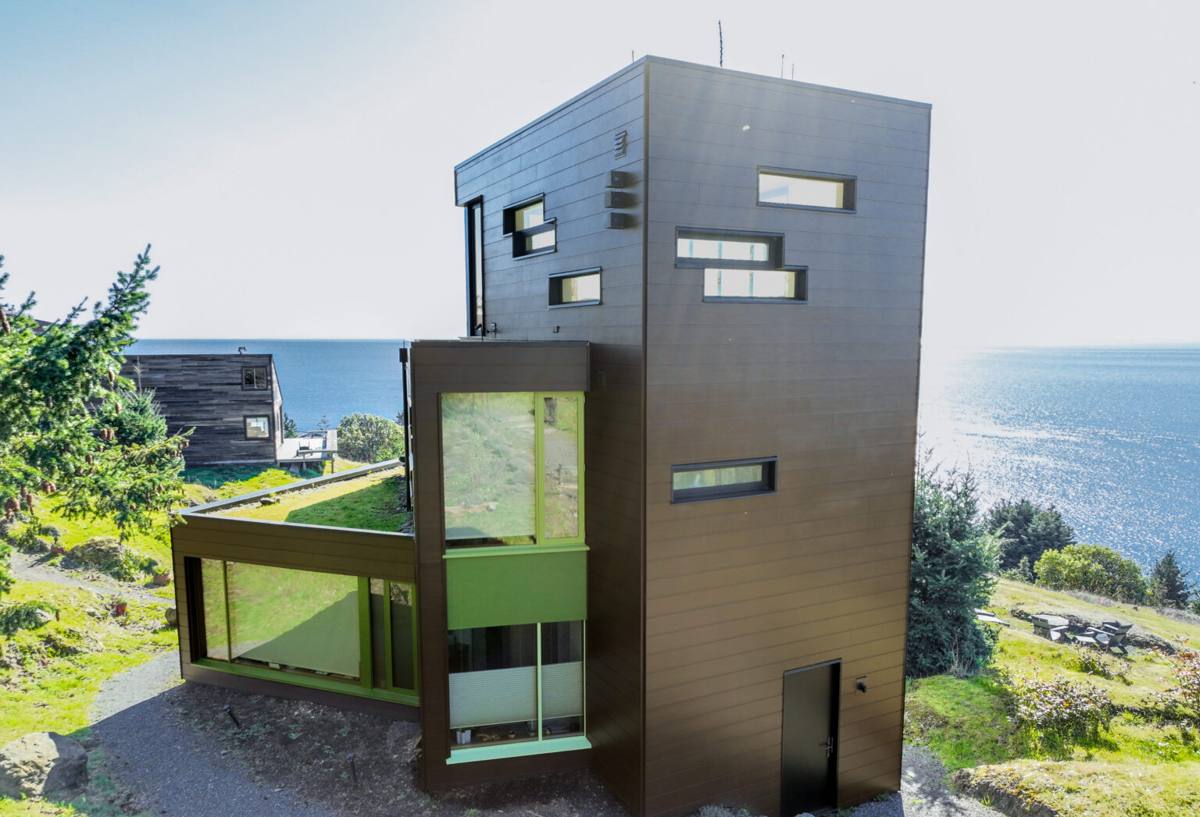
Signs Your Sunnyland Home Needs Siding Replacement
Siding failure is rarely sudden. It shows up gradually, and homeowners often adjust to the appearance before recognizing it as a problem. Watch for:
- Soft or spongy spots when you press on siding, especially near the bottom courses or below windows
- Paint that's peeling, bubbling, or needs repainting far more often than it used to
- Visible cupping, warping, or buckling boards, particularly on shaded or north-facing walls
- Persistent moss or algae growth that returns within weeks of cleaning
- Gaps opening at seams, corners, or trim boards
- Rising interior heating costs or drafts that suggest the wall assembly is no longer sealing properly
- Visible rot at butt joints, especially if the siding is wood-based or an engineered wood product
Any one of these can often be patched. Several showing up together usually means the siding system itself — not just the finish — has reached the end of its useful life.
Why We Install James Hardie Fiber Cement — Not Vinyl, Wood, or Engineered Wood
We install one siding system on every job: James Hardie fiber cement. That's a deliberate standard, not a default, and it's especially relevant in a climate like Sunnyland's.
Vinyl siding is affordable and low-maintenance in mild conditions, but it's a thin plastic product that expands and contracts with temperature swings, can crack in impact or cold, and relies almost entirely on its seams and J-channels staying tight against wind-driven rain. In a neighborhood with real weather and salt exposure, we've seen those seams become the weak point.
Engineered wood products like LP SmartSide use a wood-strand core with a resin-saturated overlay. It's a real improvement over old-style hardboard, but it's still a wood product at its core — any breach in the surface coating, whether from a nail pop, impact, or a poorly sealed cut edge, opens a path for moisture into a substrate that isn't inert. In a climate with this much sustained dampness and moss coverage, that's a risk we're not willing to install and stand behind.
Traditional cedar or primed spruce siding can look excellent, but it demands a maintenance schedule most homeowners don't keep up with — regular repainting, caulking, and moisture monitoring — and it's a combustible material in a region where wildfire smoke seasons have become a regular summer reality.
James Hardie fiber cement is cement, sand, and cellulose fiber. It doesn't rot, it isn't a food source for moss or fungus the way wood is, it's non-combustible, and its ColorPlus factory finish is baked on and warrantied against fading and peeling far longer than a field-applied paint job. It's also engineered in climate-specific HZ formulations, which matters directly for a house in our zone.
Siding Material Comparison
| Factor | Vinyl | Engineered Wood (e.g. LP SmartSide) | James Hardie Fiber Cement |
|---|---|---|---|
| Moisture/rot resistance | Doesn't rot, but seams leak under wind-driven rain | Vulnerable once surface coating is breached | Cement-based; not a rot or moss food source |
| Fire resistance | Melts/deforms under heat | Combustible wood core | Non-combustible |
| Finish durability | Can fade, chalk, or crack over time | Field or factory finish, moderate lifespan | Factory ColorPlus finish, long fade/peel warranty |
| Maintenance | Low, but seam failures are hard to spot early | Requires monitoring cut edges and caulk lines | Occasional wash; no repainting cycle needed |
| Impact resistance | Can crack in cold or from impact | Moderate | Strong, dense cement composition |
What a Correct Fiber Cement Installation Involves
Fiber cement performs the way it's supposed to only when it's installed to manufacturer spec — and in a wet climate, the installation details matter as much as the material itself.
- Weather-resistive barrier and rainscreen gap: A properly installed drainage plane lets any incidental moisture behind the siding dry out instead of sitting against the wall sheathing.
- Correct flashing at every penetration: Windows, doors, hose bibs, vents, and deck ledgers all need integrated flashing, not just caulk, to shed wind-driven rain.
- Proper fastener placement and type: Hardie specifies fastener size, spacing, and embedment; getting this wrong causes buckling and voids warranty coverage.
- Correct board and joint treatment: Butt joints, corners, and z-flashing above trim need to be detailed so water sheds outward, not into the seam.
- Minimum ground clearance: Siding installed too close to grade or a roofline stays wet longer and invites the moss and mildew growth this climate already encourages.
Skipping any one of these doesn't usually cause an immediate problem — it shows up two, five, or ten years later as exactly the kind of failure we described above.
Our Replacement Process
- On-site assessment: We look at your current siding, the condition of the sheathing underneath where accessible, drainage patterns around the home, and shaded or moss-prone areas specific to your lot.
- Plan and estimate: We walk through Hardie board profile, HZ product selection, and ColorPlus color options, and provide a clear, itemized estimate.
- Tear-off and inspection: Once old siding is removed, we inspect sheathing and framing for hidden moisture damage before closing anything up — this is often the point where problems that were invisible from outside get caught.
- Weather barrier and rainscreen installation: We install the drainage plane and furring system correctly before a single piece of siding goes up.
- Hardie installation to spec: Fastening, flashing, and joint treatment are done to manufacturer requirements, not shortcuts.
- Final walkthrough: We review the finished work with you, including trim, caulking, and touch-up details.
Cost Factors for Sunnyland Siding Projects
Every home is different, so we avoid quoting numbers that don't reflect your specific project until we've seen it. What generally moves the estimate:
| Factor | Why It Matters |
|---|---|
| Home size and wall complexity | More corners, dormers, and trim details mean more labor and material cuts |
| Condition of existing sheathing | Hidden rot found during tear-off adds repair scope before new siding goes on |
| Siding profile and color | Lap width, board texture, and ColorPlus color selection affect material cost |
| Access and site conditions | Steep lots, mature landscaping, or tight setbacks affect staging and labor time |
| Trim and accessory scope | Fascia, soffit, and trim replacement alongside siding changes total project cost |
What to Look for When Hiring a Siding Contractor in Sunnyland
Not every contractor who "does siding" installs it correctly for this climate. Before you hire:
- Ask whether they install Hardie's rainscreen/drainage plane system as standard, not as an upgrade
- Ask how they handle flashing at windows, doors, and penetrations — get specifics, not just "we caulk everything"
- Ask if they're a certified or experienced Hardie installer familiar with HZ product selection
- Confirm they carry proper licensing and insurance for exterior work in Washington State
- Ask how they handle sheathing repair if rot is found during tear-off, and how that's priced
- Ask for a written scope that specifies fastener type, flashing details, and clearances — not just "siding replacement"
Why Local Experience in Bellingham Matters
A crew that works across Whatcom County day in and day out knows how differently a wall assembly needs to be detailed here compared to a drier climate. We've seen what happens when siding is installed to a generic national spec instead of one that accounts for sustained coastal moisture, wind-driven rain, and a moss season that doesn't fully let up. That local pattern recognition — knowing which walls in a Sunnyland lot need extra attention to drainage and which details fail first under our specific weather — is exactly what separates a siding job that lasts from one that needs revisiting in a few years.
If your siding is showing signs of wear, or you're simply ready to stop maintaining a product that isn't built for this climate, we're happy to take a look and walk you through your options. Reach out for a free, no-pressure estimate — there's no obligation, and no pressure to decide on the spot.