 Bellingham Roofing
 Window Installation Built for Sunnyland's Marine Climate
Sunnyland sits close enough to Bellingham Bay that its homes take on the full brunt of what Pacific Northwest weather has to offer: wind-driven rain that finds every gap in a poorly sealed opening, salt-tinged air that speeds up corrosion on hardware and fasteners, and a moss season that stretches from fall through spring and keeps everything around a house damp for months at a stretch. Windows are one of the first places that weather shows up. A window that's flashed and sealed correctly can shrug off that exposure for decades. One that isn't lets water into the wall cavity, and by the time a stain shows up on the interior trim, the damage behind the wall is often already done.
We've installed and replaced windows in enough homes around Sunnyland — from older bungalows near the neighborhood's core to newer construction up the hillside — to know that a generic installation, the kind a crew used to drier inland climates might do, isn't good enough here. The materials, the flashing sequence, and the sealants all need to account for how much water Whatcom County actually sees in an average year.
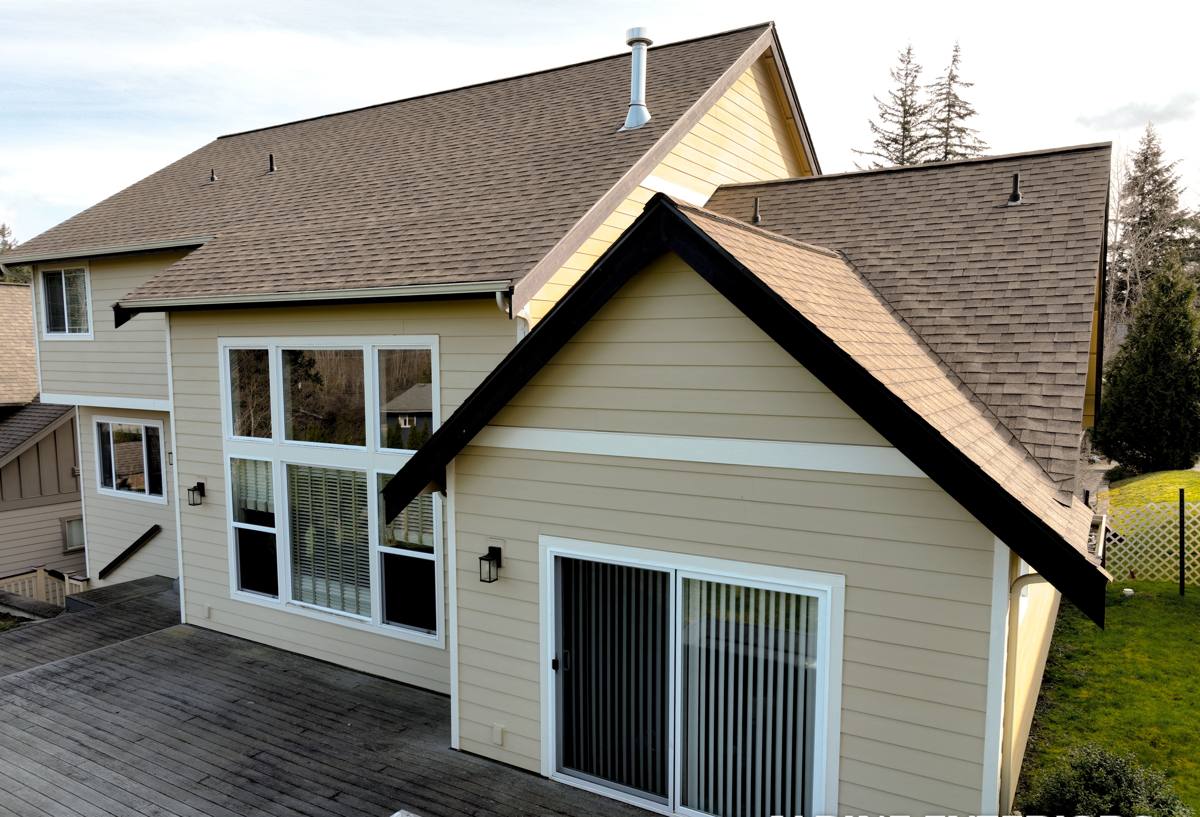
What Bellingham's Weather Does to Windows Over Time
Driving Rain and Wind
Storms coming off the Salish Sea don't just fall straight down — wind pushes rain sideways into window openings, testing every seam in the flashing and every bead of sealant. A window opening that isn't flashed to shed water outward, rather than trap it against the sheathing, will eventually leak, even when the window unit itself is a good one.
Salt Air and Corrosion
Homes within a few miles of the bay deal with airborne salt that speeds up corrosion on window hardware — hinges, locks, balance mechanisms, and exposed fasteners. Lower-grade hardware can start sticking, pitting, or corroding years before the glass or frame itself shows any wear.
Moss, Algae, and Prolonged Moisture
Whatcom County's long moss season isn't just a roofing issue. The same damp, shaded conditions that grow moss on a roof keep moisture sitting against window sills, trim, and cladding longer than it would in a drier climate. Wood trim and sills that aren't detailed with proper flashing and drip edges stay wet longer, and that's exactly the condition that leads to rot.
Signs a Sunnyland Home Needs New Windows or a Repair
Not every issue means a full replacement, but these are worth having a professional take a look at before they turn into a bigger repair:
- Fogging or condensation between the panes, which usually means the seal on the insulated glass unit has failed
- Soft, discolored, or spongy wood trim around the frame
- Windows that are hard to open, close, or lock
- Visible daylight or a noticeable draft around the frame edges
- Paint that's peeling or bubbling on the interior sill or exterior trim
- A musty smell near a window that doesn't clear up with cleaning
- Original single-pane windows in a home built before the early 1990s
What a Correct Window Installation Actually Involves
Swapping the sash and glass for something newer is the easy part. What actually determines whether a window lasts is what happens at the opening before the new unit ever goes in.
Removing the Old Window and Inspecting the Opening
Once the old window is out, we check the sheathing, framing, and sill for rot or existing water damage. This is the point where problems from a past install often surface, and it's far better to catch them here than to seal a new window over a wall that's already wet.
Flashing and Water Management
The opening gets flashed so any water that reaches the frame is directed outward and down, never into the wall cavity. That includes sill pan flashing at the bottom of the opening, side flashing that laps correctly with the housewrap or building paper, and head flashing above the window that sheds water past the top of the frame.
Insulation and Air Sealing
The gap between the window frame and the rough opening gets insulated and sealed — not just caulked on the surface, but sealed in a way that stops both air leakage and any path for moisture to travel behind the trim.
Interior and Exterior Finish Work
Trim, sills, and casing get reinstalled or replaced, then caulked and painted or finished to match the home. This is also where drip caps and sill details get set to keep water moving away from the wood rather than pooling against it.
Choosing Window Materials for Coastal Whatcom County Conditions
Frame material matters more here than it does in a drier climate, because it determines how the window holds up to years of damp exposure and occasional salt air.
| Frame Material | How It Handles This Climate | Maintenance |
|---|---|---|
| Vinyl | Won't rot or corrode from moisture or salt air; handles the wet season well | Low — occasional cleaning |
| Fiberglass | Very stable through temperature swings and damp conditions; strong long-term seal | Low |
| Wood, unclad | Classic look but needs consistent upkeep to resist rot with this much moisture exposure | High — regular painting and sealing |
| Wood-clad | Wood interior with a weather-resistant exterior shell; a reasonable middle ground | Moderate |
| Aluminum | Durable, but conducts cold and can condense or corrode near salt air without upgraded finishes | Moderate |
For most Sunnyland homes, we lean toward vinyl or fiberglass frames given the moisture and occasional salt exposure this area sees, and we reserve unclad wood for projects where matching a historic look is the priority — paired with an honest conversation about the upkeep that choice requires. On the glass side, moisture resistance and a solid edge seal on the insulated glass unit matter more here than high solar heat gain numbers, since Bellingham doesn't get the intense direct sun that some glass coatings are built around.
Energy Efficiency and Comfort in a Damp, Mild Climate
Whatcom County's climate is mild compared to much of the country, but it's also consistently damp and breezy, which shows up as cold drafts, condensation on the inside of older glass, and rooms near single-pane windows that never quite feel warm in winter. A properly installed, well-sealed window addresses both sides of that problem: it stops the air leakage that makes a room feel drafty, and it reduces the temperature difference across the glass that causes interior condensation. Homeowners often notice the difference more in comfort and reduced condensation on cold mornings than in a dramatic drop in the heating bill, and that's a fair expectation to set going in.
Our Installation Process, Start to Finish
- On-site assessment. We look at each opening, note any existing damage, and measure for an exact fit rather than relying on nominal window sizes.
- Material selection. We go over frame material, glass package, and style options based on the specific exposure of each wall — a window on the weather side of the house often needs different detailing than one on a sheltered side.
- Scheduling around the weather. Openings are only exposed for as long as necessary, and install days are planned around the forecast whenever we can.
- Removal and opening prep. Old windows come out, the opening is inspected and repaired if needed, and flashing goes in before the new unit is set.
- Installation and sealing. The new window is set, shimmed level and square, insulated, and sealed following the flashing sequence above.
- Interior and exterior finish. Trim, casing, and paint or stain are completed to match the rest of the home.
- Final walkthrough. We test operation, check the seal, and go over care and warranty information before calling the job finished.
Permits and Local Code Considerations
Whatcom County and the City of Bellingham have specific requirements around window replacement, particularly for bedroom egress windows and any project that changes a window's size or rough opening. A straight swap — new window, same opening size — is usually the simpler path, but any change in dimensions, or adding a window to a bedroom, typically needs to meet current egress code for opening size, sill height, and clear width. We factor the permit conversation into the estimate up front so there are no surprises partway through the job.
Why Hire a Crew That Already Works in Sunnyland
A contractor who already works this neighborhood knows the common housing stock, the typical age of the window openings, and how exposed a given block is to wind and rain coming off the bay. That familiarity translates into fewer surprises once an opening is exposed, a more accurate estimate up front, and a crew that treats a residential window job as the main event for the day rather than an afterthought squeezed between larger commercial projects. It also means someone who'll still be around the following winter if a question comes up about how a window is performing through its first wet season.
We offer free, no-pressure estimates for Sunnyland homeowners. If your windows are fogging, drafting, sticking, or original to a house built decades ago, it's worth having them looked at before the next wet season sets in — fill out the form below and we'll take a look at what your home actually needs.