 Bellingham Roofing
 Windows in York Take a Different Kind of Beating
The York neighborhood sits close enough to the water and the weather patterns off Bellingham Bay that windows here work harder than they do twenty miles inland. Salt-laden air corrodes hardware and finishes faster than dry-climate windows are engineered for. Driving rain off Puget Sound pushes water sideways into gaps that would stay dry in a calmer climate, and the long gray stretch of moss season keeps wood trim and sills damp for weeks at a time. None of this means a window is doomed to fail early — it means the installation has to account for these conditions from the start, not as an afterthought.
A window that's rated fine for general Pacific Northwest use can still underperform in a specific York home if it faces prevailing wind and rain, sits low near grade, or backs up to mature trees and shade that keep siding and trim wet longer than the rest of the house. We look at orientation and exposure on every job, not just the window unit itself.
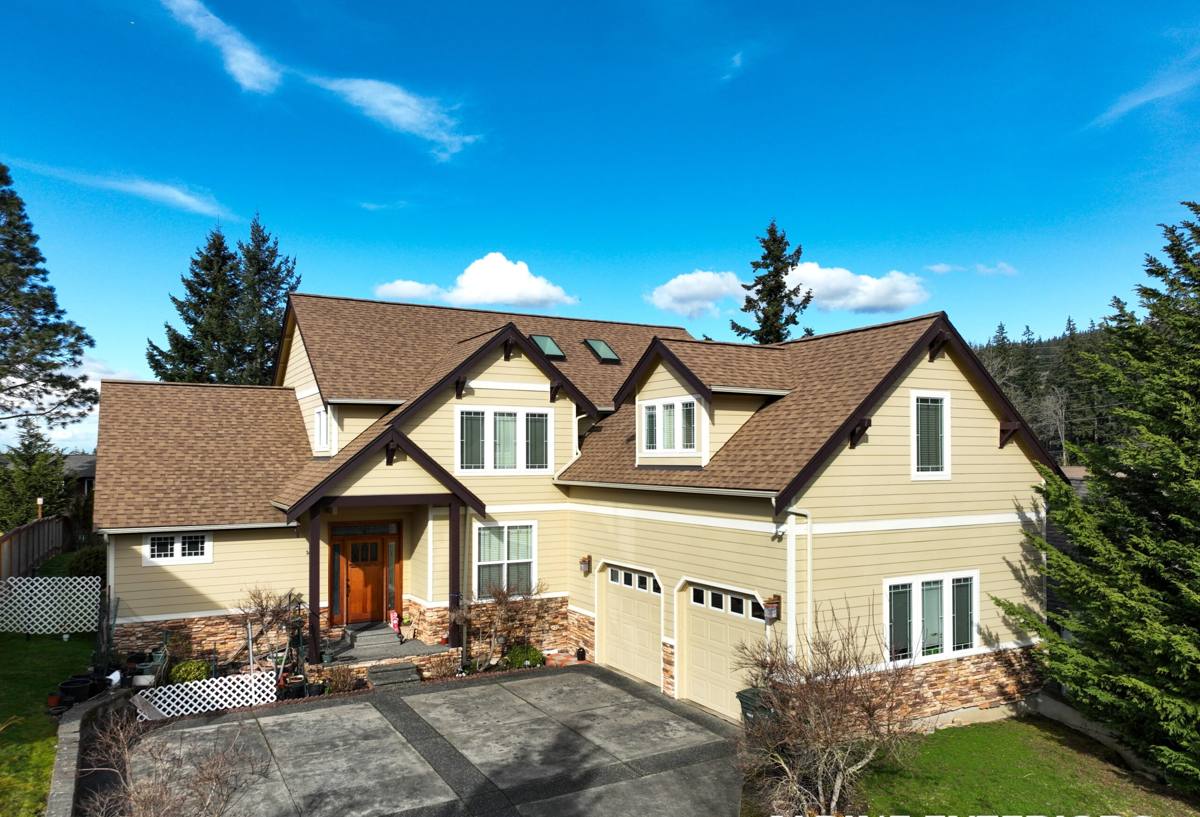
Signs Your Current Windows Are Losing the Battle
Whatcom County's wet season is unforgiving to windows that are past their prime or were installed without proper flashing. Most homeowners notice a problem well before it becomes a real headache — the trick is knowing which signs matter.
- Fogging or a milky haze between panes of double-glazed glass — the seal has failed and the insulating gas or dry air pocket is gone
- Soft or discolored wood at the sill or the bottom corners of the frame, especially on walls facing prevailing wind and rain
- Visible black or green growth on the exterior trim or sill, a common moss-season problem in this area
- Drafts you can feel with a hand near the frame on a windy day, even with the window latched
- Windows that stick, won't stay open, or need force to latch — frames can swell and shift with repeated moisture cycles
- Peeling paint or bubbling on interior sills, which usually means moisture is getting past the exterior seal
Any one of these on its own might just need caulk or a hardware adjustment. Several at once, especially rot at the sill, usually means it's time to talk about replacement rather than another round of patching.
What a Correct Window Installation Actually Involves
The window unit itself gets most of the attention when homeowners are shopping, but in a wet, salt-exposed area like York, the installation details are what actually determine whether the window performs for the next 20-plus years.
Flashing and Water Management
Proper flashing directs any water that gets behind the siding back out and away from the wall assembly, using a shingle-style layering — house wrap, then flashing tape or a pan at the sill, then the window, then flashing at the head — so water always drains outward and down, never behind the next layer up. Skipping or shortcutting this step is the single most common cause of hidden rot behind a window that looks fine from the outside for a year or two before the damage shows.
Air and Water Sealing at the Frame
Backer rod and quality exterior sealant at the right joints, paired with low-expansion foam or fiberglass insulation inside the rough opening, control both drafts and condensation. Over-filling a gap with rigid foam can actually bow the frame and cause the window to operate poorly, so this step takes some judgment, not just a caulk gun.
Sill Pitch and Drainage
The sill should be set with a slight outward pitch so bulk water sheds away from the house rather than pooling against the glass or frame. On older York homes with settled framing, this sometimes means shimming the opening more carefully than a straight swap-and-caulk job would suggest.
Choosing the Right Window for a York Home
There's no single "best" window material — the right call depends on your home's exposure, your budget, and how much upkeep you want to sign up for. Here's how the common options stack up for a coastal Whatcom County property.
| Frame Material | Salt Air / Moisture Behavior | Maintenance | Typical Fit |
|---|---|---|---|
| Vinyl | Won't rust or corrode; performs consistently in salt air | Low — occasional cleaning | Most homes, best value |
| Fiberglass | Very stable, minimal expansion/contraction, strong moisture resistance | Low | Higher-exposure walls, long-term owners |
| Wood or wood-clad | Attractive but needs a well-maintained exterior finish to resist moisture | Higher — periodic refinishing | Historic or character homes where look matters most |
| Aluminum | Prone to condensation and corrosion near salt air unless thermally broken | Moderate | Limited use; we're selective about where we recommend it here |
For most York properties, we steer homeowners toward vinyl or fiberglass for the working parts of the house and reserve wood or wood-clad for spots where the look is worth the added upkeep. That's a professional judgment based on how each material handles our specific weather, not a knock on any manufacturer.
Glass Packages Worth Considering
Beyond frame material, the glass package matters just as much for comfort and condensation control in a damp climate.
- Double-pane with Low-E coating — the standard baseline for energy performance and reduces interior condensation on cold, wet days
- Argon or krypton gas fill — improves insulating value with no visible difference, a low-cost upgrade worth having
- Triple-pane — noticeably better insulation and sound dampening, worth it on north- and west-facing walls that take the brunt of the weather, though it adds cost and weight
- Tempered or laminated glass — required by code in certain locations near doors, stairs, and low sills; we flag where this applies during the estimate
Our Installation Process, Start to Finish
- On-site assessment — we look at existing frames, sill condition, and any hidden moisture or rot before quoting anything
- Product selection — we walk through frame and glass options suited to that specific wall's exposure, not a one-size answer
- Removal — old units come out carefully so we can inspect the rough opening and framing underneath
- Repair as needed — any soft framing, rot, or damaged sheathing gets addressed before a new window ever goes in; installing a good window over a bad opening just hides the problem
- Flashing and sealing — house wrap integration, sill pan, and proper flashing sequence as described above
- Window set and shim — leveled, squared, and fastened per manufacturer spec so hardware operates correctly for years
- Insulate and seal — interior and exterior sealing done to control both air leaks and condensation
- Trim and finish — interior and exterior trim reinstalled or replaced to match the home
- Walkthrough — we test operation and go over care with the homeowner before calling the job done
Cost Factors for Window Installation
Exact pricing depends on the specifics of your home, but these are the main variables that move the number up or down on most York-area jobs.
| Factor | Why It Matters |
|---|---|
| Frame material | Vinyl is typically the most budget-friendly; fiberglass and wood cost more upfront |
| Glass package | Triple-pane and specialty coatings add cost but improve comfort and efficiency |
| Hidden damage | Rot or soft framing found during removal adds labor and material not visible in the initial quote |
| Window size and count | Larger openings and whole-house replacements benefit from some per-unit efficiency |
| Access and height | Second-story or hard-to-reach windows take more time and equipment |
| Trim and finish work | Matching existing interior trim or exterior details adds labor beyond a basic install |
We always separate "known" costs from "possible" costs in a quote — if we suspect rot behind existing trim, we'll say so up front rather than surprise you mid-job.
Why Hiring a Crew That Already Works York Matters
Window installation isn't just about the product — it's about knowing how a specific area's building stock, weather exposure, and moisture patterns tend to interact. A crew that regularly works in York already has a feel for which walls in this part of Bellingham take the worst weather, what kind of framing and sill conditions tend to turn up in homes of a certain age, and how to sequence a job around our wet season rather than fighting it. That local familiarity shows up in fewer surprises, better flashing decisions on the fly, and a finished job that's built for the specific conditions your home actually faces — not just a generic install done by the book.
It also means straightforward communication. We're not driving in from out of the area for one job and disappearing — we're a Bellingham crew that expects to be back in this neighborhood for the next project too, which keeps us honest about scope, timeline, and what your home actually needs.
Keeping New Windows Performing Through Whatcom County Winters
A correctly installed window still benefits from a little seasonal attention in this climate. Rinse salt residue off exterior frames periodically if you're close to the water, keep gutters and downspouts clear so water isn't sheeting down across window heads, and check exterior caulk lines once a year for cracking as the moss season sets in. Trim back vegetation that keeps a wall shaded and damp longer than the rest of the house. None of this is heavy maintenance, but a few minutes twice a year goes a long way toward getting the full lifespan out of a new installation.
If you're weighing whether it's time to replace windows in your York home, or just want a second opinion on what you're seeing at the sills, we're happy to take a look. Estimates are free and there's no pressure — fill out the form below and we'll set up a time to come by.