 Bellingham Roofing
 Why Windows Wear Out Faster in the Puget Area
Homes in the Puget area sit close enough to the water that the climate does more damage to windows than most homeowners realize until they start noticing the signs. Salt-laden air off the Sound corrodes metal hardware, fasteners, and window balances faster than it would inland. Driving rain, pushed sideways by wind off the water, finds every weak seal and gap in older window flashing. And Bellingham's long, damp moss season keeps wood trim, sills, and siding around window openings wet for weeks at a stretch, which is exactly the condition wood rot needs to take hold.
None of this means Puget homes need exotic solutions. It means the details that get skipped on a rushed or inland-style installation — flashing sequence, sill pan drainage, sealant selection, frame material — matter more here than they would in a drier part of the state. A window that performs fine in eastern Washington can fail early in a coastal Whatcom County install if it wasn't put in with this climate in mind.
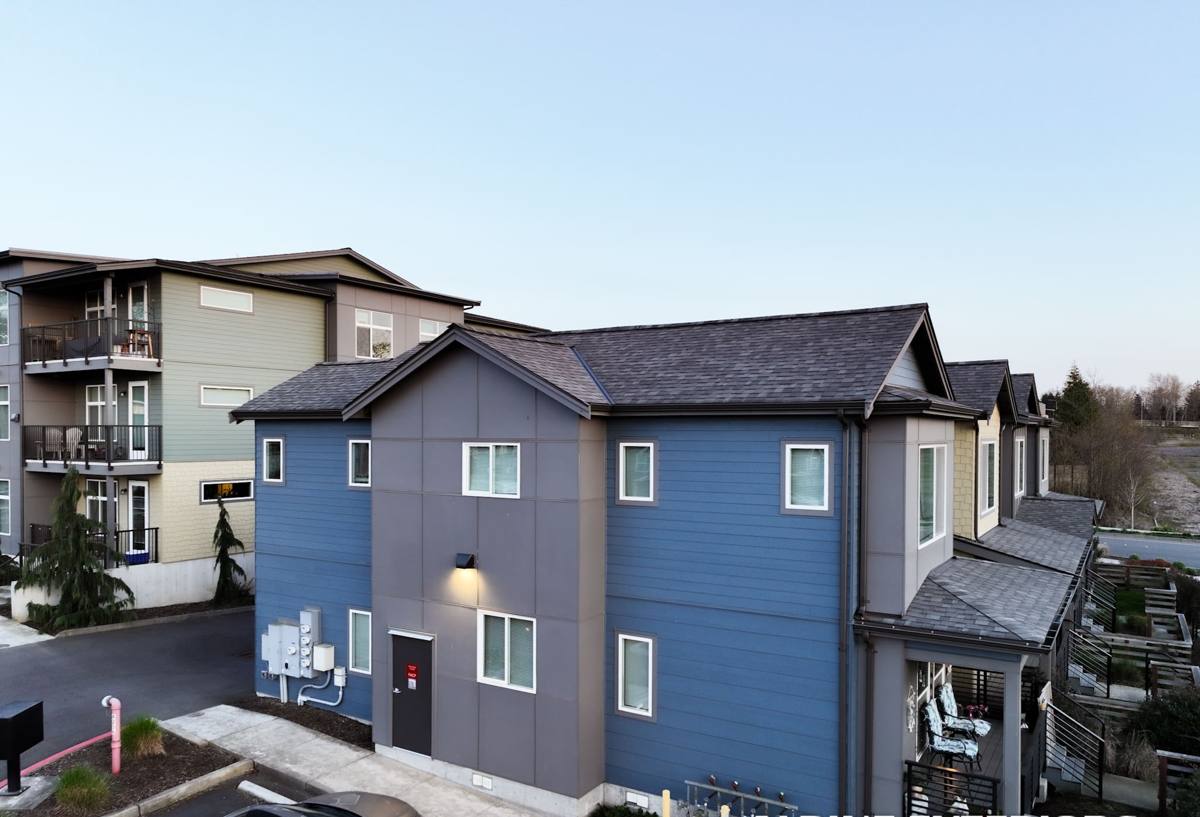
Signs a Puget Home's Windows Need Replacing
Window failure in this climate is usually gradual, not sudden. By the time a window is obviously broken, the underlying wall assembly has often been taking on moisture for a while. Here's what we look for, and what homeowners should watch for between now and their next estimate:
- Soft or discolored wood on the interior sill or exterior trim, especially on walls that face prevailing wind and rain
- Fogging or a permanent haze between panes, which means the seal on a double- or triple-pane unit has failed
- Windows that are hard to open, close, or lock — often a sign the frame has swollen, warped, or shifted
- Visible gaps, cracked caulk, or daylight around the frame when the window is closed
- A noticeable draft or cold spot near the window even when it's shut tight
- Green or black staining on siding or trim below the window, which usually points to water tracking down from a failed sill or flashing
- Higher heating bills than neighbors with similar-sized homes, without another clear cause
Any one of these on its own might not mean full replacement is needed. Several together, or moisture staining paired with soft wood, usually does — and waiting tends to turn a window job into a window-plus-framing job.
What a Correct Window Replacement Job Actually Involves
It's Not Just Swapping the Glass
A window replacement done right is really a small waterproofing project with a window in the middle of it. In a climate that gets sustained, wind-driven rain, the flashing and drainage details around the opening matter as much as the window unit itself. We remove the old unit down to the rough opening, check the condition of the framing and sheathing underneath, and address any rot or moisture damage we find before anything new goes in. Installing a new window into a compromised opening just hides a problem that will resurface.
The Details That Matter Locally
A correctly flashed window opening directs water down and out, never letting it pool against the frame or track behind the siding. That means a sloped sill pan, properly lapped flashing tape that integrates with the home's weather-resistive barrier, and sealant used only where it's supposed to be used — not as a substitute for good flashing. In a marine climate, we also pay attention to how the window handles condensation on the interior side during cold, damp stretches, since that's often mistaken for a leak when the real cause is humidity and airflow inside the home.
Choosing the Right Window Material for This Climate
Frame material is one of the biggest decisions in a window replacement, and it matters more here than in drier regions because of sustained moisture exposure and salt air. Below is how the common options generally compare for a Puget-area home.
| Material | Moisture & Salt Air Resistance | Maintenance | Best Fit |
|---|---|---|---|
| Vinyl | Good — won't rot or corrode, though hardware quality varies by manufacturer | Low — no painting, occasional cleaning | Most homes prioritizing value and low upkeep |
| Fiberglass | Very good — dimensionally stable, resists warping in temperature and moisture swings | Low | Homes wanting long-term stability and a higher-end feel |
| Aluminum-clad wood | Good on the exterior face, but interior wood is still vulnerable if a seal fails | Moderate — exterior is low-maintenance, interior wood needs monitoring | Homeowners who want a wood interior look and are willing to maintain it |
| Bare wood | Poor to fair in constant damp exposure without diligent upkeep | High — regular painting/sealing required | Historic or architecturally specific projects where matching original material is the priority |
We don't install bare wood windows on exposed, weather-facing walls in this climate as a matter of professional standard — not because wood can't work, but because it demands a level of ongoing maintenance that most homeowners underestimate, and a missed maintenance cycle here shows up as rot faster than it would somewhere drier. For most Puget homes, vinyl or fiberglass strikes the right balance of performance and upkeep, with aluminum-clad wood as a solid option for homeowners who specifically want that look and understand the maintenance trade-off.
Glass Package Matters Too
Beyond the frame, the glass package affects comfort and condensation control. Double-pane, low-E glass is the standard baseline for this region. Triple-pane adds another layer of insulation and can help with both energy performance and interior condensation on north-facing or shaded walls, though it comes at a higher cost and added weight, which matters on larger openings.
Our Process, Start to Finish
- On-site assessment — we look at every window being considered, not just the ones that are obviously failing, and check the condition of the surrounding trim and wall assembly
- Honest recommendation — we tell you which windows genuinely need replacement now, which can wait, and why, rather than pushing a full-house job when it isn't needed
- Written estimate — clear pricing by window, material, and any repair work the opening needs
- Removal and inspection — old units come out, and we inspect the rough opening for hidden rot or moisture damage before installing anything new
- Proper flashing and installation — sill pan, flashing integration, air sealing, and the new window set square and level
- Interior and exterior finish work — trim, caulking, and touch-up so the job looks finished, not just functional
- Final walkthrough — we check operation, sealing, and cleanup with you before calling the job done
Why a Crew That Already Works Puget Matters
General contracting experience doesn't automatically translate to knowing how a specific neighborhood's homes behave. A crew that has worked windows in the Puget area already knows which wall orientations take the worst of the driving rain, what moss and moisture buildup tends to look like on local trim before it becomes structural, and how salt air affects hardware choices over time. That familiarity shows up in fewer surprises during the job and fewer callbacks after it — we're not learning the climate on your house.
It also matters for permitting and code compliance. Whatcom County and the City of Bellingham have their own permitting requirements depending on the scope of work, and a crew that regularly works in the area knows when a permit is needed and how to keep the job moving through inspection without delays.
Energy Efficiency in a Marine Climate
Bellingham's climate is milder than much of the state, but it's also consistently damp and cloudy for long stretches, which changes what "efficient" means here. U-factor (how well the window resists heat transfer) matters more than solar heat gain coefficient for most Puget homes, since the priority is usually keeping heat in during long gray stretches rather than blocking summer sun. Low-E glass coatings help with this without darkening the room noticeably. A properly sealed, well-flashed window also does as much for comfort as the glass package does — a well-rated window installed with gaps in the air sealing will still feel drafty.
After Installation: What Puget Homeowners Should Know
New windows still need some attention in this climate. A quick seasonal check goes a long way toward protecting the investment:
- Inspect exterior caulking once a year, typically before the wet season starts, and touch up any cracking
- Keep gutters and downspouts clear so water isn't overflowing near window openings
- Wipe down tracks and hardware occasionally, since salt air residue can build up even on corrosion-resistant materials
- Watch for condensation on interior glass during cold snaps — persistent condensation often points to indoor humidity levels rather than a window problem, and improving ventilation usually resolves it
Get a Straight Answer for Your Home
Every Puget-area home takes weather differently depending on orientation, tree cover, and age, so the right window scope for your house isn't something we'd guess at over the phone. If you're seeing soft trim, foggy panes, drafts, or just want to know where your windows actually stand, we'll come take a look and give you a straightforward, no-pressure estimate — use the form below to get started.