 Bellingham Roofing
 Deck Repair Built for York's Weather, Not Just Its Wood
A deck in the York neighborhood earns its keep three seasons a year and takes a beating the other nine months. Bellingham sits right on the water, and that proximity to Bellingham Bay means salt-laden air is a constant, low-grade attacker on anything metal — nails, screws, joist hangers, hinges. Add Whatcom County's driving rain, which comes in sideways often enough to soak end grain and hidden framing that never gets a chance to dry, and a moss season that can run from October well into May, and you have a climate that is genuinely hard on outdoor wood structures.
None of that means a deck in York is doomed. It means the repair has to account for the actual conditions the deck lives in, not just patch the symptom. We've fixed enough decks in and around this part of Bellingham to know where the damage starts, why it starts there, and what holds up once it's fixed.
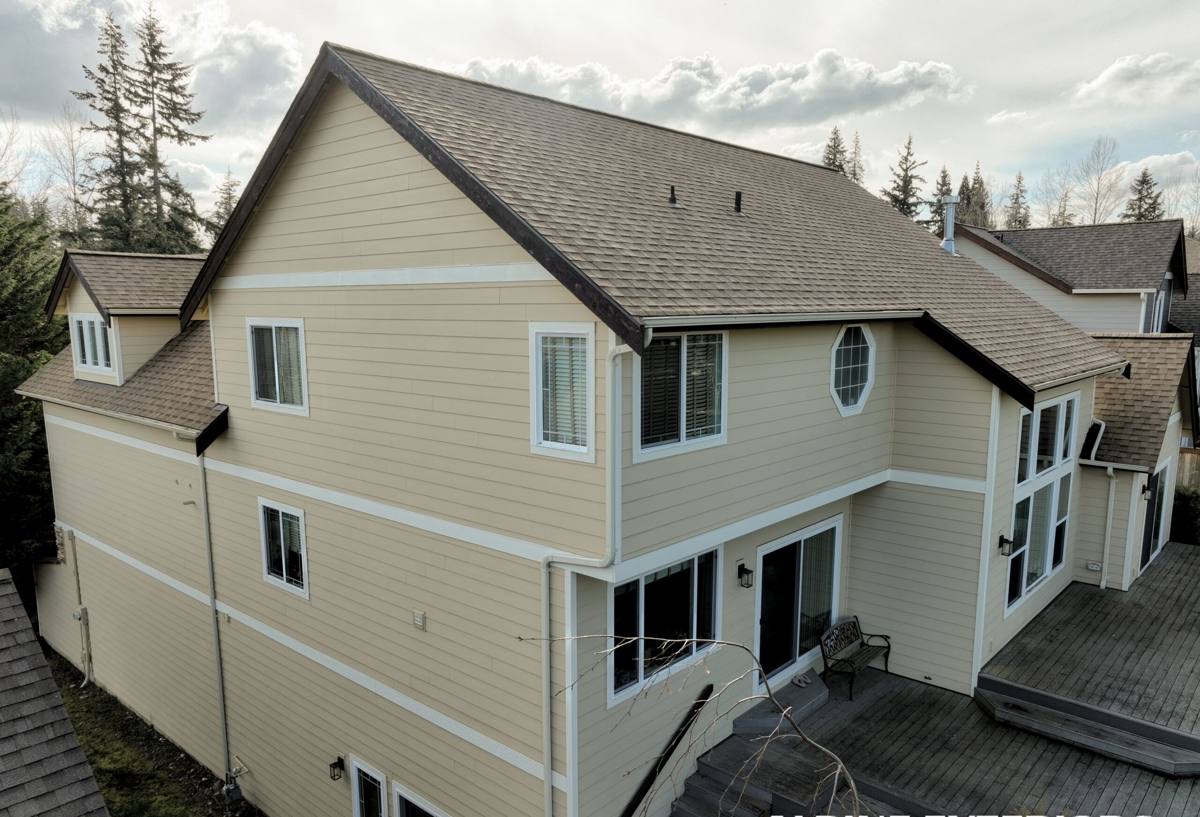
Signs Your Deck Needs Attention
Deck damage rarely announces itself all at once. It shows up as small, ignorable things first — until it isn't ignorable anymore. Homeowners in York typically call us after noticing one or more of the following:
- Boards that feel spongy, soft, or slightly bouncy underfoot
- Rust streaks bleeding out from screw or nail heads
- Gaps opening up between boards, or boards cupping and lifting at the edges
- A railing that wobbles or flexes when leaned on
- Visible separation where the deck meets the house (the ledger board)
- Green or black staining on the decking or on the framing underneath
- A musty smell coming from underneath the deck, especially after rain
- Cracking or splitting at the stair stringers
Any one of these on its own might be minor. Several at once, or anything involving the ledger board or a post base, usually means the problem has moved from the surface into the structure.
The Problems We See Most Often
Ledger Board Attachment
The ledger is the board that ties the deck to the house, and it's the single most common point of structural failure in residential decks generally — not just in Bellingham. Older decks were often lag-bolted to the rim joist without proper flashing, which lets water track behind the board and rot both the ledger and the house framing it's attached to, out of sight, for years. By the time it shows up as a soft spot or a slight downward lean at the house side, the damage is usually more extensive than it looks from the outside.
Fastener and Hardware Corrosion
Standard galvanized fasteners hold up fine in a lot of climates. Close to Bellingham Bay, salt air accelerates corrosion on hardware that wasn't rated for it, and once a nail or screw starts rusting, it loses grip strength in the wood around it long before it visibly fails. Joist hangers are a common failure point for the same reason — the hanger looks fine from a few feet away, but the fasteners holding it have lost most of their holding power.
Post Bases and Footings
Where a post meets grade, or sits in a footing that holds water instead of shedding it, is a classic rot starting point. Constant dampness plus wood-to-concrete or wood-to-soil contact is a slow but reliable way to compromise the one thing carrying the deck's structural load down to the ground.
Decking Boards and Surface Wear
This is the damage everyone notices first because it's the part you walk on. Cupping, splintering, and moss growth on the walking surface are often cosmetic and drainage-related rather than structural — but a board that's rotted through in one spot is a trip-and-fall risk regardless of what's happening underneath it.
Repair or Rebuild?
Not every deck problem calls for a full rebuild, and not every deck is worth patching. The honest answer depends on where the damage is and how far it's spread. Here's roughly how we sort it out during an inspection:
| Condition Found | Typical Recommendation | Why |
|---|---|---|
| Ledger board sound, isolated board or railing damage | Targeted repair | Structure is intact; only the damaged components need replacing |
| Rot at ledger or house rim joist | Repair, sometimes with partial reframe | Fixable if caught before it spreads into the house structure, but requires opening it up to confirm extent |
| Multiple posts or footings compromised | Partial to full rebuild | Load-bearing members in several locations rarely make sense to patch one at a time |
| Deck is 25+ years old with widespread fastener corrosion | Full rebuild | Original hardware and framing are past their useful life; repairing piecemeal just delays the next failure |
| Surface boards worn but framing solid | Decking replacement only | Framing carries the load; boards are the wear layer and can be swapped without touching the structure |
We won't recommend a full rebuild when a repair will genuinely hold, and we won't patch something that's going to be back on our schedule in two years. The inspection tells us which one we're looking at.
How We Approach a Deck Repair
- Inspection. We probe the framing, check moisture levels where rot is suspected, and look specifically at the ledger connection, post bases, and any spot where two materials meet — those joints are where water damage starts.
- Written scope. You get a clear rundown of what's failing, what we're replacing, and what it costs before any work starts. No surprise change orders for things we could see from the beginning.
- Permit check. Structural repairs — ledger reattachment, framing replacement, railing changes — often require a permit through the City of Bellingham or Whatcom County depending on where the property sits. Cosmetic board swaps generally don't. We sort out which applies before starting.
- Repair with the right materials. Corrosion-resistant fasteners, proper ledger flashing, and framing lumber rated for exterior exposure — matched to what the specific repair needs, not a one-size-fits-all fix.
- Final check. Railings get tested for flex, stairs get checked for level and secure attachment, and we walk the whole deck before calling it done.
Fasteners and Hardware Matter More Here Than Inland
This is worth its own section because it's the difference between a repair that lasts and one that doesn't. Standard hot-dip galvanized hardware is adequate for a lot of applications, but in a marine-influenced climate like Bellingham's, stainless steel or premium coated fasteners rated for coastal exposure are worth the modest extra cost — especially anywhere the hardware is hidden and hard to inspect later, like ledger bolts and joist hangers. Using the wrong-grade fastener is one of the most common reasons a "repaired" deck develops the same problem again a few years later.
Railings, Stairs, and Code
Washington's building code sets minimum requirements for guardrail height, baluster spacing, and stair rail attachment on decks above a certain height off the ground. A lot of older decks in established York-area homes were built before current code, or have been modified over the years in ways that no longer meet it. When we're already repairing a railing or stair section, we bring it up to current code as part of the job rather than reattaching something that wasn't safe to begin with — it's a small added step at repair time and a meaningful one for anyone using the deck.
Keeping a Repaired Deck From Needing Repair Again
A repair holds longer if the deck gets basic seasonal attention in between. This is the maintenance rhythm we recommend to homeowners after a repair, tuned for this climate's long wet season:
- Sweep leaves and debris out of the board gaps regularly — trapped debris holds moisture against the wood
- Clean moss and algae with a deck-safe cleaner rather than a pressure washer on full blast, which can gouge softwood and force water into the grain
- Reseal or restain on the manufacturer's recommended schedule, typically every one to two years for most wood decking in this climate
- Check visible fasteners once a year for rust bleed or loosening
- Keep the space underneath the deck ventilated — trapped, still air under a low deck is a mildew and rot accelerant
- Trim back vegetation touching the deck or shading it heavily, since constant shade keeps surfaces damp longer after rain
- Glance at the ledger flashing line each spring for any sign of gapping or water staining
Why Hire a Crew That Already Works in York
Deck repair isn't exotic work, but doing it well in this specific area means understanding a few things that don't show up in a general how-to guide: the way salt air shortens the life of standard hardware, how long moss season actually runs here and what that means for drainage and cleaning schedules, and what permitting looks like for structural work in this part of Whatcom County. A crew that's already done this work nearby isn't guessing at any of that. We also know the housing stock common to established Bellingham neighborhoods like York — older framing, older fastener standards, decks that have been added onto or modified more than once — and what that history usually means once we open things up.
We'd rather give you an honest read on what your deck actually needs — repair, partial rebuild, or just better maintenance — than talk you into more work than the problem calls for. If you're seeing any of the warning signs above, or just want a straight opinion on where your deck stands, we're happy to take a look. Use the form below to request a free, no-pressure estimate.