 Bellingham Roofing
 Siding Installation in York: Built for Bellingham's Weather, Not Just Its Looks
York is one of Bellingham's older, well-established neighborhoods, which means its homes have already been through decades of Whatcom County weather. Salt-laden air off Bellingham Bay, wind-driven rain that finds every gap in a wall assembly, and a moss season that seems to run longer every year — all of it works on siding whether the house is 15 years old or 75. When we install siding in York, we're not just matching a color or a profile. We're building a water-management system that has to outperform the last one.
That distinction matters more here than in drier climates. A siding job that looks fine on day one but was rushed on flashing, gapping, or fastening will show its weaknesses within a few wet seasons — bubbling paint, soft trim, moss creeping up from the ground line, or moisture tracking behind panels where nobody can see it until the sheathing underneath is already compromised.
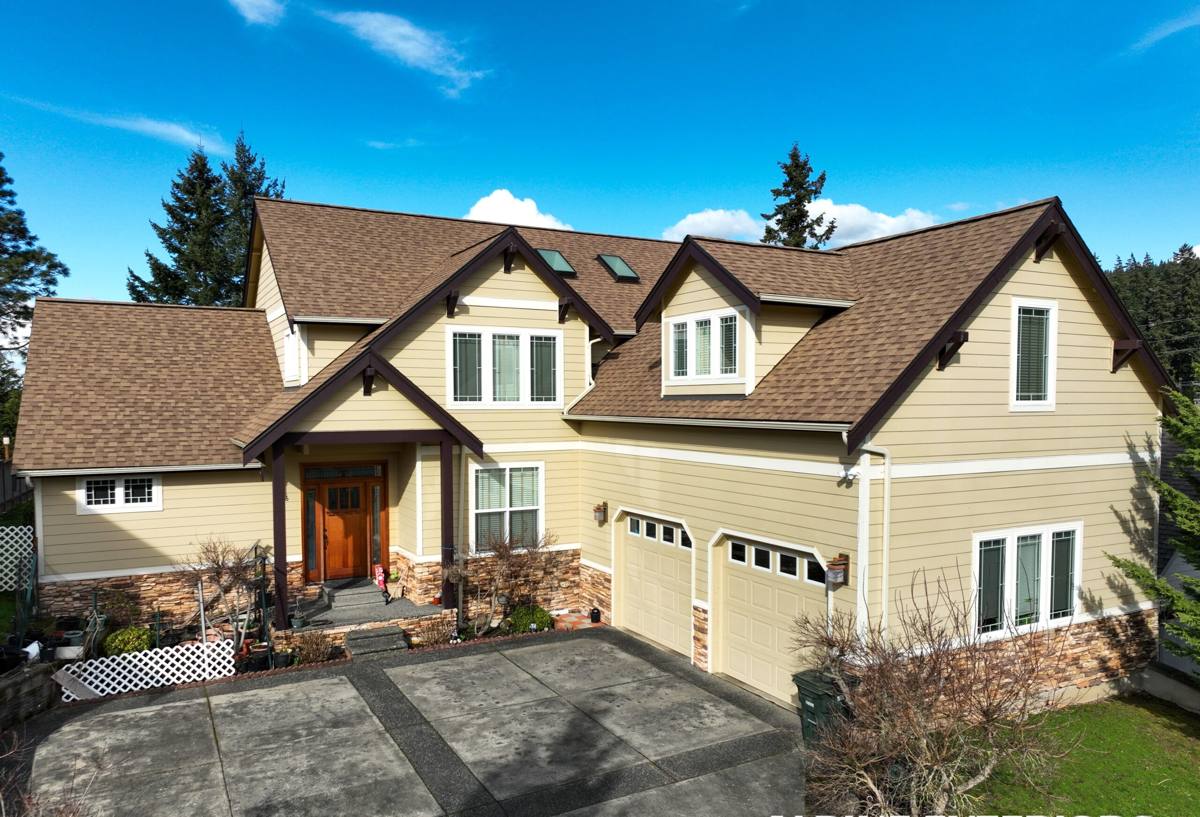
What York's Housing Stock Needs From Its Siding
Like much of Bellingham, York has a mix of housing ages and styles — older bungalows and post-war homes alongside newer infill construction. That mix creates a few recurring realities for siding work in this neighborhood:
- Older wall assemblies often have thinner or non-existent weather-resistive barriers by modern standards, so the new siding install is frequently the first real opportunity to correct decades-old moisture paths.
- Mature tree cover common in established neighborhoods like York keeps siding shaded and slow to dry after rain — a direct contributor to moss and mildew growth on the wrong materials.
- Lot sizes and setbacks in older neighborhoods mean homes often sit closer together, so proper clearances, flashing at trim and window returns, and clean sightlines matter for both performance and curb appeal.
- Renovation layering — some York homes have already had one or two siding replacements over their lifetime, sometimes over top of the original material, which needs to be identified and addressed before new siding goes on, not covered up again.
None of this is unique to any one street or block — it's the general pattern across an established Bellingham neighborhood, and it's why we walk every wall section individually before quoting rather than pricing off square footage alone.
What Correct Siding Installation Actually Involves
Siding is a system, not a single product. The panel itself gets most of the attention, but the parts nobody sees are usually what determines whether the job lasts.
The Weather-Resistive Barrier
Before any siding goes up, the wall needs a continuous, properly lapped weather-resistive barrier (housewrap or equivalent) with all penetrations — outlets, vents, hose bibs, light fixtures — flashed and sealed correctly. In a climate that sees as much wind-driven rain as ours, shortcuts here are invisible until they aren't.
Flashing at Every Transition
Window and door heads, deck ledgers, roof-to-wall intersections, and horizontal trim boards are where water intrusion actually starts. Each of these needs metal or membrane flashing installed in the correct shingle-lap order so water is always directed outward and down, never trapped behind the cladding.
Proper Clearance and Fastening
Fiber cement siding needs a minimum gap from grade, roofing, decks, and patios — typically several inches depending on the manufacturer's requirements — so splash-back and standing moisture never sit against the bottom edge of a panel. Fasteners need to hit framing at the correct spacing and depth; overdriven or underdriven nails are a leading cause of premature paint failure and panel movement.
Rainscreen or Direct Application
Depending on the wall assembly and exposure, a drainage gap (rainscreen) behind the siding can meaningfully improve drying time after our region's extended wet stretches. We evaluate this on a wall-by-wall basis rather than applying one approach to every home.
Why We Install Only James Hardie Fiber Cement
We made a deliberate decision to stop installing vinyl, LP SmartSide, and other fiber cement brands, and to install James Hardie exclusively. That's not a marketing preference — it's a standard we hold because of what we've seen hold up in this climate and what we're willing to warranty our labor against.
| Factor | Vinyl Siding | Engineered Wood (LP SmartSide) | James Hardie Fiber Cement |
|---|---|---|---|
| Moisture behavior | Doesn't absorb water, but seams and gaps let water track behind panels | Wood-based core is vulnerable if edges or cuts aren't sealed and maintained | Non-combustible cement composite, engineered to resist moisture-driven damage when installed to spec |
| Moss and algae resistance | Textured surfaces trap moisture and grow moss in shaded spots | Similar risk, worsened if coating is compromised | ColorPlus factory finish resists moss growth better than field-painted or porous surfaces |
| Finish longevity | Color baked into plastic, but panels can warp, fade, or crack in temperature swings | Requires ongoing paint maintenance to protect the substrate | Factory-applied ColorPlus finish is engineered for UV and moisture exposure, reducing repaint cycles |
| Fire resistance | Combustible | Combustible (wood-based) | Non-combustible material |
| Installation sensitivity | Moderate — improper nailing causes buckling | Moderate to high — cut edges need sealing | High — requires correct fastening, clearances, and flashing, but performs excellently when done right |
Vinyl is inexpensive and easy to install fast, but its seams and thermal movement work against it in a climate with this much sustained rain. LP SmartSide is a genuinely engineered product with real strengths, but its wood-strand core depends on an intact factory coating and careful field sealing at every cut — a maintenance burden we're not comfortable asking York homeowners to take on for the next 30 years. Cedar and primed spruce look great on day one but demand a repaint and caulk schedule that most homeowners underestimate, especially with our moss and mildew pressure.
James Hardie's HZ5 product line is engineered specifically for climates like ours — freeze-thaw cycling, sustained moisture, and coastal exposure — and backed by a warranty structure that transfers if the home is sold. We'd rather install one product exceptionally well than spread our crews thin across five product lines with five different failure points.
Our Process, Start to Finish
- On-site walkthrough: We inspect existing siding, trim, flashing, and any visible moisture damage before quoting — not from a photo, in person.
- Sheathing assessment: Once old siding is removed, we check for rot, soft spots, or prior water intrusion and address it before anything new goes up.
- Weather barrier and flashing: New housewrap, window/door flashing, and penetration sealing installed to current best practice, regardless of what standard was used originally.
- Hardie panel or lap installation: Installed to James Hardie's published fastening, clearance, and joint-treatment specifications — this is what keeps the manufacturer's warranty intact.
- Trim, caulking, and finish detail: Corners, trim boards, and joints finished for both weather performance and a clean final appearance.
- Final walkthrough: We review the completed work with the homeowner before calling the job done.
Moss, Salt Air, and Driving Rain: Designing Against All Three
Bellingham's proximity to the water means siding here deals with salt exposure that inland Whatcom County homes don't see as much of — it accelerates corrosion on fasteners and hardware if the wrong materials are used. We use fasteners and flashing components rated for coastal exposure, not just standard interior-grade hardware.
Moss is a separate but related problem. It thrives on siding that stays damp and shaded, which describes a lot of walls under mature tree canopy in established neighborhoods. Smooth, factory-finished fiber cement sheds water faster and gives moss and algae less to grip than porous or heavily textured surfaces, but proper soffit and gutter function matters just as much as the siding material — we'll flag drainage issues that feed moss growth even if they're technically outside the siding scope.
Driving rain — wind-blown rain that hits siding at an angle instead of falling straight down — is what exposes weak flashing and undersized laps. It's also why we don't treat any siding job as "just the panels." The water management behind the panels is what actually keeps a York home dry through a normal Pacific Northwest winter.
Signs a York Home May Need New Siding
- Visible moss or dark streaking that returns shortly after cleaning
- Soft, spongy, or bubbling spots when pressed, especially near the bottom courses or under windows
- Cracked, warped, or separating panels, particularly at corners and seams
- Peeling or chalky paint that keeps failing despite repainting
- Visible gaps or missing caulk at trim, window, and door edges
- Rising energy bills that may point to a compromised weather barrier, not just insulation
- Musty smells or visible staining on interior walls that share an exterior wall
What Drives the Cost of a Siding Installation
| Cost Factor | Why It Matters |
|---|---|
| Home size and wall complexity | More corners, dormers, and trim details mean more labor and material cuts |
| Condition of existing sheathing | Rot or water damage found during tear-off adds repair scope before new siding can go on |
| Siding profile chosen | Lap siding, panel siding, and shingle-style Hardie products carry different material and labor costs |
| Trim and accessory scope | Full trim replacement versus reusing sound existing trim changes the total significantly |
| Access and site conditions | Tight lot lines, mature landscaping, or multi-story walls affect scaffolding and staging time |
We give exact numbers only after that in-person walkthrough — anyone quoting a firm price over the phone for a Bellingham home hasn't actually seen the walls yet.
Why It Matters That We Already Work in York
Siding performance in this climate isn't generic — it depends on how a specific wall faces the weather, how much shade and moisture it sits in, and how the existing structure was built. A crew that already works in and around York neighborhoods in Bellingham has a working sense of the age range of the housing stock, the moisture and moss patterns that show up here, and what it actually takes to get a fiber cement installation to perform for decades rather than years. That local pattern recognition doesn't replace an on-site inspection, but it means fewer surprises and a more accurate quote from the first visit.
If you're weighing a siding replacement or repair for a home in York, we're glad to come take a look. The estimate is free, there's no pressure, and you'll get a straight answer about what your walls actually need — use the form below to get started.