 Bellingham Roofing
 Building Decks That Hold Up in Barkley's Climate
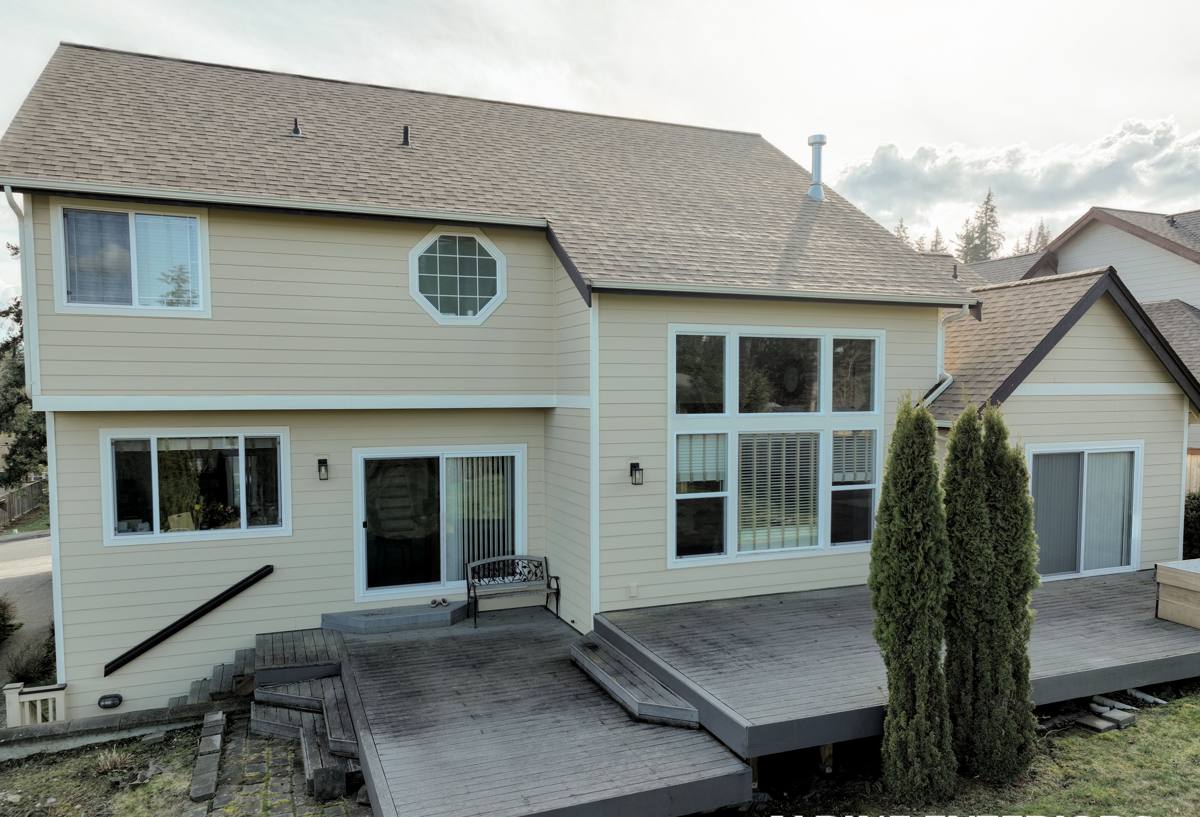
Barkley homes sit in one of Bellingham's more established residential areas, with a mix of newer builds and homes now old enough that their original decks are showing their age. Whatcom County weather is hard on outdoor structures in ways that surprise a lot of homeowners who moved here from drier climates. It's not one dramatic storm that does the damage — it's the steady grind of driving rain most of the fall and winter, salt-tinged air rolling in off Bellingham Bay, and a moss season that can run eight months or longer if a deck sits shaded and damp. A deck built without that reality in mind will look fine for a year or two and then start telling on itself: soft spots, black streaking, fasteners bleeding rust, railings that wobble because the posts never dried out between storms.
We build and rebuild decks for Barkley homeowners with those conditions as the starting assumption, not an afterthought. That changes material choices, framing details, drainage planning, and even where we tell clients to put the grill or the hot tub. This page walks through what actually goes into a deck that's built right for this neighborhood, so you know what to expect and what to ask for.
What Barkley's Microclimate Does to a Deck
Rain Volume and Duration
Bellingham gets a lot of its annual rainfall as long, low-intensity soaking events rather than short downpours. For a deck, that matters more than total inches. Wood and composite surfaces stay wet for hours or days at a stretch, which means end grain, fastener holes, and any spot where water can pool get far more exposure time to do damage than the same rainfall would cause somewhere with quick-drying weather.
Salt Air
Barkley isn't waterfront, but it's close enough to Bellingham Bay that salt-laden air still reaches the neighborhood, especially on windier days. Salt air accelerates corrosion on standard fasteners, hinges, and any exposed metal hardware. It's a slower effect than a dockside property would see, but over a decade it adds up, particularly on lower-grade screws and brackets.
Moss and Shade
Many Barkley lots have mature trees and homes close enough together that decks get partial shade for a good part of the day. Combine that with our wet season and you get ideal moss conditions — moss holds moisture against the deck surface long after the surrounding air has dried, which is one of the leading causes of premature rot and slick, unsafe footing.
What a Correct Deck Build Involves Here
A deck that's actually built for this climate isn't just "more expensive lumber." It's a set of decisions made at every stage of the project.
Site and Drainage Planning
- Grading the ground beneath and around the deck so water moves away from the foundation and footings instead of pooling underneath
- Positioning footings below frost depth and on solid, well-draining soil rather than fill
- Planning gaps between deck boards wide enough for water to shed but tight enough to stay comfortable underfoot
- Accounting for roof runoff or downspouts that may discharge near the deck footprint
Framing Choices
We use pressure-treated framing rated for ground contact where it's within a few inches of soil, and we flash the ledger board where the deck attaches to the house — this is one of the most common failure points on older Bellingham decks, since a poorly flashed ledger lets water track directly into the house's rim joist. Joist tape over the tops of framing members adds another layer of protection where the decking will be screwed down, since that's exactly where standing water likes to sit.
Fasteners and Hardware
Given the salt air, we spec corrosion-resistant fasteners and structural hardware rather than the cheapest option on the shelf. Hot-dip galvanized or stainless connectors cost more up front but they're the difference between hardware that's still solid in fifteen years and hardware that's staining the deck surface with rust within five.
Choosing a Decking Material for Barkley Conditions
There's no single "best" decking material — there's a best fit for your budget, your maintenance appetite, and how much sun or shade your specific lot gets. Here's how the common options actually perform in this climate.
| Material | Moisture Behavior | Moss Resistance | Maintenance | Typical Lifespan |
|---|---|---|---|---|
| Pressure-treated wood | Absorbs and releases moisture readily; needs to fully dry between rains | Low — moss takes hold quickly if shaded | Annual cleaning and re-sealing recommended | 10-15 years with upkeep |
| Cedar | Naturally moisture-resistant, but surface still needs protection | Moderate | Periodic oiling or staining to maintain appearance | 15-20 years with upkeep |
| Composite decking | Doesn't absorb water into the board itself | Moderate to good, depending on surface texture | Occasional washing; no sealing or staining | 25-30 years, manufacturer-dependent |
| PVC/capped composite | Fully sealed surface, minimal water uptake | Good, especially with textured caps | Lowest — soap and water cleaning | 25-30+ years, manufacturer-dependent |
For shaded, moss-prone Barkley lots, we often steer homeowners toward composite or capped composite boards specifically because bare wood in constant shade is fighting an uphill battle against moisture and organic growth no matter how well it's built. That said, plenty of clients want the look and feel of real wood, and cedar built with proper drainage and airflow underneath can still perform well here — it just needs more attention from the homeowner over the years. We'll walk you through the honest trade-offs for your specific lot rather than pushing one material across the board.
Design Decisions That Matter More Here Than Elsewhere
Airflow Under the Deck
A deck built low to the ground with poor ventilation underneath traps moisture and creates the exact dark, damp environment moss and rot prefer. We build in enough clearance and, where the design allows, skirting with vents rather than solid skirting, so air can move beneath the structure.
Sun Exposure and Layout
Where a lot allows any flexibility, orienting the deck to catch more afternoon sun — even partially — measurably reduces how much moss and algae take hold compared to a deck in full shade all day. This isn't always possible given lot size and house placement, but it's worth discussing at the design stage rather than after the deck is built.
Railings and Stairs
Wet, mossy stair treads are a real safety issue in a climate like ours. We detail stair treads and railing posts with the same drainage and fastener standards as the deck field, and we'll talk through slip-resistant surface options if stairs see regular winter use.
Our Process for a Barkley Deck Project
- On-site assessment — we look at sun exposure, existing drainage, soil conditions, and how the deck will tie into your house before recommending anything
- Design and material walkthrough — we go over layout options and material trade-offs specific to your lot, not a generic sales pitch
- Permitting — most new decks and significant rebuilds in the Bellingham area require a permit; we handle that process rather than leaving it to the homeowner
- Framing and structural work — footings, ledger flashing, joists, and hardware installed to the standards outlined above
- Decking, railing, and finish work — surface material installed with proper spacing and fastening, railings and stairs completed and checked
- Final walkthrough — we go over the finished deck with you, including basic maintenance guidance for the material you chose
Maintenance Realities for Whatcom County Decks
Even the best-built deck needs some ongoing attention in this climate. What that looks like depends heavily on material:
- Clear leaves and debris off the deck surface and out of gaps between boards before they trap moisture through the wet months
- Rinse or lightly scrub moss and algae buildup off the surface each spring, before it gets established
- Check fastener heads and hardware periodically for rust staining, especially near the perimeter where salt air exposure is higher
- For wood decking, plan on re-sealing or staining on the schedule your material calls for — skipping a cycle in this climate shows up fast
- Keep gutters and downspouts near the deck clear so runoff isn't dumping extra water onto or under the structure
None of this is difficult, but it does need to actually happen. A deck that's built correctly and then maintained on a reasonable schedule will substantially outlast one that's neglected, regardless of material.
Why a Crew That Already Works in Barkley Matters
A lot of deck problems we get called to fix started with a builder who did solid work somewhere drier and applied the same details here without adjusting for our rain volume, shade patterns, and salt air. Framing details that are optional in a low-rainfall climate — ledger flashing, joist tape, upgraded fasteners, drainage grading — aren't optional here. They're the difference between a deck that needs real repair work at year eight and one that's still solid at year twenty.
Working regularly in Bellingham and around Whatcom County also means we're familiar with local permitting requirements, typical soil conditions in this area, and the specific ways moss, shade, and moisture show up on decks in neighborhoods like Barkley. That's not a substitute for a site visit — every lot is different — but it means we're not guessing at what this climate does to a structure over time.
Cost Factors to Expect
We don't publish fixed pricing because deck cost depends heavily on size, framing complexity, material choice, and site conditions like slope or existing structure removal. In general terms, expect material selection (wood versus composite versus PVC) and overall square footage to be the biggest cost drivers, with railings, stairs, and any built-in features like benches or planters adding to the total. We'll give you a clear, itemized estimate after seeing your site and hearing what you want out of the space — no ballpark guess over the phone that changes once we show up.
Ready to Talk About Your Deck?
If you're planning a new deck for a Barkley home or dealing with an aging deck that's starting to show what our winters do to a structure, we're happy to take a look and give you an honest read on what it needs. Reach out for a free, no-pressure estimate using the form below.