 Bellingham Roofing
 Siding Installation for Barkley Homes
Barkley sits close enough to the water and surrounded by enough mature tree cover that its homes take a specific kind of beating over the years: salt-laden air drifting in off Bellingham Bay, long stretches of driving rain through fall and winter, and a moss season that seems to start earlier and last longer every year. Siding in this neighborhood isn't just a cosmetic layer — it's the one thing standing between that weather pattern and the framing, sheathing, and insulation underneath. When we install siding in Barkley, we're not treating it as a generic Bellingham job. We're building for the specific combination of moisture load and organic growth that this part of Whatcom County produces year after year.
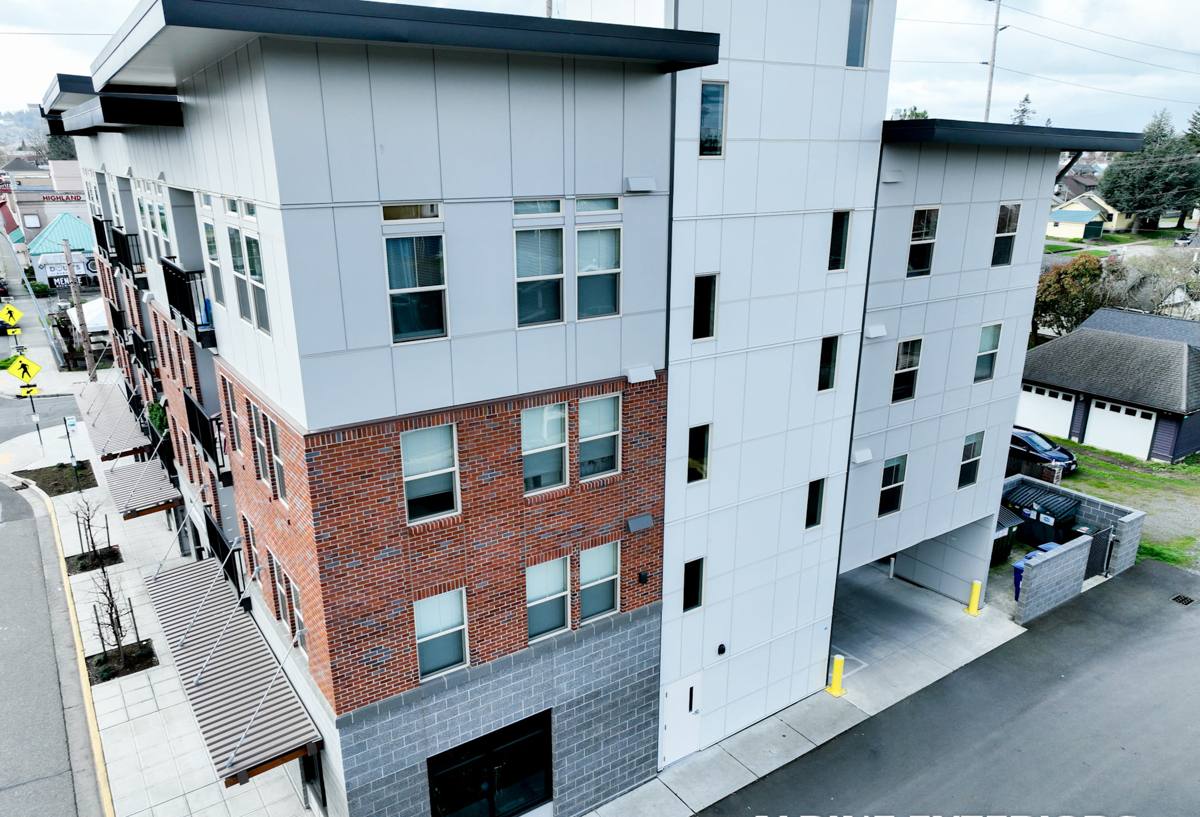
What Barkley's Climate Actually Does to Siding
It helps to be specific about the mechanisms at work, because they're different from what you'd worry about in a drier climate.
Salt Air
Homes closer to the water pick up airborne salt that settles on exterior surfaces and accelerates corrosion of fasteners, flashing, and any metal trim. Over time, salt exposure also breaks down lower-grade paint finishes faster than inland exposure would, leading to chalking, fading, and early repaint cycles on products that weren't engineered to resist it.
Driving Rain
Bellingham's rain doesn't just fall straight down — wind off the water regularly pushes it sideways into wall assemblies. That means seams, laps, and butt joints in siding aren't a minor detail; they're the main line of defense. Any gap, any reverse-lapped seam, any fastener driven at the wrong spot becomes a path for water to get behind the cladding.
Moss and Organic Growth
Shade, moisture, and mild temperatures are exactly what moss, algae, and mildew need to establish themselves on exterior surfaces. Wood-based and wood-adjacent siding products are especially vulnerable because moss holds moisture directly against an absorbent substrate. Once a wall is hosting sustained organic growth, that moisture cycle doesn't stay on the surface — it works its way into seams and fastener holes over time.
What a Correct Siding Installation Involves
A siding job is only as good as what's underneath it and how carefully the details are handled. In Barkley, we treat the following as non-negotiable:
- Full weather-resistive barrier — a continuous, properly lapped water-resistive barrier (WRB) installed shingle-style so every seam sheds water downward, with no gaps at penetrations.
- Correct flashing at every penetration — windows, doors, hose bibs, vents, and any wall-mounted fixture get properly integrated flashing, not just caulk.
- Proper clearances — siding held off decks, patios, and grade by the manufacturer's minimum clearance so splash-back and standing moisture don't wick into the bottom edge.
- Rain screen or drainage gap where called for — a small air gap behind the siding lets incidental moisture drain and the wall assembly dry, rather than trapping water against the sheathing.
- Manufacturer-specified fastening — correct fastener type, spacing, and depth, since over-driven or under-driven fasteners are one of the most common causes of premature siding failure.
- Factory-finished panels installed to spec — cut edges primed or sealed per manufacturer instructions so the factory finish isn't compromised at every joint.
None of this is visible once the job is finished — which is exactly why it matters who's doing the install. A wall can look identical from the street whether it was done right or done fast.
Why We Install Only James Hardie Fiber Cement
We made a deliberate decision to install James Hardie fiber cement siding exclusively, and we don't install vinyl, LP SmartSide, cedar, primed spruce, Cemplank, or Allura. That's not a marketing position — it's a standard we hold because of what we've seen happen to each of those products in exactly this kind of climate.
Fiber cement is non-combustible, dimensionally stable across wet and dry cycles, and doesn't feed the moss and mildew growth the way wood-based products can. James Hardie's ColorPlus factory finish is baked on under controlled conditions, which gives it better resistance to fading and chalking than field-applied paint — a real advantage against Barkley's salt-air exposure. Hardie also engineers regional product lines (HZ5 and HZ10) specifically for climate zones like ours, and backs the product with a strong transferable warranty when it's installed to spec.
We're not saying every other product is unusable everywhere. We're saying that for the specific combination of salt air, driving rain, and moss exposure that Barkley homes deal with, fiber cement from a manufacturer that engineers for this climate is the product we're willing to put our name behind. Everything else asks a homeowner to take on more maintenance risk than we think is fair to sell them.
Siding Options Compared for Barkley's Climate
| Factor | Vinyl | Wood / Engineered Wood | James Hardie Fiber Cement |
|---|---|---|---|
| Moisture behavior | Doesn't absorb, but seams and expansion gaps can let water track behind | Absorbs moisture; prone to swelling and rot if finish is compromised | Dimensionally stable; doesn't absorb or swell with moisture cycles |
| Moss / algae resistance | Surface growth possible, doesn't feed into the material | Vulnerable — organic surface holds moisture against growth | Resists sustained organic growth better than wood-based products |
| Finish durability in salt air | Can chalk and fade; color is through-body but finish degrades | Field-applied paint/stain needs frequent recoating | Factory-baked ColorPlus finish resists fading and chalking |
| Fire resistance | Combustible | Combustible | Non-combustible |
| Typical maintenance cycle | Low, but repairs are visible and hard to color-match | Repaint/reseal every few years | Caulk touch-up and periodic wash; repaint cycle much longer |
This is a general comparison, not a claim that other products fail outright — it's meant to show why the trade-offs stack up differently once salt air and moss are part of the equation.
Our Installation Process
- On-site assessment — we walk the exterior, check existing sheathing and framing condition, note drainage patterns, shade exposure, and any areas already showing moisture or moss damage.
- Tear-off and substrate check — old siding comes off and we inspect sheathing for rot or soft spots before anything new goes up. Any damaged sheathing gets replaced, not covered over.
- Weather barrier and flashing — WRB installed and lapped correctly, with flashing integrated at every window, door, and penetration before siding starts.
- Rain screen setup where appropriate — furring or a manufactured drainage mat installed to give the wall assembly a way to dry.
- Hardie panel or lap installation — installed to manufacturer fastening specs, with correct clearances at grade, decks, and roof lines.
- Trim, caulking, and touch-up — factory-finish touch-up at cut edges and fastener heads so the ColorPlus finish stays consistent.
- Final walkthrough — we go over the finished work with the homeowner and flag anything worth knowing for future maintenance.
Signs Barkley Homeowners Should Watch For
- Moss or dark streaking building up on north-facing or shaded walls
- Soft, spongy, or bubbling siding near ground level or under decks
- Visible gaps opening up at seams, corners, or trim boards
- Paint that's chalking heavily or peeling in sheets rather than wearing evenly
- Rising energy bills that coincide with visible siding deterioration
- Interior stains near exterior walls after heavy wind-driven rain
Any one of these on its own isn't necessarily an emergency, but a couple showing up together is usually a sign the wall assembly is taking on water somewhere it shouldn't.
Why Hiring a Crew That Already Works Barkley Matters
A crew that's worked this specific neighborhood knows which walls take the worst wind-driven rain, which lots hold shade and moisture longer into the day, and which older homes were built with sheathing and detailing that needs extra attention during tear-off. That local pattern recognition changes decisions on the job — where to add extra flashing, where a rain screen gap matters more, where to expect surprises once old siding comes off. It's the difference between a crew following a generic checklist and one that's actually accounting for Barkley's conditions.
What to Expect After Installation
Correctly installed James Hardie siding is low-maintenance, but "low" doesn't mean "none." Expect to occasionally wash down shaded walls where moss or algae tries to establish, keep an eye on caulk lines at trim and penetrations over the years, and address any landscaping that's grown up against the siding and trapping moisture. None of this is heavy upkeep — it's the kind of periodic attention that keeps a well-installed system performing for decades in this climate.
If your Barkley home's siding is showing wear, or you're planning ahead for a replacement, we're happy to walk the property with you and give you an honest read on what's going on — no pressure, no obligation. Reach out below for a free estimate.