 Bellingham Roofing
 Salt Air, Rain, and Moss Take Their Toll on Columbia Decks
Homes in the Columbia neighborhood sit close enough to Bellingham Bay that the marine air is a daily fact of life, not an occasional nuisance. That air carries salt, and salt is hard on the metal fasteners, hardware, and connectors that hold a deck together. Add in the long stretch of wet weather that defines a Whatcom County winter, and you have two forces working against a deck at the same time: corrosion from the air and moisture intrusion from the rain.
Then there's moss. Bellingham's moss season isn't a few weeks — it's most of the year on any deck surface that doesn't get consistent sun and airflow. Moss holds moisture against wood and composite alike, and on a horizontal walking surface it becomes a slip hazard long before it becomes an eyesore. A deck built without this climate in mind will show problems years before a deck built with it in mind.
None of this means Columbia is a bad place to have a deck — it just means the details matter more here than they would in a drier climate. Framing, flashing, fastener choice, and decking material all need to be selected with driving rain and salt exposure as a starting assumption, not an afterthought.
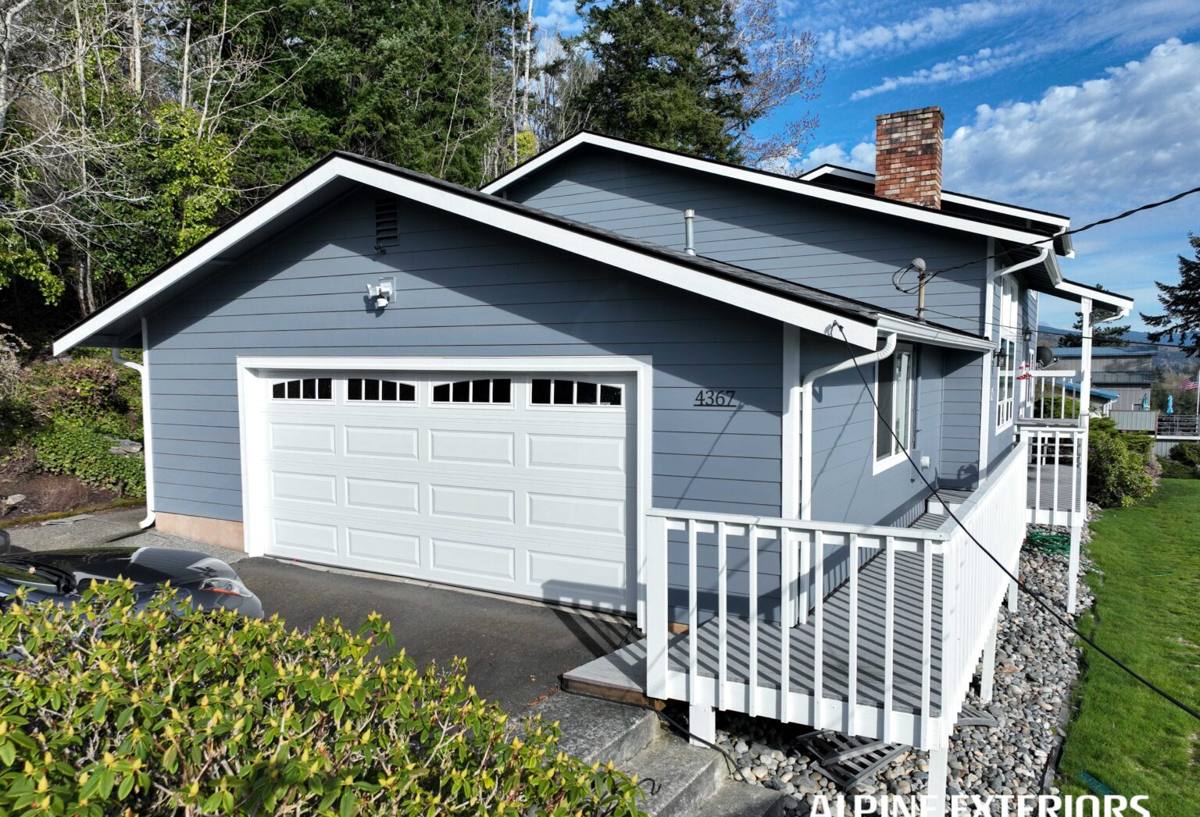
Signs Your Columbia Deck Needs Replacement, Not Another Repair
Not every deck problem calls for a full replacement. A cracked board, a loose baluster, or a stain job overdue by a couple of years can often be repaired. But once the structure itself is compromised, patching becomes a temporary fix that costs money without solving anything. Here's what tells us a deck has crossed that line:
- Boards that feel soft, spongy, or springy underfoot, especially near the house or in shaded corners
- Visible gaps, dark staining, or separation where the deck meets the ledger board on the house
- Rust streaks bleeding out from screw or bolt heads, a sign the fasteners themselves are failing
- Moss or algae that regrows within weeks of cleaning, no matter how often it's scrubbed
- Railings or stair stringers that flex, wobble, or feel less solid than they used to
- Joists or posts that a screwdriver can sink into without much resistance — a clear sign of rot
- A deck built decades ago under older framing standards, with undersized joists or missing structural hardware
If you're only seeing one or two of these, a repair may still make sense. If you're seeing several at once, especially anything involving the ledger connection or the framing underneath, replacement is usually the more honest recommendation — and the one that avoids paying twice.
What a Correct Deck Replacement Actually Involves
A deck replacement done right is a structural project, not a cosmetic one. The decking boards you walk on are the last thing installed and the least important part of whether the deck lasts. What happens underneath is what determines whether it holds up through another twenty Whatcom County winters.
Removing the Old Structure Down to What's Sound
We take the old deck apart down to the framing, and often down to the posts and footings, so we can see exactly what condition the structure is in. This is also when hidden problems — rot at the ledger, undersized joists, missing hardware — get found and addressed instead of built over.
Ledger Attachment and Flashing
The ledger board, where the deck attaches to the house, is the single most common failure point on any deck in a wet climate, and it's also the point where a poorly built deck can cause water damage to the house itself. Correct flashing detail here — installed so water sheds away from the house rather than behind the ledger — matters more in a climate with our rainfall totals than almost anything else in the build.
Footings, Posts, and Beams Built for Wet Ground
Footings need to be sized and set below frost depth with proper drainage around them, since standing water at the base of a post is what starts rot from the ground up. Posts and beams get rated hardware and connectors chosen for exterior, corrosion-prone conditions rather than standard interior-grade fasteners.
Joist Spacing and Structural Hardware
Joist spacing gets set to match the decking material going on top of it — composite and PVC products often call for tighter spacing than solid wood — and every connection uses structural screws or bolts and rated joist hangers, not just nails driven in by hand.
Decking Material Choices for a Columbia Home
There's no single "best" decking material — there's a best fit for your budget, your maintenance appetite, and how much direct weather exposure your particular deck gets. Here's how the common options actually perform in our climate:
| Material | Upfront Cost | Maintenance in Our Climate | Typical Lifespan |
|---|---|---|---|
| Pressure-treated wood | Lowest | Annual cleaning and re-staining/sealing to fight moss and moisture | 10–15 years |
| Cedar | Moderate | Regular sealing; naturally more rot-resistant but still needs upkeep against moss | 15–20 years |
| Composite | Higher | Occasional washing; resists rot but still needs moss cleared from grain texture | 25–30 years |
| PVC / vinyl decking | Highest | Lowest of all options; sheds moisture and doesn't feed rot | 25–30+ years |
Wood costs less to install but asks more of you every year in a climate this wet — skipping a season of sealing shows up fast. Composite and PVC cost more upfront but hold up with far less attention, which is why we see more homeowners in wetter parts of the county moving that direction for a full replacement rather than a repair. We'll walk through the honest trade-offs for your specific deck rather than pushing one material across the board.
Our Deck Replacement Process
- On-site assessment — we inspect the existing deck, ledger, and framing to confirm replacement is the right call and identify any hidden issues
- Design and material selection — we go over layout, decking material, and railing options based on your budget and how the deck gets used
- Permitting — we handle the paperwork with the local building department so the job is inspected and legal, not something that comes back to bite you at resale
- Demolition — the old structure comes down, with debris hauled off and the site protected
- Framing and flashing — new footings, posts, beams, joists, and ledger flashing go in to code, built for our wet climate specifically
- Decking, railing, and stairs — the surface material and railings you selected are installed, along with any stairs
- Final walkthrough — we go over the finished deck together before calling the job done
Railings, Stairs, and Building Code
Guardrail height, baluster spacing, and stair rise-and-run are all governed by building code, and inspectors in this area check them closely — for good reason, since these are the details that actually prevent falls. A deck replacement is also the right time to correct any of these if your old deck predates current code, since bringing it up to standard now is far cheaper than doing it later as a standalone fix. We handle the permit and inspection process as part of the job, so you're not left figuring out Bellingham's requirements on your own.
What Deck Replacement Costs — and What Drives the Price
Every deck is different, so we won't quote a number without seeing the site, but these are the factors that move the price up or down on most projects:
| Factor | How It Affects Price |
|---|---|
| Deck size and shape | More square footage and complex angles mean more material and labor |
| Decking material | Pressure-treated wood costs least upfront; composite and PVC cost more but need less upkeep |
| Height and stairs | Elevated decks with stairs require more framing, footings, and railing than a low, ground-level deck |
| Ledger or house damage | Rot found at the ledger connection may require repair to the house structure itself, not just the deck |
| Railing style | Cable, glass, and custom railing systems cost more than standard baluster railings |
| Permit and engineering | Larger or unusually configured decks may need engineered plans, which adds to the cost but ensures it's built to hold |
The honest answer to "what will this cost" only comes after we've looked at the deck in person. Anyone quoting a firm number sight unseen is guessing.
Why It Matters to Hire a Crew That Already Works in Columbia
A contractor who works regularly in this part of Bellingham has already seen how the local conditions play out on real decks — which framing details hold up to our rain year after year, which fastener choices actually resist the salt air, and where moss tends to take hold fastest based on sun exposure and airflow. That familiarity means fewer surprises during the project and a deck that's built with this specific climate in mind from the first footing to the last board, rather than a generic build dropped into a Whatcom County backyard.
It also means a crew that's already familiar with the local permitting process and inspection expectations, which keeps the project moving instead of stalling on paperwork neither of you anticipated.
If your deck in Columbia is showing its age, we're happy to take a look and give you a straight answer on whether it needs replacing or just some targeted repair — no pressure, no hard sell. Fill out the form below to schedule a free estimate.