 Bellingham Roofing
 Windows Built for Birchwood's Weather, Not a Showroom in Phoenix
Birchwood sits close enough to the water and the lowland fog belt that its houses take a different kind of beating than homes twenty miles inland. Salt-laden air off the Sound corrodes cheap hardware and fasteners faster than most manufacturers' warranty language accounts for. Driving rain off winter storms tests every seal, flashing detail, and sill pan on a window install. And the long stretch of gray, wet months each year keeps wood trim and sills damp for weeks at a time, which is exactly the environment moss, algae, and slow rot problems love. A window that performs great in a lab or in a dry-climate showroom can still fail here in five years if it wasn't installed with this specific climate in mind.
We install energy-efficient windows across Bellingham and Whatcom County, and Birchwood jobs get the same standard: correct flashing sequence, proper drainage behind the window, and hardware rated for a marine-influenced climate. This page covers what that actually looks like, not just a list of window brands.
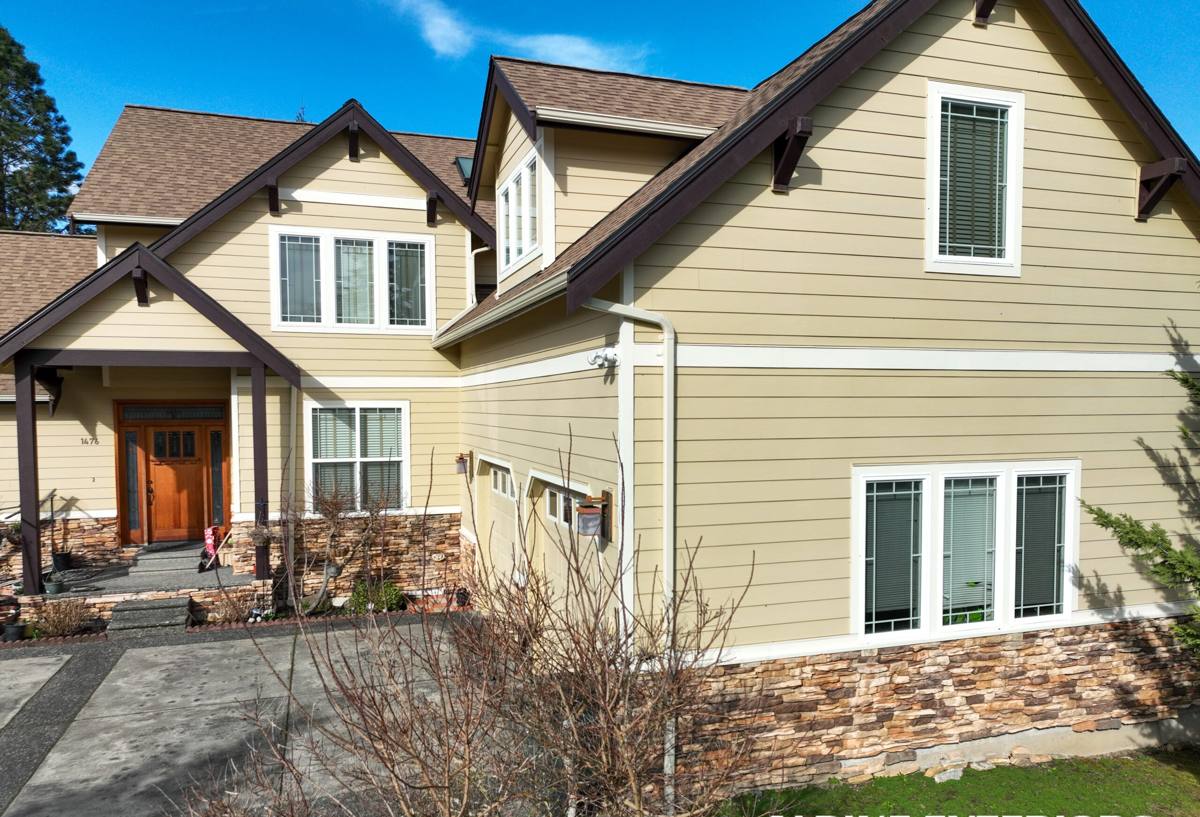
What "Energy-Efficient" Actually Means Here
In this region, energy efficiency isn't just about a U-factor sticker. It's about how a window handles moisture, wind-driven rain, and temperature swings between a cold, damp exterior and a heated interior — day after day, month after month.
The Numbers That Matter
- U-Factor — how well the window resists heat loss. Lower is better for our heating-dominant climate. This is the single most important number for a Whatcom County home.
- Solar Heat Gain Coefficient (SHGC) — how much solar heat passes through. Bellingham doesn't get intense direct sun most of the year, so this matters less here than it would in a sunnier region, but it's still worth checking on south- and west-facing rooms.
- Air Leakage (AL) — how much air sneaks through the frame and sash. Lower numbers matter a lot with our steady wind and driving rain, since air leaks and water leaks often travel the same path.
- Condensation Resistance — a measure that doesn't get talked about enough locally. With our damp winters and heated interiors, poorly rated windows fog and sweat, which feeds the mold and window-sill rot problems we see in older Birchwood homes.
Look for windows carrying NFRC ratings appropriate for the Pacific Northwest, and don't assume a window that's efficient in a dry climate performs the same way here.
Frame Materials: What Holds Up in Salt Air and Moss Season
| Frame Material | How It Handles Our Climate | Maintenance |
|---|---|---|
| Vinyl | Good moisture resistance, no corrosion risk from salt air, budget-friendly | Low — occasional cleaning |
| Fiberglass | Excellent dimensional stability in temperature/humidity swings, very durable against rain exposure | Low |
| Aluminum | Strong but prone to corrosion in salt air unless properly coated; can conduct cold and contribute to condensation | Moderate — coating wears over time |
| Wood | Attractive but highest risk in our climate — prolonged dampness and moss/algae growth accelerate rot without diligent upkeep | High |
| Wood-Clad | Wood interior with a protective exterior cladding; better rain resistance than solid wood, still needs attention at joints and sills | Moderate |
We don't refuse to install any particular frame material, but we'll tell you honestly where each one is going to give you trouble in a Birchwood setting — especially anything low on the property, shaded, or exposed to prevailing wind and rain. Solid wood frames aren't wrong, they just come with a maintenance commitment that not every homeowner wants to sign up for.
Why Installation Quality Matters More Than the Window Itself
A high-efficiency window installed poorly will leak, fail early, and lose most of its energy benefit. We see this more than homeowners expect: the window itself is fine, but the flashing, sealant, or drainage behind it was done wrong, and water finds its way into the wall assembly over a wet Bellingham winter.
What a Correct Installation Includes
- Removing old windows carefully to inspect the rough opening for hidden rot or water damage before anything new goes in
- Installing a sloped sill pan so any water that gets past the window sheds outward, not into the wall
- Proper flashing sequence — housewrap, flashing tape, and window flange layered so water always sheds downward and outward, shingle-style
- Sealing and insulating the gap between the window frame and rough opening without over-packing it, which can bow the frame and cause it to operate poorly
- Exterior caulking and trim work sized correctly for wind-driven rain, not just a light bead of sealant
- Checking that the window operates smoothly and seals tight before we call the job done
This sequence isn't unique to us — it's the standard for correct window installation anywhere with significant rain exposure. What we can tell you is that we follow it every time, on every window, because skipping steps here is exactly how a five-year-old window install starts leaking.
Common Problems We Find on Older Birchwood Homes
When we're called out to look at failing windows in the area, a handful of issues come up repeatedly:
- Sill rot from years of trapped moisture — often from missing or failed sill pan flashing on the original install
- Fogged double-pane glass — the seal between panes has failed and moisture is trapped inside the glass unit; this isn't repairable and means the glass (or window) needs replacement
- Moss and algae staining on sills and trim — cosmetic on its own, but a sign that the area stays damp longer than it should, which speeds up wood decay nearby
- Drafts around the frame — usually failed weatherstripping or a frame that's shifted slightly out of square over time
- Condensation on the interior glass — common with older single-pane or poorly rated windows once the heat is running against our cold, damp winters
None of these are unusual for the age and climate of homes in this part of Whatcom County. They're also all reasons to get a straight opinion on whether a window needs replacing or just better maintenance.
Our Process for a Birchwood Window Project
1. On-Site Assessment
We walk the exterior and interior of each window being considered, checking for existing rot, drainage issues, and how exposed each opening is to wind and rain. Not every window on a house needs the same solution.
2. Straightforward Recommendations
We'll tell you which windows genuinely need replacement, which could be repaired, and which frame and glass options make sense for your budget and exposure — without pushing the most expensive option if it's not necessary.
3. Correct Installation
Every install follows the flashing and drainage sequence described above, regardless of window brand or price point. This is non-negotiable on our jobs because it's the difference between a window that lasts and one that doesn't.
4. Final Walkthrough
We check operation, seals, and exterior finish work with you before considering the job complete.
Cost Factors for Birchwood Homeowners
| Factor | Why It Affects Price |
|---|---|
| Frame material | Vinyl is typically the most budget-friendly; fiberglass and wood-clad cost more upfront but differ in longevity and upkeep |
| Number of windows | Whole-house replacement usually comes with a better per-window rate than one-off replacements |
| Existing damage | Rot or water damage found in the rough opening during removal adds repair work before the new window goes in |
| Window size and type | Larger units, custom shapes, or operable styles (casement vs. slider) vary in cost |
| Exposure | Windows facing prevailing wind and rain may warrant higher-spec flashing or trim details |
We give honest, itemized estimates rather than a vague ballpark, so you know exactly what you're paying for and why.
Why Hire a Crew That Already Works in Birchwood
A contractor who works this specific pocket of Bellingham regularly already understands how the local moisture patterns, salt exposure, and moss growth behave against different house styles and ages here. That's not something you get from a crew that mostly works dry inland climates or does a handful of PNW jobs a year. We know what to check for in a rough opening on an older home in this area, and we know the flashing details that actually hold up through a full Whatcom County winter — not just what looks fine the day the job wraps up.
Local also means accountability. If a question comes up after the install, or you want a seal checked before the next storm season, we're not a call center — we're the same crew that did the work.
Ready for a Straight Answer on Your Windows?
If you're dealing with drafty, foggy, or water-stained windows in Birchwood, we're happy to take a look and give you a clear, no-pressure assessment of what's actually needed. Use the form below to request a free estimate, and we'll walk you through your options in plain terms.