 Bellingham Roofing
 Board & Batten in a Waterfront Neighborhood
Fairhaven's mix of older homes and newer infill sits close enough to Bellingham Bay that the siding on these houses works harder than siding a few miles inland. Board and batten has always suited this neighborhood's character — the vertical lines read as craftsman, farmhouse, or historic coastal depending on the trim and color, and it's a natural fit for the mix of architectural styles you find walking from the flats up toward the hillside streets. But the same waterfront setting that makes the style look right is also what makes the wrong siding material fail early here.
This page is specifically about board and batten siding installed on homes in Fairhaven and the surrounding Bellingham waterfront area, using the one material we install on every job: James Hardie fiber cement. We're not going to give you a generic rundown of board and batten in the abstract — we're going to walk through what this profile needs to hold up against salt air, driving rain off the bay, and a moss season that runs longer here than it does even twenty minutes inland.
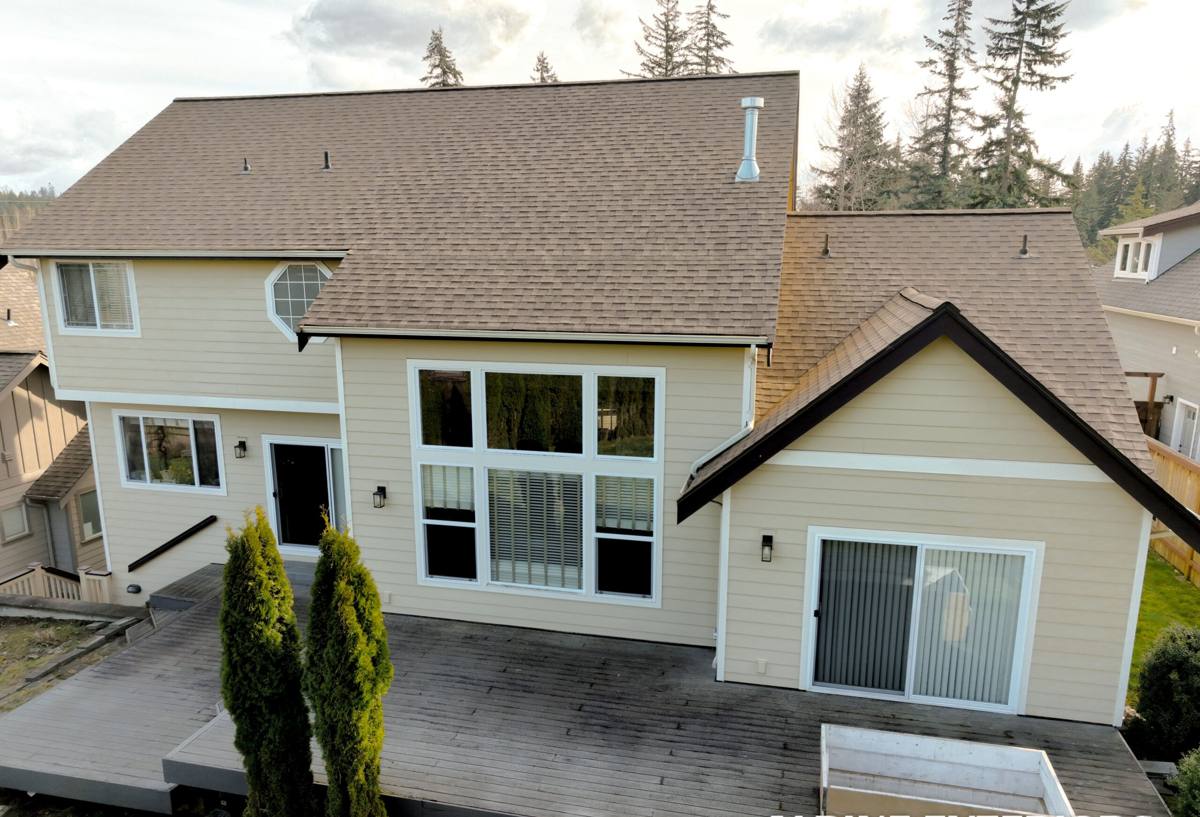
What Bellingham Bay's Climate Actually Does to Vertical Siding
Salt Air and Corrosion
Homes within a mile or so of Bellingham Bay deal with airborne salt that settles on siding, trim, and especially fasteners. Over years, that salt exposure accelerates corrosion on anything less than a properly rated fastener, and it degrades paint films faster than the same product would wear inland. Board and batten has more exposed vertical seams and more face-nailing than lap siding, which means more opportunities for a corroding fastener to telegraph a rust streak or work itself loose.
Driving Rain
Whatcom County storms coming off the Salish Sea don't just fall — they drive sideways against west- and southwest-facing walls. Board and batten relies on the vertical battens to shed water down and away from the seams between boards. If those seams, the flashing above openings, or the water-resistive barrier behind the siding aren't detailed correctly, wind-driven rain finds its way behind the cladding instead of running off it.
A Long Moss Season
Bellingham's damp, mild winters and shaded lots (common on older Fairhaven parcels with mature trees) keep siding wet for extended stretches, which is exactly what moss and algae need to take hold. Vertical battens create horizontal ledges and shadow lines where organic growth likes to start, particularly on north-facing walls that never fully dry out between rain events.
Why We Only Install James Hardie, Not the Alternatives
Board and batten is available in several materials — vinyl, engineered wood, primed spruce, cedar, and fiber cement among them. We install exclusively James Hardie fiber cement, and in a climate like this one, the reasoning isn't marketing — it's what actually survives.
Wood-based battens and boards, whether cedar or engineered wood, are more vulnerable to moisture absorption at cut ends and seams, which in this climate means a shorter clock before repainting, caulking, or replacement becomes necessary. Vinyl board and batten can look the part from a distance, but it moves with temperature swings, can't take the same paint or stain flexibility Hardie's ColorPlus finish offers, and doesn't have the mass to resist wind-driven rain intrusion at the seams the way fiber cement does. James Hardie's fiber cement formulation is non-combustible, dimensionally stable once installed, and engineered specifically for wet climate zones — the HZ5 product line used in the Pacific Northwest accounts for exactly the moisture cycling this region produces.
None of this means other materials are without merit for other applications or other climates. It means that for the specific combination of salt air, driving rain, and moss pressure that Fairhaven homes face, we've standardized on the one material we're confident will still look and perform correctly a decade or two out.
What a Correct Board & Batten Installation Involves
Board and batten is less forgiving of shortcuts than lap siding, because every seam is a potential water path and every batten is a fastening point through the field of the wall, not just the bottom edge. A correct install here includes:
- A weather-resistive barrier installed and lapped correctly behind the siding, with all penetrations sealed before the first board goes up
- A rainscreen gap (furring strips or a drainage mat) behind the cladding so any moisture that does get past the surface can drain and the wall can dry
- Correct board spacing and batten placement per James Hardie's published fastening schedule, not a generalized "close enough" layout
- Stainless steel or hot-dip galvanized fasteners rated for coastal exposure — a real requirement here, not an upsell
- Flashing at every window head, sill, and any horizontal trim transition, installed to shed water outward rather than relying on caulk alone
- Factory-applied ColorPlus finish preserved through careful handling, with any field-cut edges sealed per manufacturer spec
Skipping any one of these doesn't usually cause an obvious problem in year one. It shows up in year five or eight as a soft spot at a butt joint, a rust bleed at a fastener, or moss establishing itself in a seam that never had a chance to dry.
Mistakes We See on Existing Fairhaven Homes
When we're called out to look at failing board and batten on an older Fairhaven home, the pattern is usually the same: no rainscreen gap behind the original siding, standard fasteners that have corroded from salt exposure, or flashing that was skipped above a window because the trim "looked fine" without it. These aren't installer incompetence so much as shortcuts that don't show consequences right away — which is exactly why they're common and exactly why they matter.
Our Process
We start with a walk-through of the exterior, checking existing siding condition, trim, window flashing, and any moisture damage at grade or around penetrations before we ever talk about new siding. From there:
- We assess the wall assembly — what's there now, what condition the sheathing is in, and whether a rainscreen needs to be added or upgraded
- We put together a scope and estimate specific to the elevation exposures on your home, since a south-facing wall in full sun and a shaded north wall near mature trees don't need identical treatment
- We handle tear-off, barrier and flashing work, and rainscreen installation before a single Hardie board goes up
- We install the board and batten system to James Hardie's fastening and clearance specifications, including proper ground clearance and roof-line clearances that matter in a wet climate
- We walk the finished job with you before calling it complete
Cost Factors for Fairhaven Board & Batten Projects
Board and batten pricing depends on more than square footage. The table below covers the variables that actually move the number on a Fairhaven job.
| Factor | Why It Matters Here |
|---|---|
| Existing siding removal | Older Fairhaven homes may have multiple layers or hidden moisture damage that adds scope once uncovered |
| Rainscreen addition | Homes without a drainage gap need furring or matting added, which affects labor and window/trim buildout |
| Wall height and access | Multi-story homes on sloped Fairhaven lots often require more staging and safety setup |
| Trim and window count | Every opening needs correct flashing detail, so more windows and trim transitions mean more flashing labor |
| Color and finish | Factory ColorPlus finishes cost more upfront than field paint but remove a recurring maintenance expense |
| Fastener spec | Coastal-rated fasteners cost more than standard ones but are not optional this close to the bay |
Maintaining Board & Batten Through Bellingham's Wet Season
Fiber cement board and batten is low-maintenance relative to wood, but "low" isn't "none," especially with the moss pressure common around Bellingham Bay. A simple seasonal routine keeps a correctly installed system performing the way it should:
- Rinse siding annually, focusing on shaded and north-facing walls where moss establishes first
- Keep gutters clear so overflow doesn't run down the face of the siding and hold moisture at seams
- Trim back vegetation and tree cover that keeps a wall shaded and slow to dry
- Check caulking at trim transitions every year or two, since caulk is a maintenance item even on a well-flashed wall
- Watch for any fastener staining, which can indicate a fastener that isn't rated for the exposure
Why Hiring a Crew That Already Works Fairhaven Matters
Board and batten detailing changes based on wall exposure, and exposure in Fairhaven is not the same as exposure twenty minutes inland in Whatcom County. A crew that already works this neighborhood knows which elevations take the worst of the driving rain, which lots hold moisture longest, and how much of a role salt air plays in fastener selection before the first board ever goes up. That's the difference between a board and batten installation that looks right at completion and one that's still performing correctly in year fifteen.
If you're considering board and batten siding for a home in Fairhaven, we're happy to walk the exterior with you and put together a straightforward, no-pressure estimate — just fill out the form below.