 Bellingham Roofing
 Why Fairhaven's Location Changes What a Window Has to Do
Fairhaven sits close enough to the water that homes here deal with a different set of stresses than houses further inland in Whatcom County. Salt-laden air moves through the neighborhood off Bellingham Bay, driving rain comes in sideways during winter storms, and the damp, shaded months that follow bring on moss and mildew that cling to anything that stays wet too long. Windows are one of the first things on a house to show the wear from all of that. A window that would last three decades in a dry inland climate can start failing in half that time here if it wasn't built, sealed, and flashed for coastal conditions in the first place.
Custom windows aren't just about matching an odd-sized opening or getting a specific look. For a Fairhaven home, "custom" also means choosing materials, glazing, and installation details that are actually suited to salt exposure and near-constant moisture — not just whatever is fastest to order.
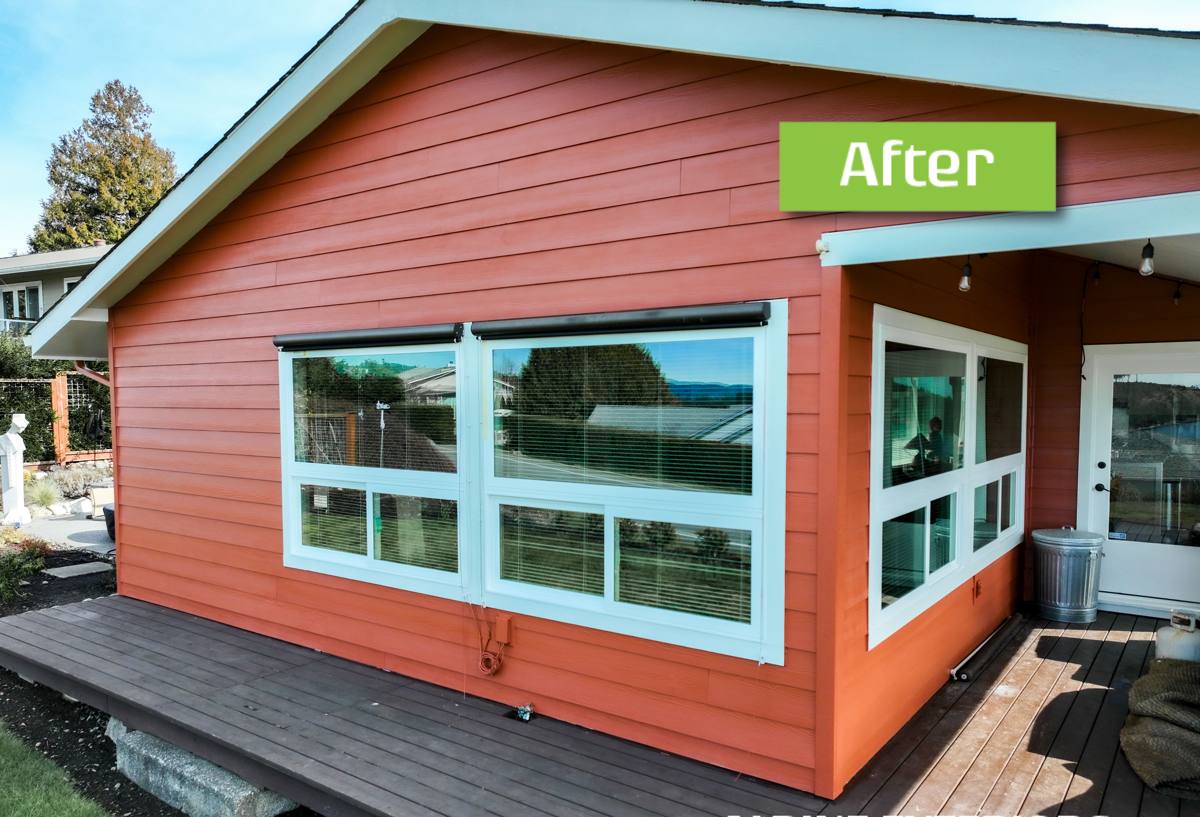
Signs Your Current Windows Are Losing the Fight
Before talking about replacement, it's worth knowing what coastal wear actually looks like, because it's often subtle at first.
- Fogging or a hazy film between panes of double-glazed glass — a sign the seal has failed and moisture has gotten into the airspace
- Soft or discolored wood at the sill or bottom corners of the frame, especially on windows facing prevailing weather
- Visible pitting, chalking, or corrosion on aluminum frames or hardware
- Persistent black or green streaking on the frame or nearby siding, even after cleaning
- Drafts or a noticeable temperature difference near the window on windy days
- Paint or finish that keeps failing in the same spot no matter how often it's touched up
- Difficulty opening, closing, or locking a window that used to operate smoothly
Any one of these on its own might just mean a repair. Several at once, especially on the weather-facing side of the house, usually means the window assembly itself is losing the battle with the climate and a repair will only buy a little time.
What "Custom" Actually Means for a Home Like Yours
Matching the House, Not Just the Opening
Fairhaven has a mix of older homes with original character and newer construction, and window replacement should respect what's already there. Custom sizing means we build or order to your exact rough openings rather than forcing a standard size and patching the gaps — which is one of the more common ways water finds its way into a wall assembly. Custom also covers grid patterns, trim profiles, and hardware finishes that match the age and style of the house instead of looking bolted on.
Matching the Exposure, Not Just the Style
The side of a house that takes direct wind and rain off the water needs different glazing and sealing detail than a sheltered side wall. We look at which elevations get hit hardest and specify accordingly — better weatherstripping, a higher-performance glass package, or additional flashing detail where it will actually earn its keep, rather than spending the same on every opening regardless of exposure.
Frame and Glass Materials for Salt Air and Wet Winters
There's no single "best" window material for every home — the right choice depends on your budget, your home's style, and how exposed a given wall is. Here's how the common options generally hold up in a Bellingham coastal environment:
| Material | Coastal Durability | Maintenance | Notes |
|---|---|---|---|
| Vinyl | Good | Low | Won't corrode or rot; a solid, budget-friendly default for most openings |
| Fiberglass | Very good | Low | Dimensionally stable in temperature swings, holds paint well, higher upfront cost |
| Wood (clad exterior) | Good if maintained | Moderate to high | Classic look for older Fairhaven homes; the exterior cladding does the weather-fighting, but interior wood still needs periodic attention |
| Aluminum | Fair | Moderate | Strong and slim-profile, but bare aluminum is more prone to salt-driven corrosion without a quality factory finish |
| Solid wood (unclad) | Poor in direct exposure | High | We generally steer this toward sheltered elevations only — direct salt spray and driving rain are hard on unprotected wood over time |
On glass, a dual-pane unit with a quality low-E coating and an argon fill is the standard we recommend for most Fairhaven homes — it manages condensation better and helps with both winter heat loss and summer glare off the water. For openings that take the worst of the weather, we'll sometimes discuss upgraded seal systems or impact-rated glass, but that's a conversation specific to your home, not something we push as a blanket upsell.
Our Installation Process
1. On-Site Assessment
We start by walking the house, checking existing window condition, looking at framing and sill health behind the trim where we can, and noting which elevations take the worst weather. This is also where we talk through your priorities — energy performance, appearance, budget, or all three.
2. Measuring and Ordering
Custom units are measured precisely to each opening. We don't reuse a single measurement across "matching" windows, because settling and age mean openings on the same house are rarely identical.
3. Removal Without Collateral Damage
Old windows come out carefully, with attention to protecting interior trim, siding, and finished surfaces. If we find rot or moisture damage in the framing once the old unit is out — which isn't unusual on a coastal home — we'll show you what we found and talk through the repair before moving forward, rather than covering it up.
4. Flashing and Weatherproofing
This is the step that matters most for long-term performance and the one most often rushed elsewhere. Proper flashing tape, a correctly lapped weather-resistant barrier, and sill pan flashing where called for are what actually keep wind-driven rain from getting behind the window and into the wall. We treat this as non-negotiable, not optional.
5. Setting, Shimming, and Sealing
The window gets shimmed level and plumb, fastened per the manufacturer's specification, and sealed with an exterior-grade sealant rated for the coastal exposure it'll see. A window installed slightly out of square will bind, leak, or fail its seals early — precision here is what separates a durable install from one that needs attention again in a few years.
6. Trim, Cleanup, and Walkthrough
Interior and exterior trim is finished to match your home, the work area is cleaned up, and we walk the job with you so you know how to operate and maintain the new windows before we consider the job done.
The Details That Prevent Future Callbacks
Most window failures we get called out to inspect on older installs trace back to the same handful of shortcuts: missing or improperly lapped flashing, gaps left in the weather barrier, sealant applied over dirty or wet surfaces, or a unit that was never properly shimmed square. None of these are visible once trim goes back on, which is exactly why they cause problems years later instead of on install day. Doing this correctly the first time costs a little more attention up front and saves a homeowner from water damage, mold, or a premature second replacement down the road.
What Affects the Cost
Every home is different, so we don't quote sight unseen, but these are the main factors that move the price on a custom window project:
| Factor | How It Affects Cost |
|---|---|
| Frame material | Vinyl is typically the most affordable; fiberglass and clad wood cost more upfront |
| Glass package | Standard dual-pane vs. upgraded low-E coatings or impact-rated glass |
| Opening condition | Rot or framing repair discovered during removal adds labor and material |
| Number of openings | Whole-house projects often see better per-unit pricing than single replacements |
| Custom shapes or sizes | Non-standard geometry (arched, oversized, odd angles) costs more than stock sizing |
| Trim and finish work | Matching existing historic trim profiles adds labor beyond a basic install |
We'll always walk you through where your specific budget is going rather than handing over a number with no explanation.
Keeping Coastal Windows Performing Long-Term
Even a well-installed window needs a bit of ongoing attention in this climate. A short seasonal routine goes a long way:
- Rinse frames and sills periodically to clear salt residue before it sits and does its work
- Check and clear weep holes so water can drain out instead of pooling in the frame
- Inspect exterior caulking and sealant once a year, and touch up before winter storm season
- Wipe down and dry sills after heavy rain events where water tends to collect
- Watch for early moss or algae growth on north-facing or shaded windows and clean it off before it spreads
- Test that locks and operating hardware still move freely, since corrosion can creep in quietly on hardware before it's visible on the frame
Why Working With a Crew That Already Knows Fairhaven Matters
A lot of window problems on the coast aren't caused by a bad product — they're caused by an install that wasn't detailed for the exposure the home actually gets. A crew that works regularly in Bellingham and around Whatcom County has already seen how salt air, driving rain, and the long moss season play out on real houses, and builds that experience into every step, from material recommendations down to how the flashing gets lapped. That's the difference between windows that need attention again in a few years and windows that quietly do their job for decades.
If your Fairhaven home has windows showing their age, or you're planning a renovation and want windows built and installed for the conditions this neighborhood actually sees, we're happy to take a look and talk through honest options. Reach out for a free, no-pressure estimate using the form below.