 Bellingham Roofing
 Building Decks for Happy Valley's Climate and Terrain
Happy Valley sits close enough to Bellingham Bay that salt-laden air reaches the neighborhood on a regular basis, and its sloped, wooded lots create their own set of building challenges. A deck built here needs to handle three things at once: corrosive marine air, driving rain that comes in sideways off the water during winter storms, and a moss season that can stretch from October through May in shaded, wet corners of Whatcom County. A deck design that works fine in a dry inland climate can start failing within a few years out here if it wasn't built with these conditions in mind.
We've built and repaired decks throughout this part of Bellingham long enough to know which shortcuts show up as callbacks two winters later. This page walks through what actually matters for a deck in Happy Valley — not generic deck-building advice, but the specific choices that hold up against this neighborhood's weather and terrain.
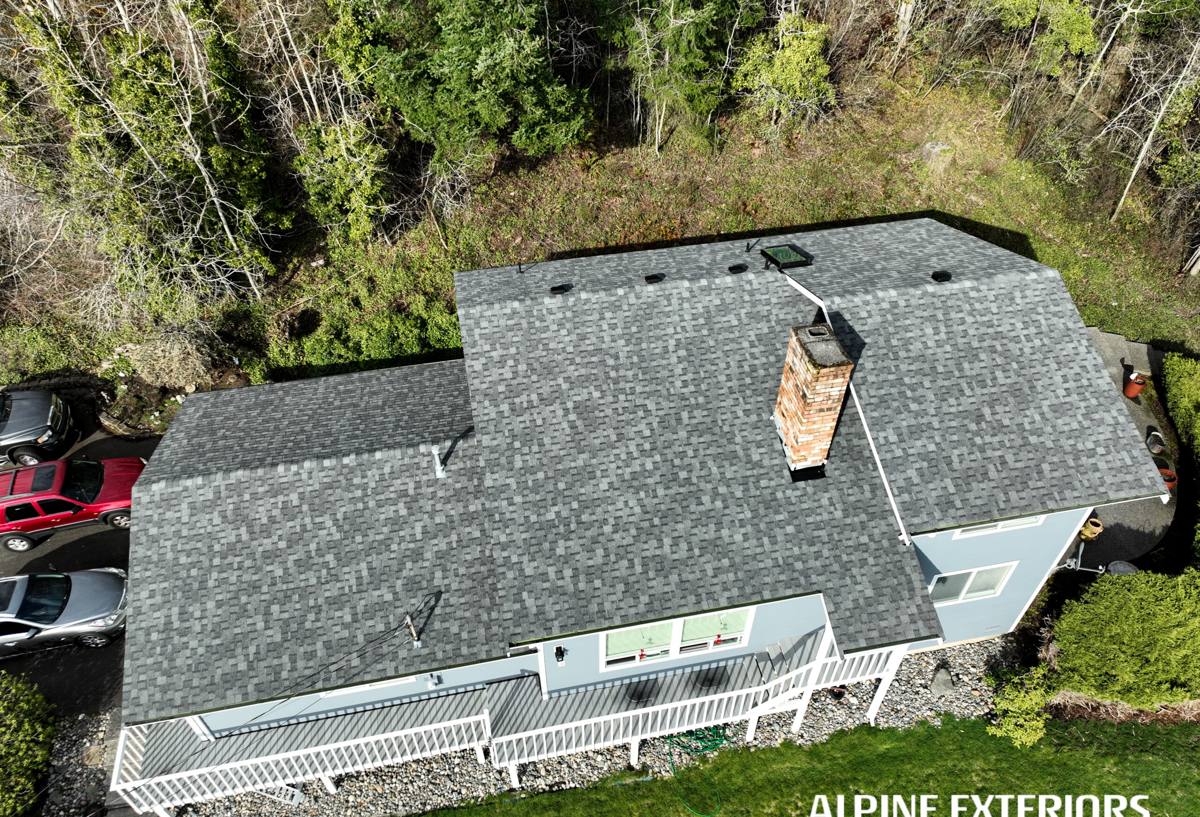
What Happens When a Deck Isn't Built for This Environment
Most deck problems we get called out for aren't dramatic structural failures — they're slow, quiet damage that adds up. Understanding the failure pattern helps explain why certain build choices matter more here than they would elsewhere.
Corrosion at the connection points
Standard galvanized fasteners and hardware can start showing rust within a few seasons when they're exposed to salt-influenced air, especially on decks with any western or water-facing exposure. Once a fastener corrodes, it loses holding strength long before it looks obviously bad — the deck can seem solid right up until it isn't.
Moisture trapped where you can't see it
The ledger board — the piece that attaches the deck to the house — is the single most common source of hidden rot. If it isn't properly flashed and separated from the house's water-resistive barrier, rain that runs down the siding gets channeled straight into the framing behind it. This kind of damage is invisible until the deck starts to feel spongy or a railing post loosens.
Moss, algae, and slick surfaces
Shaded lots with tree cover, combined with Bellingham's long wet season, give moss and algae exactly the conditions they need: standing moisture and low sunlight. Beyond looking bad, a mossy deck surface is a genuine slip hazard, and moss holds moisture against the decking material, accelerating rot in wood and staining in lighter-colored composites.
Choosing Decking Material for This Neighborhood
There's no single "best" decking material — the right choice depends on your budget, how much upkeep you're willing to do, and how exposed your lot is to wind-driven rain and shade. Here's how the common options actually compare for a Happy Valley build.
| Material | Upfront Cost | Moisture Behavior | Moss/Algae Resistance | Maintenance |
|---|---|---|---|---|
| Pressure-treated wood | Lowest | Good if sealed and gapped correctly; prone to cupping if neglected | Moderate — needs regular cleaning | Annual cleaning and re-sealing |
| Cedar | Moderate | Naturally moisture-resistant but still needs finish protection | Moderate to good | Periodic staining/sealing to maintain appearance |
| Composite | Higher | Very good — won't rot or absorb water | Good, though surface film can still grow on shaded boards | Occasional washing, no sealing or staining |
| PVC/capped polymer | Highest | Excellent — fully sealed surface | Best of the group | Lowest — soap and water as needed |
We'll walk you through this trade-off honestly rather than pushing whatever has the best margin. A well-built wood deck, sealed and maintained on a reasonable schedule, can serve a Happy Valley home for decades. A composite or PVC deck costs more upfront but removes staining and sealing from your to-do list — a real consideration if your lot is shaded and moss-prone.
The Structural Work Underneath — Where Most Failures Start
The decking boards are the least important part of a deck's long-term durability. What's underneath determines whether the whole structure lasts.
- Ledger flashing: A proper flashing detail, integrated with the house's water-resistive barrier, keeps rain from tracking into the rim joist and wall framing behind the deck.
- Corrosion-resistant hardware: Stainless steel or heavy hot-dip galvanized joist hangers, screws, and structural connectors hold up against marine air far longer than standard-coated fasteners.
- Joist tape and drainage gaps: Protective tape over joist tops sheds water off the framing instead of letting it pool and soak in around every fastener.
- Footings below frost depth: Footings sized and set to the depth required by local code keep the deck from heaving or settling as the ground freezes and thaws through the winter.
- Board spacing for airflow: Correct gapping between deck boards lets water drain through and air circulate underneath, which is one of the simplest ways to slow moss growth on the surface.
Building for Happy Valley's Sloped Lots
A lot of homes in this part of Bellingham sit on sloped or uneven ground, which changes how a deck needs to be engineered compared to a flat backyard build.
Height and stair design
Sloped lots often mean the deck sits several feet above grade, which brings stair design, guardrail height, and sometimes engineered beam sizing into play in ways a ground-level deck never has to deal with. Getting the rise and run of stairs correct on a slope takes more careful layout than on flat ground.
Footings on uneven ground
Footing depth and placement have to account for the slope itself, not just the frost line — a footing that's fine on the uphill side of a deck may need different sizing or depth on the downhill side to bear properly.
Drainage away from the house
On a slope, water runoff from the deck and the roof above it needs somewhere to go that isn't back toward your foundation. We grade and route drainage during the build so the deck isn't quietly contributing to a wet crawlspace or soggy yard down the hill.
Railings, Stairs, and Code Compliance
Guardrails and stairs are the parts of a deck most likely to get flagged in a permit inspection, and for good reason — they're the safety-critical elements. Local code sets minimum guard height, maximum baluster spacing, and stair rise-and-run tolerances, and we build to those requirements as the floor, not the ceiling.
Material choice matters here too. Wood railings look great but take the brunt of weather exposure since they're vertical and unshaded by the deck surface above. Metal cable or aluminum railing systems, or composite railing to match composite decking, tend to hold up with less upkeep in a climate that sees this much year-round moisture.
Our Deck Building Process
- Site visit and assessment: We look at your lot's slope, sun exposure, tree cover, and how the deck will tie into your house before recommending anything.
- Design and material selection: We go over the honest trade-offs between wood, composite, and PVC based on your budget and how much maintenance you want to take on.
- Permitting: We handle the permit application and coordinate required inspections so the deck is documented and code-compliant from the start.
- Construction: Footings, framing, ledger flashing, and decking are built in sequence, with each structural stage inspected before we move to the next.
- Final walkthrough: We go over the finished deck with you, including a basic maintenance rundown so you know what to check and when.
Keeping Moss and Moisture From Taking Over
A well-built deck still needs some seasonal attention in a climate like this. A few habits go a long way toward keeping moss season from getting ahead of you:
- Sweep leaves and debris off the deck surface regularly in fall, especially in shaded corners where moisture collects.
- Trim back overhanging branches to let more light and air reach the deck surface.
- Check that gaps between boards haven't clogged with debris, which blocks drainage and airflow underneath.
- Wash the deck surface at least once a year with a deck-safe cleaner to remove early moss and algae growth before it takes hold.
- Inspect the ledger board area and any visible framing each fall for soft spots, staining, or rust at fasteners.
- Reseal wood decking on the schedule recommended for your finish product — usually every one to three years depending on sun and rain exposure.
Why Hiring a Crew That Already Works Happy Valley Matters
A deck built to a generic national spec sheet isn't the same as one built for a specific lot in Whatcom County. Knowing how much salt air actually reaches a given part of Happy Valley, which corners of a lot hold shade and moisture longest, and what the local permitting process expects for sloped-lot construction all comes from having done this work in the neighborhood before. That local experience shows up in fewer callbacks and a deck that's still solid well past the point where a poorly matched build starts failing.
If you're planning a new deck or replacing one that's showing its age, we're happy to take a look and talk through what makes sense for your lot. Reach out for a free, no-pressure estimate using the form below.