 Bellingham Roofing
 Roof Repair Built for Happy Valley's Conditions
Happy Valley sits close enough to Bellingham Bay that salt air is part of daily life, and like the rest of Whatcom County, it gets its share of driving rain off the Sound. Roofs here don't fail the way they do in drier climates. They fail slowly, from moisture that never fully leaves the wood, granule loss that speeds up in salt-laden air, and moss that gets a running start every fall and doesn't let go until late spring. A roof repair done right in Happy Valley has to account for all of that, not just patch the spot that's leaking today.
We work on homes in this neighborhood regularly, which means we're not learning the local conditions on your dime. We already know which roof styles and ages tend to show trouble first, where flashing tends to fail, and what a "quick fix" looks like a year later when it wasn't done for this climate.
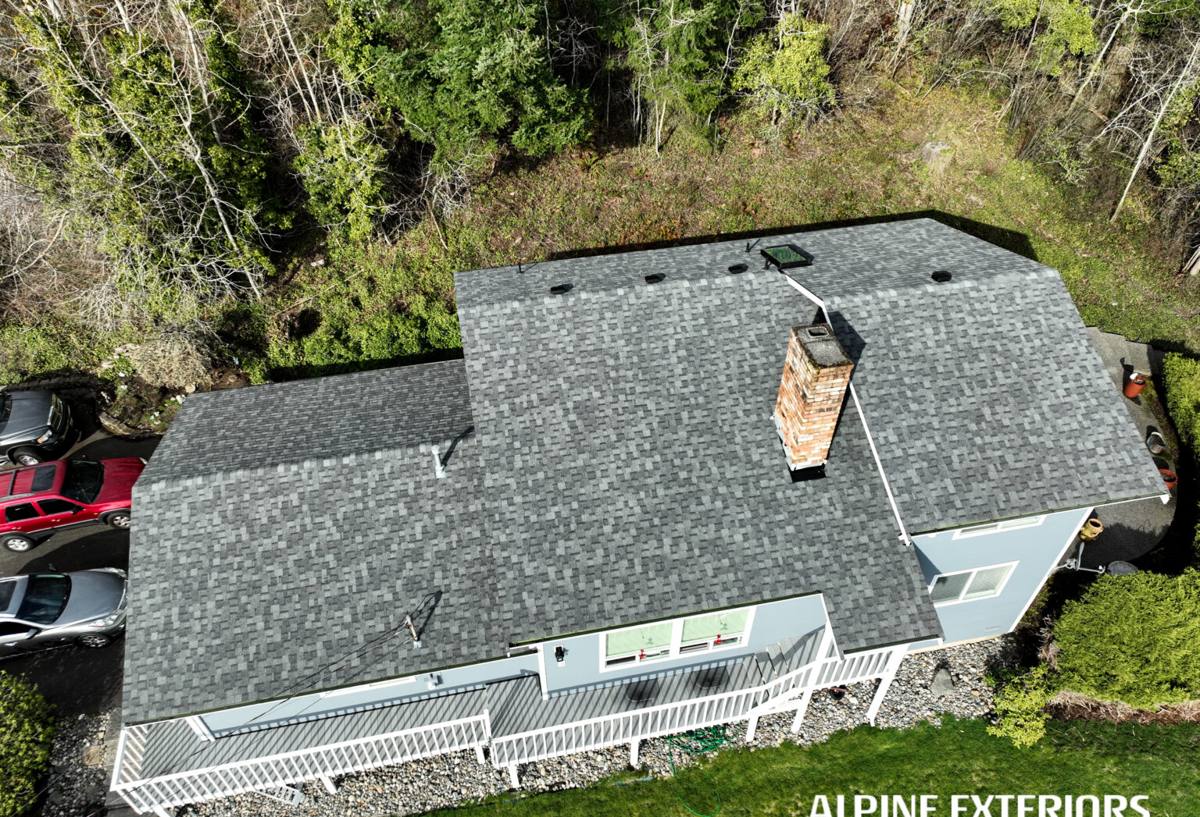
What Bellingham's Climate Does to Roofs Here
Salt Air and Metal Fatigue
Proximity to the bay means airborne salt settles on roofing metal — flashing, vent caps, gutters, fasteners — and accelerates corrosion compared to roofs further inland. Galvanized fasteners and lower-grade flashing corrode faster here, which shows up as rust streaking, pitted metal, and eventually pinhole leaks at the exact spots designed to keep water out.
Driving Rain and Wind-Driven Moisture
Bellingham's rain rarely falls straight down. Wind off the water pushes it sideways, which means it gets into gaps that a roof in a calmer climate would never test — under shingle tabs, behind step flashing, around vent boots that have started to shrink or crack. A roof that would hold up fine somewhere drier can leak here simply because the water is coming in at an angle.
Moss, Shade, and Slow-Growing Damage
Happy Valley's tree cover keeps parts of many roofs shaded most of the year, which is exactly what moss needs to establish. Moss holds moisture against the roofing material long after the rain has stopped, works its way under shingle edges as it grows, and lifts material as its roots spread. By the time moss is visible from the ground, it's often been doing damage for a season or more.
Common Repair Needs We See in Happy Valley
- Flashing failures at chimneys, skylights, and roof-to-wall transitions — usually corrosion or sealant that's dried out and cracked.
- Moss-related lifting along shaded slopes and north-facing sections, especially under tree canopy.
- Granule loss on older asphalt shingles, accelerated by salt air, leaving bare spots more vulnerable to UV and moisture.
- Vent boot cracking — rubber boots around plumbing vents degrade with age and are a common hidden leak source.
- Gutter and edge damage from moss buildup and debris holding water against the roof edge and fascia.
- Nail pops and fastener corrosion, which loosen shingles and create small entry points for wind-driven rain.
What a Correct Repair Actually Involves
A repair that holds up here starts with figuring out what's actually happening, not just where the ceiling stain showed up. Water travels along rafters and sheathing before it shows itself indoors, so the visible drip point and the actual entry point are often several feet apart. Skipping that step is the most common reason a "repaired" roof leaks again in the next storm.
- Locate the real source. We trace the leak path from the interior back to the roof, checking flashing, penetrations, and shingle condition in that area — not just the nearest visible gap.
- Assess the surrounding material. Wet sheathing, rotted decking, or moss-lifted shingles nearby need to be addressed too, or the repair fails again at the same spot.
- Replace, don't just seal. Caulk and roofing cement over a failing joint is a temporary cover-up. A correct repair replaces the failed flashing, boot, or shingle section with proper material and technique.
- Re-integrate with the existing roof. New material has to be woven into the surrounding shingles and underlayment correctly so water sheds over it, not into it.
- Clear and treat moss where relevant. If moss contributed to the problem, it gets removed and the area treated so the repair isn't undone within a season.
Repair vs. Replacement — How We Help You Decide
Not every leak means a new roof, and not every roof worth saving is obvious from the ground. We walk you through the actual condition and give you a straight answer, not an upsell.
| Factor | Leans Toward Repair | Leans Toward Replacement |
|---|---|---|
| Age of roof | Under 15–20 years, materials still sound | Near or past expected lifespan for the material |
| Extent of damage | Isolated to one flashing point or section | Multiple failure points across different areas |
| Decking condition | Sheathing is dry and solid | Widespread rot or soft spots found |
| Granule/wear condition | Localized wear, rest of roof intact | Uniform thinning and brittleness across the roof |
| History of repairs | First or second repair in this area | Repeated repairs in the same or nearby spots |
Cost for a straightforward repair typically runs from a few hundred dollars for a single flashing or boot replacement up to a couple thousand for more involved work with decking replacement. We give you a firm number after we've actually seen the damage, not a phone estimate.
Our Process, Start to Finish
We keep the process simple because most homeowners just want the leak fixed correctly and want to know what they're paying for.
- Initial inspection. We look at the roof itself, not just the interior symptom, and photograph what we find so you can see it too.
- Written scope and estimate. You get a clear explanation of what failed, what needs to happen, and what it costs before any work starts.
- Repair work. Most repairs are completed in a single visit, weather permitting — Bellingham's rain windows sometimes mean scheduling around a dry stretch.
- Final check. We confirm the repair sheds water correctly and check adjacent areas for anything that could become the next problem.
Materials and Methods We Rely On
For flashing and fasteners, we favor corrosion-resistant materials over standard galvanized options in areas exposed to salt air — it costs a little more upfront but holds up far longer this close to the bay, which matters more here than in most of the county. For sealants and boots, we use products rated for the temperature swings and UV exposure this region actually sees, rather than whatever's cheapest at the moment. We're selective about that because the wrong material in a marine climate doesn't fail gracefully — it fails quietly, behind the shingles, until it's a bigger job than it needed to be.
We also don't rely on sealant or roofing cement as a standalone fix for flashing or boot failures. It has its place as a secondary seal, but used alone it's a short-term patch that tends to crack and separate within a season or two in this climate, which just delays the real repair and can mask a growing problem.
Why a Crew That Already Works Happy Valley Matters
Roofing in a marine climate like Bellingham's rewards local experience in ways that aren't obvious until something goes wrong. A crew that works this neighborhood regularly already knows how moss behaves on the tree-shaded lots here, which flashing details tend to fail first on the roof styles common in the area, and how to sequence a repair around Whatcom County's rain patterns instead of guessing. That translates into fewer surprises, fewer follow-up visits, and a repair that's actually built for the conditions it has to survive — not a generic fix that happens to be installed here.
It also means faster response. When a leak shows up during a storm, having a crew that's already familiar with the neighborhood and doesn't have to scope out unfamiliar territory matters.
Roof Repair Checklist for Happy Valley Homeowners
- Check attic or ceiling for water stains after any heavy wind-driven rain, not just after visible leaks.
- Look at shaded and north-facing roof sections for moss buildup, especially heading into fall.
- Have flashing around chimneys and skylights inspected every few years — corrosion from salt air isn't always visible from the ground.
- Clear gutters and roof edges of debris so water doesn't pool against the roofline.
- Address small leaks promptly — in this climate, moisture that sits under shingles causes damage faster than in drier regions.
- Ask any contractor for a written scope before work begins, and get a second look if a "repair" keeps coming back.
Getting an Honest Look at Your Roof
If you're dealing with a leak, moss buildup, or just want a straight read on where your roof stands, we're glad to come take a look. We'll tell you what's actually going on, what it takes to fix it correctly for Bellingham's conditions, and what it costs — no pressure, no upsell. Reach out for a free estimate using the form below.