 Bellingham Roofing
 Windows Built for Happy Valley's Weather, Not Just Any Weather
Happy Valley sits close enough to the water and the hills around Bellingham that its homes take a specific kind of beating: salt-tinged air drifting up from Bellingham Bay, long stretches of driving rain off the Sound, and a moss season that seems to start earlier and last longer every year. Windows here don't fail the way they do in drier climates. They fail at the seams, at the sills, and at the flashing details that a rushed or inexperienced install skips over.
We install windows across Bellingham and Whatcom County, and Happy Valley's mix of older bungalows, mid-century homes, and newer infill construction all share the same vulnerability: any gap in the water management system around a window opening becomes a slow, hidden problem long before it becomes a visible one. Good window installation in this neighborhood isn't just about the window unit itself — it's about everything around it.
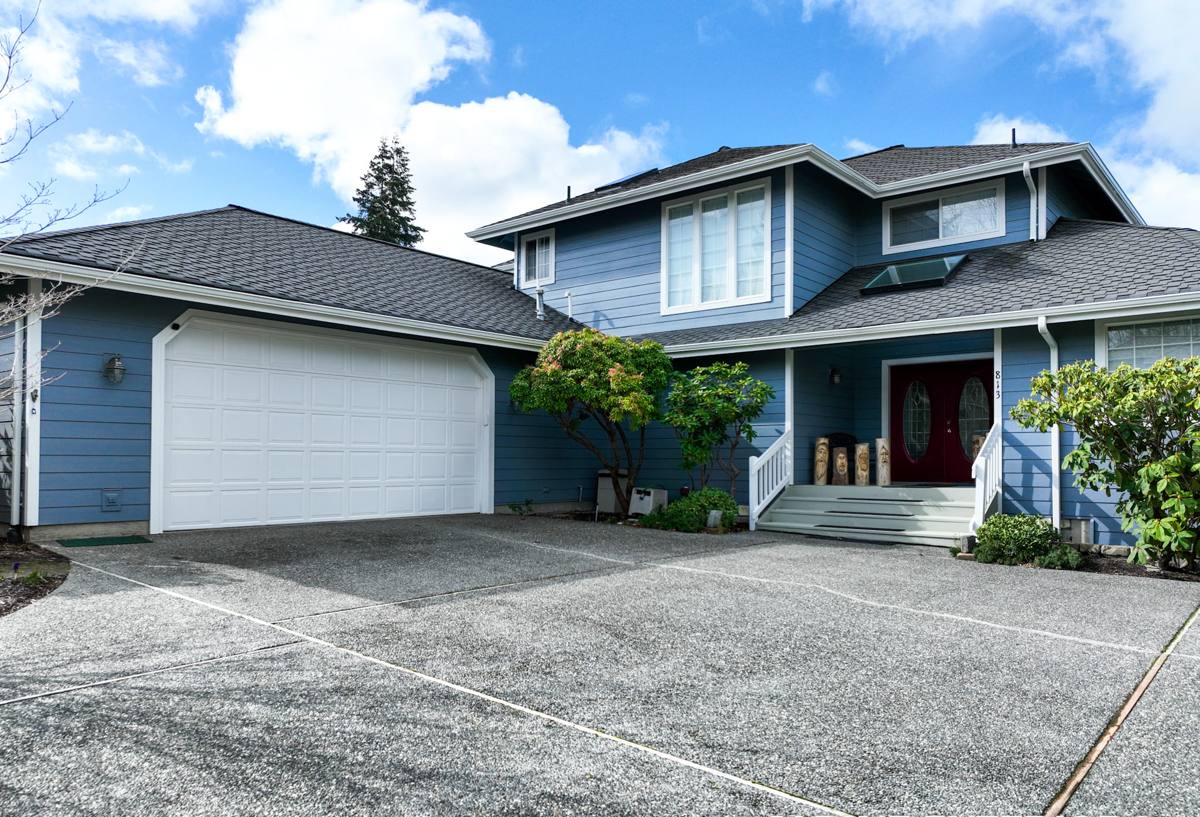
What Whatcom County Weather Does to a Poorly Installed Window
Understanding the failure pattern helps explain why installation quality matters more than brand name. In this climate, problems tend to show up in this order:
- Wind-driven rain finds any gap in the flashing or sealant and pushes water sideways and upward, not just down — a detail a lot of installers underestimate.
- Trapped moisture behind the trim or in the wall cavity has nowhere to dry out during our long wet stretches, which is when rot actually starts.
- Salt-laden air accelerates corrosion on lower-grade hardware, fasteners, and some aluminum components faster than it would inland.
- Moss and organic growth on north-facing walls and shaded sills holds moisture against the window frame for weeks at a time, especially on homes with tree cover.
- Temperature swings between damp mornings and afternoon sun cause repeated expansion and contraction, which works loose any seal that wasn't done correctly the first time.
None of this is unique to Happy Valley, but it is a fair description of what every window installation in this part of Bellingham has to be built to withstand.
Signs a Window Is Due for Replacement
Homeowners often wait until a window is visibly failing, but the earlier signs are usually quieter. Watch for:
- Fogging or a permanent haze between panes on double-glazed units — the seal has failed and the gas fill is gone
- Soft or discolored wood on the sill, jamb, or interior trim
- Windows that are noticeably harder to open, close, or lock than they used to be
- Visible daylight or a draft you can feel around the frame on a windy day
- Condensation collecting on the inside of the glass regularly, even with normal ventilation
- Paint that keeps bubbling or peeling near the frame no matter how often it's touched up
- A noticeable rise in heating costs without any other explanation
Any one of these can often be repaired. Two or more together, especially on a window over ten or fifteen years old, usually means replacement will cost less over time than continuing to patch it.
What a Correct Installation Actually Involves
The window unit itself is maybe a third of the job. The rest is the detailing that determines whether the installation holds up through a normal Whatcom County winter or starts leaking within a few years.
Removal and Opening Inspection
Once the old window is out, we inspect the rough opening before anything new goes in. This is the point where hidden rot, old or missing flashing, and past water damage get found — and it's much cheaper to address here than to discover later after new siding or trim has gone back on top of it.
Flashing and Water Management
Proper flashing directs water down and away from the opening in the correct sequence — sill pan first, then side flashing, then head flashing lapped over the top, integrated with the home's weather-resistive barrier. In a climate with as much sideways rain as we get here, sequencing matters as much as the materials themselves.
Air Sealing and Insulation
The gap between the window frame and the rough opening gets sealed with an appropriate low-expansion foam or backer rod and sealant — not just stuffed with fiberglass, which does nothing to stop air movement or moisture.
Level, Plumb, and Square
A window that's out of square will bind, won't seal against its own weatherstripping correctly, and will strain its own hardware over time. This gets checked and shimmed before it's ever fastened permanently.
Exterior Trim and Sealant
The final exterior sealant bead is the last line of defense, not the first — it should never be doing the job that flashing was supposed to do underneath it.
Our Process, Start to Finish
- On-site assessment — we look at your existing windows, the condition of the openings, and how your home is oriented to wind and rain exposure.
- Honest recommendation — replacement where it makes sense, repair where it doesn't, with the reasoning explained plainly.
- Accurate measurement and ordering — correct sizing avoids the shimming and gap problems that cause leaks later.
- Careful removal — protecting interior finishes and siding around the opening.
- Opening inspection and repair — any rot or old damage found gets fixed before the new window goes in, not covered up.
- Installation with full flashing and air-sealing detail — done the same way regardless of whether it's visible once trim goes back on.
- Interior and exterior finish work — trim, caulking, and cleanup so the job looks as good as it performs.
- Final walkthrough — every window opens, closes, and locks the way it should before we call it done.
Choosing Window Materials and Styles for This Climate
There isn't a single "best" window material — there are trade-offs, and the right call depends on your home, your budget, and how much upkeep you want to take on. Here's how the common options compare for a coastal, high-rainfall climate like ours:
| Material | Moisture Performance | Maintenance | Typical Lifespan |
|---|---|---|---|
| Vinyl | Very good — won't rot, low sensitivity to installation moisture | Low — occasional cleaning, no painting | 20–30 years |
| Fiberglass | Excellent — dimensionally stable, resists warping in wet-dry cycles | Low | 30+ years |
| Wood | Requires diligent upkeep — attractive but vulnerable in constant damp exposure | High — regular painting/sealing | Varies widely with maintenance |
| Wood-clad (exterior aluminum or fiberglass clad) | Good — exterior shell protects the wood interior | Moderate | 25–35 years |
| Aluminum | Fair — can be prone to condensation without a thermal break; watch for corrosion near salt air | Low | 20–30 years |
We generally steer homeowners in this area away from bare, unclad wood on exposures that take direct wind-driven rain, not because wood is a bad material, but because the maintenance schedule needed to keep it performing well in this climate is a real, ongoing commitment. If you love the look of wood, a clad option gives you that appearance with a lot less exposure risk.
Glass Packages Worth Considering Here
Double-pane, low-E glass with argon fill is the practical standard for our climate — it balances insulation value with cost. Triple-pane adds cost and weight and makes the most sense on north-facing walls, homes near busy roads where sound matters, or where energy costs are a bigger priority than budget.
What to Look for When Hiring a Window Contractor
Not every crew installs to the same standard, and the difference usually isn't visible until years later. Before hiring anyone for window work in Happy Valley or elsewhere in Bellingham, it's worth asking:
- Do they inspect and repair the rough opening, or just swap the window and reinstall trim?
- Can they describe their flashing sequence without hesitation?
- Are they licensed and insured to work in Washington State?
- Do they offer a written warranty on both the product and their labor?
- Will they give you a straight answer about repair versus replacement, even if repair is the cheaper answer for you?
- Do they have experience with homes in this specific area and its exposure conditions?
Why Local Experience in Happy Valley Matters
A crew that regularly works Whatcom County homes already knows which exposures take the worst of the wind-driven rain, which older homes in this area are more likely to have outdated or missing flashing behind the trim, and how aggressively moss and moisture build up on shaded north and west walls through our wet months. That's not something you can fully compensate for with a good product alone — it comes from having done the work here repeatedly and seen what holds up and what doesn't.
It also means faster, more accurate estimates, because we're not guessing at how a Bellingham winter treats a given installation — we've seen it firsthand, on homes not unlike yours.
Keeping New Windows Performing Through the Wet Season
Even a correctly installed window benefits from basic seasonal attention in this climate:
- Clear debris and moss from sills and tracks before fall rains set in
- Check exterior caulking annually for cracking or gaps, especially after a hard winter
- Keep gutters and downspouts clear so runoff isn't sheeting directly across window openings
- Trim back vegetation that keeps a window shaded and damp for extended periods
- Operate locks and hardware a few times through the year so they don't seize up from disuse
If you're noticing drafts, fogging, sticking sashes, or trim that never seems to dry out, it's worth getting a straightforward, no-pressure look at what's going on before it turns into a bigger repair. We're happy to walk your home, point out what we see, and give you an honest estimate — no obligation either way.