 Bellingham Roofing
 Why Sehome's Climate Is Hard on Siding
Sehome sits close enough to Bellingham Bay that salt-laden air is a constant factor, and it shares the same weather pattern as the rest of Whatcom County: long stretches of driving rain in the fall and winter, followed by a slow, damp spring where moss and algae get a real head start on anything that holds moisture. Add in the tree cover that shades a lot of Sehome's older residential streets, and you have siding conditions that are tougher than they look from the sidewalk. Homes here don't fail because of one big storm. They fail slowly, from siding that never fully dries out between rain events, or from paint and caulk that couldn't keep pace with the salt air and UV cycling.
That combination — moisture, salt, shade, and moss — is exactly why the siding material and the installation details matter more here than in a drier inland climate. A product that performs fine in eastern Washington can struggle on the west side, and a siding job that's "good enough" in a dry climate can start showing problems within a few years in Bellingham.
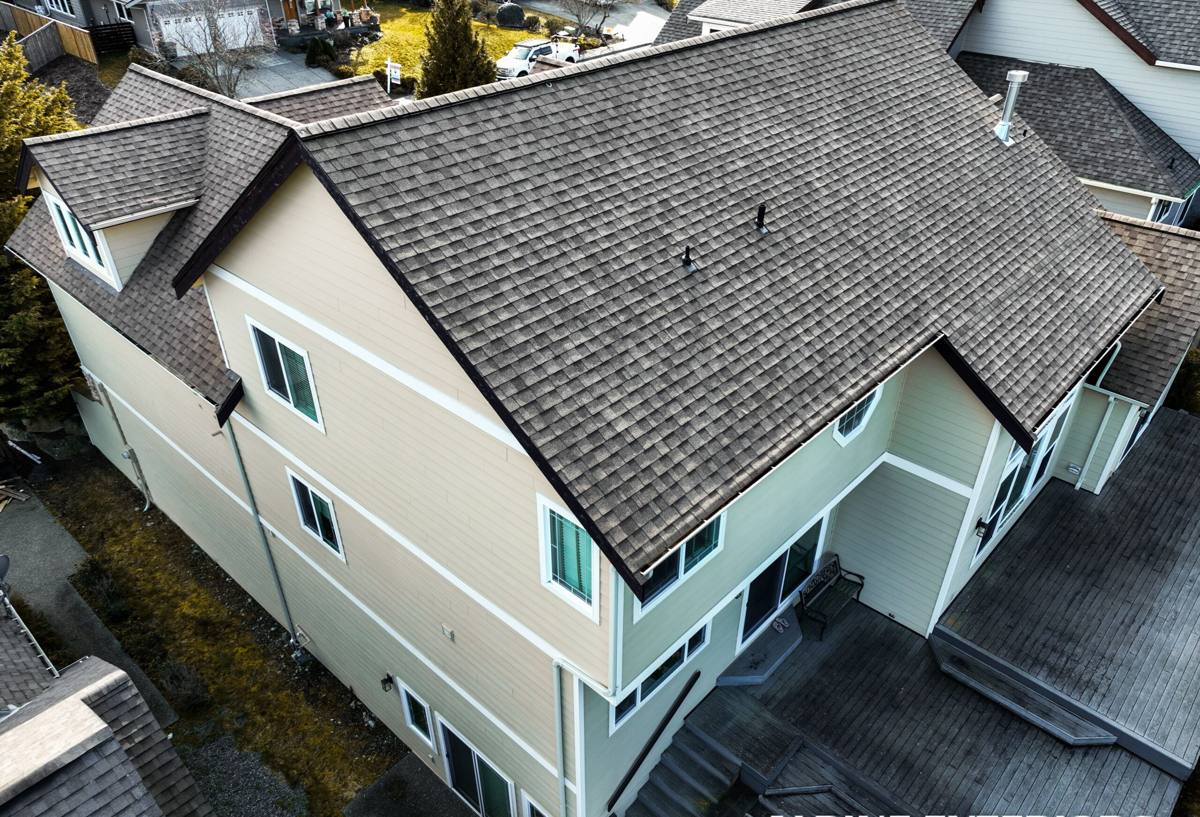
What Sehome Homes Actually Need From Their Siding
Three things matter most for a Sehome exterior: the siding has to shed water without trapping it, it has to resist moss and mildew growth without needing constant power-washing, and it has to hold its finish through repeated wet-dry cycling without cracking, warping, or delaminating. That rules out a lot of lower-cost options right away. Untreated or primed wood siding needs aggressive, ongoing maintenance in this climate to avoid rot. Vinyl can handle the moisture fine but tends to look tired fast under damp, shaded conditions, and it has real limits in how it performs over time compared to a fiber cement system.
Fiber cement, when it's the right product installed the right way, is built for exactly this kind of weather. It's dimensionally stable, so it doesn't swell and shrink the way wood does with every rain cycle. It doesn't feed mold and moss growth the way wood fiber can. And with a factory-applied finish, it holds color and resists the fading and chalking that happens when a field-applied paint job takes years of Pacific Northwest weather.
Why We Only Install James Hardie
We've standardized on James Hardie fiber cement specifically, not fiber cement in general. Other fiber cement brands exist, but Hardie's ColorPlus factory finish, its climate-engineered HZ5 product line built for the Pacific Northwest's wet-dry cycling, and its transferable warranty are the reasons we put it on Sehome homes instead of the alternatives. It's non-combustible, it's engineered for this specific moisture pattern, and when it's installed to spec it holds up for decades with minimal upkeep. We'd rather install one product well than offer five options and hope one of them works out.
What a Correct Fiber Cement Installation Involves
The siding board itself is only part of the equation. Most of the siding failures we see on older Bellingham homes trace back to installation shortcuts, not the material. A correct install in a climate like Sehome's includes:
- A drainage plane or rainscreen gap behind the siding so any moisture that gets past the surface has somewhere to go besides your sheathing
- Properly lapped and sealed house wrap or weather-resistant barrier, installed shingle-style so water always sheds outward and down
- Flashing at every window, door, and roofline intersection — the places where water actually gets in
- Correct fastener type, spacing, and depth per James Hardie's installation specs, not just "close enough"
- Proper gaps and factory-approved caulking at butt joints and trim, sized to allow for expansion without opening a water path
- Bottom clearance from grade, decks, and roof lines so siding isn't sitting in standing water or snow load
Skip any one of these and you can end up with siding that looks right for a few years and then starts failing from behind — the kind of damage you don't see until it's expensive.
Signs a Sehome Home's Siding Needs Attention
Moisture and Moss Indicators
Persistent green or black staining on north- and shade-facing walls, siding that stays visibly damp long after a rain, and soft or spongy spots near the bottom courses are all signs that water is being held against the siding instead of shedding off it. In older neighborhoods like Sehome, with mature tree canopy over a lot of lots, this shows up faster than in newer, more open subdivisions.
Aging Wood and Failing Paint
If your home still has original wood or hardboard siding, look for peeling or bubbling paint, visible grain swelling, and soft spots you can press in with a thumb. These are signs the substrate is absorbing moisture faster than it can dry — a losing battle in this climate without constant repainting and caulking.
Aging Vinyl
Vinyl doesn't rot, but it does fade unevenly, warp in direct sun exposure, and crack in cold snaps. Once a run of vinyl panels is more than a decade or two old, exact color matches for repairs get difficult, and impact damage tends to accumulate rather than get fixed piece by piece.
How Our Process Works
1. On-Site Assessment
We walk the exterior with you, check the condition of the existing siding and sheathing where it's exposed, and look at moisture-prone areas — under eaves, around window trim, near grade — before recommending anything.
2. Scope and Product Selection
We talk through the right James Hardie plank profile, texture, and ColorPlus finish for your home, and explain what full tear-off versus partial replacement makes sense given the condition we found.
3. Written Estimate
You get a clear, itemized estimate before any work starts — no verbal ballparks that turn into surprises on the invoice.
4. Tear-Off and Sheathing Check
Old siding comes off, and we inspect the sheathing and framing underneath for hidden rot or moisture damage before anything new goes up. This is the step that gets skipped on lower-bid jobs, and it's the one that matters most.
5. Weather Barrier and Flashing
House wrap, flashing, and drainage details go in per manufacturer spec, not shortcuts.
6. Hardie Installation
Panels or planks go up with correct fastening, gapping, and caulking, finished with trim that matches the home's existing lines where we're doing a partial replacement.
7. Final Walkthrough
We walk the finished job with you before calling it done.
Fiber Cement vs. Other Siding Options for Sehome
| Factor | James Hardie Fiber Cement | Vinyl | Untreated/Primed Wood |
|---|---|---|---|
| Moisture resistance in wet climates | Engineered for wet-dry cycling (HZ5 line) | Sheds water but can trap moisture behind panels if installed poorly | Absorbs moisture, prone to rot without constant maintenance |
| Moss/algae resistance | Dense, non-organic surface resists growth | Resists growth but shows staining | Wood fiber can feed mold and moss growth |
| Finish durability | Factory ColorPlus finish, fade and chip resistant | Color is baked into the panel but can fade/chalk over time | Field-applied paint, needs repainting every few years |
| Fire resistance | Non-combustible | Combustible | Combustible |
| Expected upkeep | Occasional wash, caulk checks | Low, but repairs are hard to color-match over time | Regular repainting, caulking, spot repairs |
What Drives the Cost of a Sehome Siding Job
| Cost Factor | Why It Matters |
|---|---|
| Full tear-off vs. partial replacement | Tear-off costs more upfront but lets us inspect and fix sheathing issues before they're hidden again |
| Home size and wall complexity | Multiple gables, dormers, and trim details take more labor per square foot than a simple rectangular elevation |
| Existing damage found during tear-off | Rotted sheathing or framing found mid-project needs repair before new siding can go on correctly |
| Plank profile and finish selection | Different Hardie textures and ColorPlus colors carry different material costs |
| Access and site conditions | Sloped lots, mature landscaping, and tight setbacks — common in Sehome's older residential blocks — can add labor time |
Why Local Experience in Sehome Matters
Sehome is a well-established part of Bellingham, with a mix of home ages and a fair number of properties on sloped or tree-shaded lots. A crew that's worked this neighborhood before knows to expect things like limited street access for material staging, mature root systems near foundations, and the specific moisture patterns that come with heavy tree cover this close to the bay. That's not something you get from a crew that only occasionally works Whatcom County — it comes from doing the work here repeatedly and paying attention to what actually fails and why.
We also know Bellingham's permitting expectations and building department requirements, which keeps a siding project from stalling out on paperwork you didn't know you needed.
Maintaining Your Hardie Siding Once It's Installed
- Rinse siding gently once or twice a year to clear pollen, dust, and early moss growth — a garden hose is enough, avoid high-pressure washing directly at seams
- Keep gutters clear so overflow doesn't run down the wall face repeatedly in one spot
- Trim back vegetation and tree limbs that keep siding shaded and damp longer than necessary
- Check caulking at trim and butt joints every couple of years and have gaps resealed before they become water entry points
- Address any impact damage (from lawn equipment, branches, etc.) promptly rather than letting it sit exposed
If your Sehome home's siding is showing moisture staining, aging paint, or you're just planning ahead for a replacement, we're happy to take a look and walk you through what we'd recommend. Reach out for a free, no-pressure estimate using the form below.