 Bellingham Roofing
 New Roof Installation Built for Silver Beach's Climate
Silver Beach homes sit close enough to Bellingham Bay that roofs here deal with a combination most inland Whatcom County houses never see: salt-laden air, wind-driven rain that comes in sideways off the water, and a moss season that runs long and wet for much of the year. A new roof installed for this neighborhood needs to be planned around those three things from day one, not treated as a generic reroof with whatever materials happen to be on the truck. This page covers what that actually means in practice — for the roof itself, for our installation process, and for why the crew doing the work matters as much as the shingle brand on the invoice.
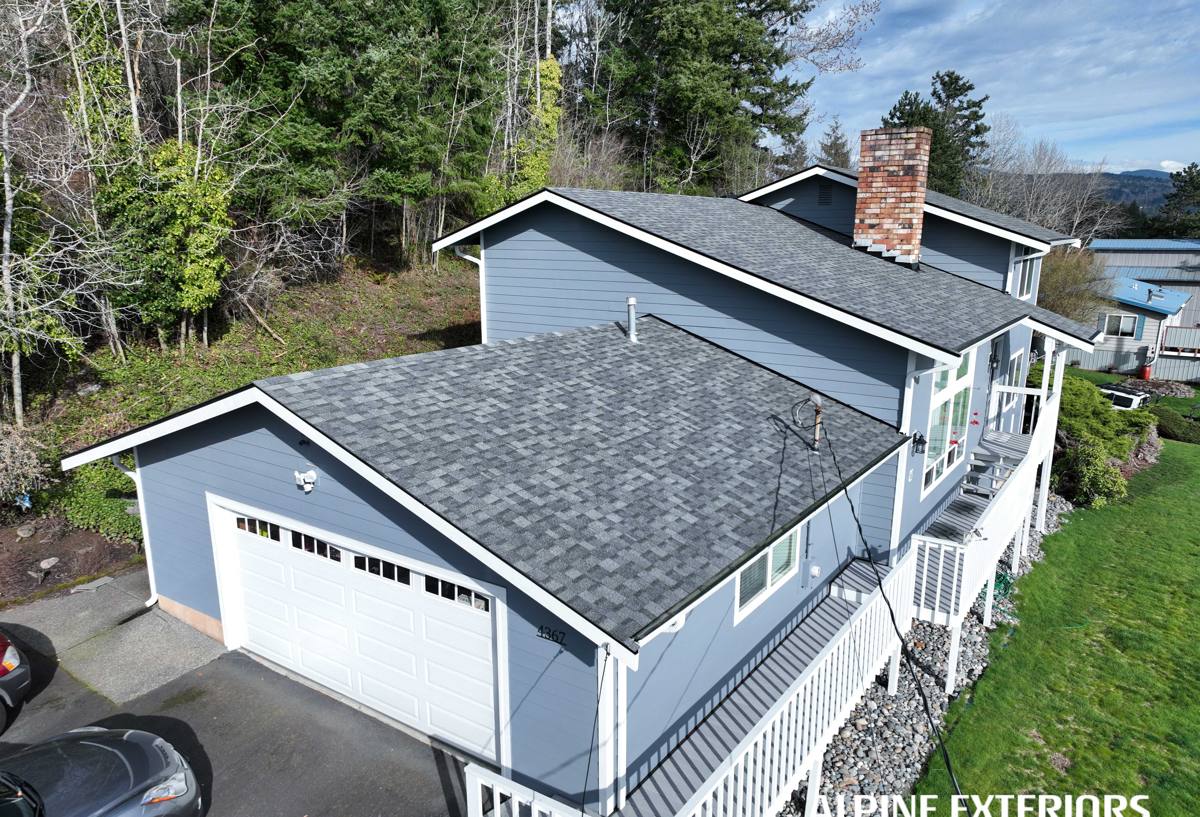
What Salt Air, Driving Rain, and Moss Actually Do to a Roof
Salt Air
Airborne salt is corrosive to exposed metal. On a roof that shows up first at fasteners, flashing, and any exposed metal edge — rust bleed streaks, pitted nail heads, and flashing that fails years before the field material does. It's a slow process, but it's constant, and it's the reason we're picky about which metals and coatings go on a Silver Beach roof versus one further inland.
Driving Rain
Wind off the bay doesn't just fall on a roof, it pushes water sideways and upward under laps, around vents, and along ridge lines. A roof that would shed water fine in a calm rain can still take on moisture in a wind-driven storm if the underlayment, laps, and flashing details weren't built with that wind loading in mind. This matters most at transitions — where a roof meets a wall, a chimney, a skylight, or a valley.
Moss Season
Bellingham's wet season stretches long, and shaded, north-facing, or tree-covered sections of roof stay damp for weeks at a stretch. Moss and algae take hold in that dampness, and once established they hold moisture against the roofing material, lift shingle edges, and work their way toward the deck over time. A roof that isn't designed to shed water fast and dry out between storms gives moss exactly the conditions it needs.
None of these three problems are dramatic on their own. Together, over years, they're why roofs on this stretch of the coast tend to show wear in different places and at different rates than roofs a few miles inland — and why a correct installation looks a little different too.
What a Correctly Installed New Roof Actually Includes
A new roof is more than the shingles or panels visible from the street. Every layer underneath does specific work, and skipping or downgrading any of them is where premature failures start.
- Deck inspection and repair — any soft, delaminated, or water-stained sheathing gets replaced before anything new goes down, not covered over.
- Ice-and-water shield at eaves, valleys, and penetrations, sized generously for this region's rain volume, not just code minimum.
- Synthetic underlayment across the full deck as a second line of defense under the roofing material.
- Corrosion-resistant flashing at every wall, chimney, skylight, and roof-to-roof transition, sized and lapped to shed wind-driven rain.
- Balanced intake and exhaust ventilation so the attic space dries out instead of trapping moisture.
- Field material — shingles, metal, or your chosen product — installed to manufacturer spec with fastener patterns matched to our wind exposure.
Any one of these done poorly shortens the life of the whole system, even if the shingles on top look perfect on installation day.
Choosing Materials for a Salt-Air, High-Moss Environment
There's no single "best" roofing material for Silver Beach — it depends on the home, the roof's exposure, and your budget — but some choices hold up better than others in this specific mix of salt, rain, and shade. We'll walk through the honest trade-offs for your roof rather than push one product for every house.
| Material | How It Handles Salt Air | How It Handles Moss-Prone Shade | General Cost Position |
|---|---|---|---|
| Architectural asphalt shingle | Good, when paired with corrosion-resistant flashing and fasteners | Algae-resistant granule options reduce staining and buildup | Lower to mid |
| Standing seam metal | Excellent with marine-grade coatings and fasteners; poor with mismatched or bare metal | Very good — smooth, steep panels shed moss more easily | Mid to higher |
| Synthetic/composite shingle | Good; resists the rot and corrosion issues of some natural products | Good, depending on surface texture | Mid to higher |
| Cedar shake | Requires more upkeep near salt air and moisture; higher maintenance burden | More susceptible without regular treatment and cleaning | Higher, plus ongoing maintenance |
We're not going to tell you a material is "bad" — every one of these has a place. What we will tell you honestly is which ones ask more of the homeowner in a climate like this, and which fasteners, coatings, and details we insist on regardless of which material you choose, because that's where salt-air failures actually start.
Fasteners and Flashing Details
This is where we're strictest, and it's often invisible once the roof is finished. Stainless or hot-dip galvanized fasteners, properly coated flashing, and correctly lapped step and counter-flashing cost more up front than the cheaper alternatives, but they're the difference between flashing that lasts as long as the roof and flashing that's bleeding rust and leaking in five to eight years.
Our New Roof Installation Process
- On-site assessment — we walk the roof, check the deck condition where accessible, note shade patterns, drainage paths, and existing moss or algae growth.
- Material and system recommendation — based on your roof's exposure, existing ventilation, and budget, with the trade-offs explained plainly.
- Written estimate — scope, materials, and price laid out before any work starts.
- Deck repair and prep — old roofing removed, deck inspected, any damaged sheathing replaced.
- Underlayment and flashing installation — ice-and-water shield, synthetic underlayment, and all new flashing installed to the standard described above.
- Field material installation — installed to manufacturer spec, with fastener patterns and lap details matched to wind exposure.
- Ventilation check — intake and exhaust confirmed balanced for the attic's size and use.
- Final walkthrough — we go over the finished roof with you before calling the job done.
Ventilation and Moisture Control Matter as Much as the Shingles
A roof deck that can't breathe traps moisture from below just as surely as bad flashing lets it in from above. In a marine climate, that trapped moisture condenses, feeds rot in the sheathing, and shortens the life of the insulation underneath — problems that often don't show up until they're expensive. We check existing intake and exhaust ventilation on every new roof installation and correct imbalances as part of the job, not as an upsell after the fact.
Why a Crew That Already Works Silver Beach Matters
A roofing crew that's worked this neighborhood before already knows which slopes tend to hold moss, which roof-wall transitions catch the worst of the wind-driven rain, and which flashing details fail first in salt air — because they've replaced them. That experience shows up in small decisions during installation that a crew unfamiliar with this specific stretch of coast might not think to make. It also matters for practical reasons: knowing the local permitting process, having a realistic read on Whatcom County weather windows for scheduling, and being reachable afterward if a question comes up. A new roof is a long-term investment, and it's worth having it installed by people who plan to still be doing business here in ten years.
After Installation: What Keeps a New Roof Performing
A correctly installed roof still benefits from basic upkeep, especially in a moss-prone, salt-air environment. None of this is complicated, but skipping it shortens the life of even a well-built roof.
- Keep gutters and downspouts clear so water isn't backing up under the eaves.
- Trim back overhanging branches to cut down on shade and debris that feed moss growth.
- Have moss or algae growth treated promptly rather than left to spread.
- Watch for granule buildup in gutters, a sign of shingle wear worth a look.
- Schedule a periodic roof check, especially after a hard winter storm season.
- Address any small flashing rust or staining early, before it becomes a leak.
What Timeline and Access Look Like
Most new roof installations on a typical Silver Beach home take a few days from tear-off to final cleanup, weather permitting — steeper roofs, larger footprints, or extensive deck repairs add time. Because of Bellingham's wet-season pattern, we plan installation windows around realistic dry stretches rather than forcing a schedule and risking exposed decking taking on water partway through the job. We'll walk you through a realistic timeline for your specific roof before work begins, not a generic estimate.
If your roof is due for replacement, the best next step is a straightforward, no-pressure look at what your home actually needs. We'll walk the roof, talk through honest material options for a home in this environment, and give you a written estimate with no obligation — just fill out the form below to get started.