 Bellingham Roofing
 Storm Damage Roof Repair Built for South Hill's Terrain
South Hill sits above the rest of Bellingham on a wooded slope, and that elevation and tree cover change how storms hit the roofs up there compared to homes closer to sea level. Wind funnels differently across a hillside, mature trees drop limbs and needles onto roof planes at a steady rate, and the same driving rain that soaks Bellingham Bay-facing neighborhoods arrives at South Hill with extra force where the terrain channels it. When a windstorm or a hard rain event does damage to a South Hill roof, the fix needs to account for the slope, the tree canopy, and the age of the housing stock up there, not just patch whatever's visible from the ground.
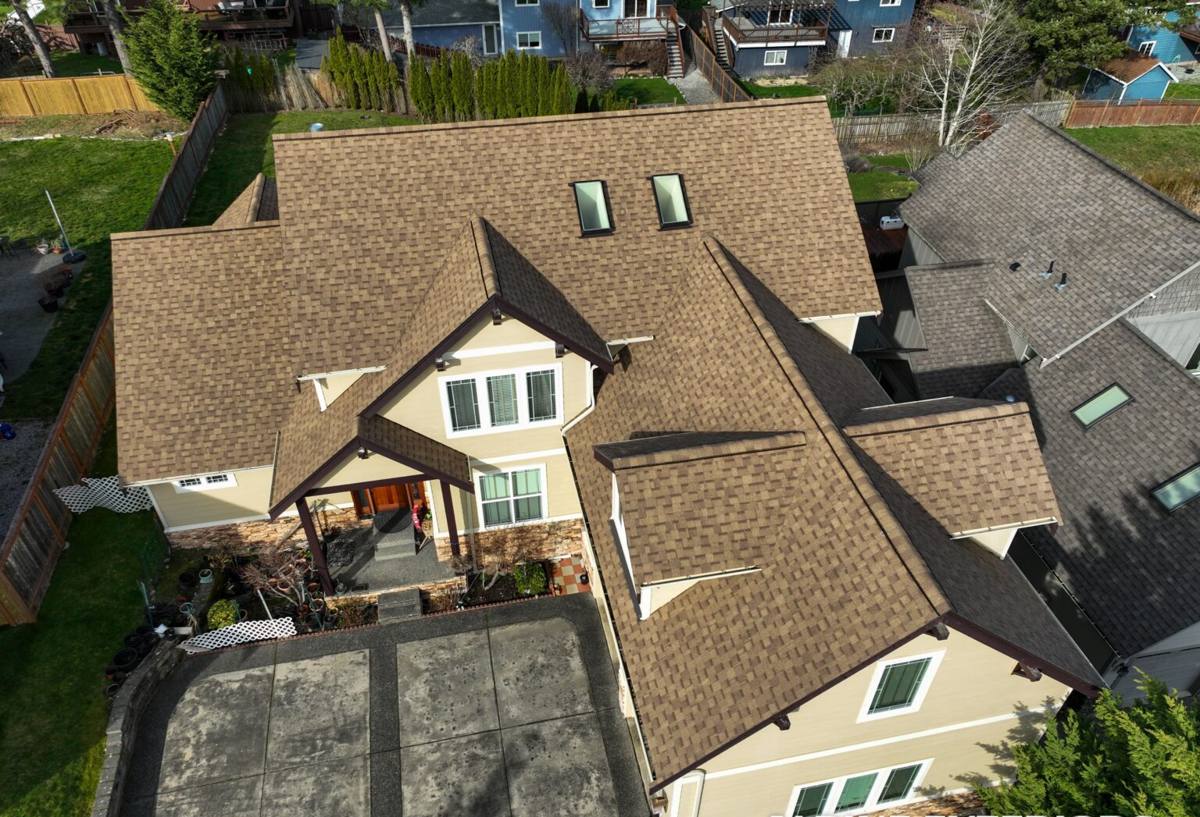
We work storm damage calls across Whatcom County, and South Hill is one of the neighborhoods where we see a particular mix of problems: older roofs on homes built decades ago, steep and complex rooflines with multiple valleys and dormers, and heavy shade from tall conifers and deciduous trees that keeps roof surfaces damp longer after a storm passes. That combination means storm damage here often isn't a single obvious hole. It's a set of smaller issues, loosened flashing, lifted shingles, a cracked vent boot, that a rushed inspection can miss entirely.
What Storms Actually Do to South Hill Roofs
Wind and Limb Impact
South Hill's tree cover is part of what makes the neighborhood attractive, and it's also a direct source of storm damage. High wind events knock branches and whole limbs onto roofs, and even when a limb doesn't puncture the roof deck, the impact can crack shingles, dent metal flashing, or knock granules loose in a way that shortens the roof's remaining life without leaving an obvious leak right away.
Wind-Driven Rain at Valleys and Penetrations
Bellingham's marine climate pushes rain sideways more often than it falls straight down, and on a hillside like South Hill, wind can accelerate and shift direction as it moves across the slope. That matters most at roof valleys, chimney flashing, skylights, and vent penetrations, the spots where a roof is already relying on flashing and sealant rather than a continuous shingle field to keep water out. A storm that loosens or lifts flashing in those areas can let water in during the very next rain, even if nothing looks visibly broken from the ground.
Moss and Trapped Moisture After the Storm
Whatcom County's long moss season doesn't pause because a storm just passed. If anything, storm damage that lifts shingle edges or dislodges flashing gives moss and moisture more surface area to work into. On the shaded, tree-covered lots common in South Hill, a roof that's already carrying moss growth is more vulnerable to storm damage in the first place, and slower to dry out afterward, which is exactly the setup that turns a minor storm event into a real leak a few weeks later.
Salt Air's Slow Contribution
Even at South Hill's elevation, Bellingham's proximity to the bay means fasteners, flashing, and metal roof components are dealing with a steady low-level exposure to salt-tinged air over the years. That accelerates corrosion in nails, flashing, and any exposed metal, which is part of why storm damage on an older South Hill roof sometimes reveals underlying flashing or fastener issues that were already partway to failing before the storm hit.
What a Correct Storm Damage Repair Involves
A proper storm damage repair starts with an honest, full-roof inspection, not just a look at the spot the homeowner noticed. We check the whole roof plane, all valleys, all penetrations, and the attic space where accessible, because wind and impact damage doesn't always show up directly under the point of impact. A shingle can be cracked or lifted several feet from where a branch actually landed, and flashing can be knocked loose without visibly moving.
What We Look For
- Cracked, torn, or missing shingles, and granule loss that signals impact stress even where the shingle itself is still intact
- Lifted or bent flashing at valleys, chimneys, skylights, and roof-to-wall intersections
- Damaged or displaced vent boots and pipe collars, a common source of slow leaks after wind events
- Soft spots or staining on the roof deck itself, visible from the attic side where accessible
- Moss and debris buildup that's trapping moisture against the roofing material, especially in shaded valleys
- Gutter and downspout damage or blockage that's redirecting water somewhere it shouldn't go
- Signs of prior repair work that may have failed or was never sealed correctly
Matching the Repair to the Damage
Not every storm-damaged roof needs full replacement, and we don't push toward one when a targeted repair will hold. A localized section of cracked shingles or a section of flashing can often be repaired and matched into the surrounding roofing without disturbing the rest of the roof. But if the damage has let water track under the roofing material for any length of time, or if the roof was already near the end of its service life before the storm, patching that section is usually a short-term fix that costs more in the long run. We'll tell you plainly which situation you're in and why, rather than defaulting to the bigger job.
Our Process for South Hill Storm Calls
- Initial contact and scheduling: We prioritize storm damage calls, especially where there's an active leak or exposed roof deck, and get out to assess the roof as soon as reasonably possible.
- Full roof and attic inspection: We walk the whole roof, not just the damaged section, and check attic space where accessible for water staining or deck damage that hasn't shown up inside the house yet.
- Written assessment: You get a clear explanation of what we found, what caused it, and what it will take to fix, in plain language, before any work starts.
- Temporary protection if needed: If there's active water intrusion, we can tarp or otherwise protect the exposed area to prevent further damage while repair materials and scheduling come together.
- Repair or replacement: We complete the agreed-upon work, matching materials to the existing roof wherever a full replacement isn't necessary.
- Final check: We confirm the repair is sealed and performing correctly, and walk you through what was done.
Insurance Documentation
Storm damage repairs often involve a homeowner's insurance claim, and we document damage thoroughly, with photos and a written scope of work, so you have what you need to support that process. We're not a public adjuster and we don't negotiate your claim for you, but a clear, honest assessment of the actual roof condition is one of the most useful things you can bring to that conversation.
Why Local Storm Damage Experience Matters on South Hill
A crew that's worked South Hill's roofs before already understands the practical realities of the neighborhood: steep driveways and limited staging area on some lots, mature tree canopy that affects both access and ongoing debris, and the mix of older and newer roofing systems on homes of different eras. That familiarity shows up in small but real ways, knowing to check specific flashing details common on older South Hill homes, or recognizing when moss buildup in a shaded valley is a longer-running issue rather than something the last storm caused. It also means we're not guessing at how Bellingham's climate interacts with a hillside, tree-covered site, because we've seen it play out on roofs nearby.
Repair Cost Factors for South Hill Homes
| Factor | What It Affects | Why It Matters on South Hill |
|---|---|---|
| Roof pitch and complexity | Labor time and access difficulty | Many South Hill homes have steeper, more complex rooflines with multiple valleys where storm damage concentrates |
| Tree cover and access | Staging, cleanup, and safety setup | Mature trees common on South Hill lots can limit equipment access and add debris removal to the job |
| Extent of water intrusion | Whether deck or insulation needs replacement, not just roofing material | Damp, shaded roof surfaces stay wet longer, giving water more time to work into the deck before it's noticed |
| Age and condition of existing roof | Whether a patch will hold or a larger repair makes more sense | Older housing stock on South Hill means some roofs are already near the end of their service life before storm damage hits |
| Flashing and penetration count | Number of vulnerable points needing individual attention | Chimneys, skylights, and dormers are common on South Hill's older homes and are frequent failure points after wind events |
| Material matching | Whether a repair can blend in or the whole slope needs re-covering | Older or discontinued shingle profiles can make a clean match harder on established South Hill roofs |
What Homeowners Can Do Between Storms
- Keep an eye on tree limbs overhanging the roof and have concerning ones trimmed before they become a storm liability
- Clear gutters and downspouts of needles and debris regularly, especially heading into the fall wind season
- Check the attic occasionally for staining, musty odor, or daylight where there shouldn't be any
- After any significant wind event, do a visual check from the ground for obviously displaced shingles, flashing, or debris on the roof
- Address moss buildup before it spreads, rather than waiting for it to visibly lift shingles
- Get a professional inspection after any storm that dropped limbs on the property, even if nothing looks wrong from below
If a recent storm has left you wondering about the condition of your South Hill roof, or you'd just like a professional set of eyes on it before the next one rolls through, we're happy to take a look. Reach out for a free, no-pressure estimate using the form below.