 Bellingham Roofing
 Roofing in Sunnyland: A Different Set of Conditions Than People Expect
Sunnyland sits close enough to Bellingham Bay and the surrounding water and tree cover that its roofs work harder than a lot of homeowners realize. It isn't dramatic weather that wears out a roof here — it's the steady combination of salt-laden air, driving rain off the water, and a moss season that can run most of the year in shaded, north-facing sections of a roofline. None of that is unique to one street or one home; it's a Whatcom County condition, and it shapes almost every decision that goes into a correctly built asphalt shingle roof in this neighborhood.
An asphalt shingle roof installed the same way you'd install one in a dry inland climate will underperform here. The materials, the flashing details, the ventilation, and the maintenance plan all need to account for near-constant moisture exposure and the organic growth that comes with it. That's the lens we use on every Sunnyland roof — not a generic install, but one built for this specific setting.
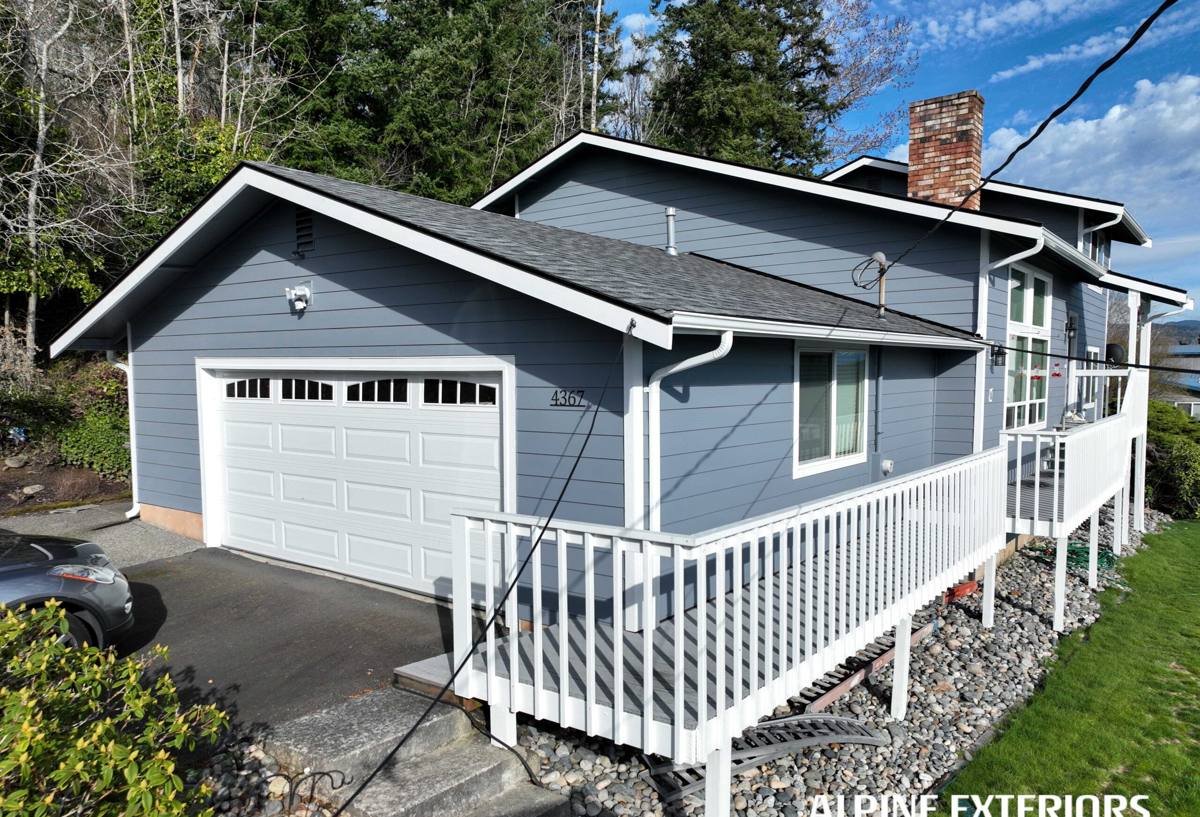
What Local Homes Actually Need From a Shingle Roof
Moisture Management Comes First
In this climate, water isn't an occasional visitor to a roof deck — it's a constant. Bellingham gets extended stretches of low-intensity rain punctuated by wind-driven storms that push water sideways under shingle tabs and around penetrations. A shingle roof built for Sunnyland needs a self-adhering ice-and-water membrane at eaves, valleys, and around every penetration (chimneys, vents, skylights), not just the minimum code coverage. That membrane is what keeps wind-driven rain from working its way under the shingles and into the deck.
Ventilation Matters More Than Most Homeowners Think
A roof that traps warm, moist air underneath the deck accelerates shingle aging from below and creates the exact damp, dark conditions moss and algae thrive in. Balanced intake at the eaves and exhaust at the ridge keeps the underside of the roof deck dry and close to outdoor temperature, which extends shingle life and reduces the moss problem before it starts. This is one of the most commonly skipped details on quick re-roofs, and it's one of the first things we check on an existing roof before we ever talk about new shingles.
Salt Air and Fastener Corrosion
Homes with any exposure toward the water deal with airborne salt that accelerates corrosion on exposed metal — nail heads, flashing edges, and vent stacks in particular. We use corrosion-resistant fasteners and flashing metals as standard practice on Sunnyland roofs, not as an upgrade, because replacing a shingle roof over rusted-through flashing in ten years costs more than doing it right the first time.
Signs a Sunnyland Roof Needs Attention
Because so much of the damage here happens gradually — moisture cycling, moss root growth, slow granule loss — many homeowners don't notice a problem until it shows up as an interior stain. A periodic look at the roof from the ground can catch issues years before that happens.
- Dark streaking or green-black growth concentrated on north-facing or shaded slopes
- Shingle tabs that look cupped, curled, or are missing granules in patches
- Moss visibly lifting shingle edges, especially along ridges and in valleys
- Rusty streaking below metal flashing, vent stacks, or nail heads
- Sagging or spongy-feeling sections when walked (a sign of deck moisture damage)
- Granules collecting in gutters or at downspout outlets
- Daylight visible through the attic roof deck, or musty attic odor
Any one of these on its own isn't necessarily an emergency, but a combination of two or more is usually a sign that it's worth having someone look at the roof before the next wet season, not after.
Our Asphalt Shingle Installation Process
1. Inspection and Honest Assessment
We start by getting on the roof, not just looking at it from the driveway. We check deck condition, existing ventilation, flashing points, and how the current roof has handled moisture over time. If a repair is genuinely a better option than a full replacement, we'll say so — a full tear-off isn't always the right call, and we'd rather tell you that upfront than sell a bigger job than the roof needs.
2. Tear-Off and Deck Inspection
When a full replacement is the right move, we remove the old roofing down to the deck. This is the point where hidden problems — soft spots, old water damage, undersized ventilation — actually get found and fixed, rather than covered over. Any deck sections that don't meet a solid nailing surface get replaced before anything new goes down.
3. Underlayment and Flashing
This is where the climate-specific work happens: full ice-and-water membrane at eaves and valleys, synthetic underlayment across the field, and new flashing at every penetration, wall intersection, and chimney. We don't reuse old flashing on a full replacement — it's one of the most common failure points on roofs that leak within a few years of a "new" install.
4. Shingle Installation
Shingles go down to manufacturer nailing specs, with attention to proper exposure and sealing in the coastal wind exposure common to this area. Ridge and hip caps, ventilation components, and any pipe boots or flashing collars are installed as part of the same system, not treated as afterthoughts.
5. Final Walkthrough
Before we consider the job done, we walk the roof and the property with the homeowner, cover what was done, and go over basic maintenance expectations for this climate — what to watch for with moss, how gutters factor in, and when it's worth a follow-up look.
Choosing the Right Shingle for a Wet, Shaded Neighborhood
Not every asphalt shingle product is a good fit for a climate with this much sustained moisture and shade. We steer homeowners toward algae-resistant shingle lines (rated with copper- or zinc-infused granules) as a baseline standard here, because standard granules alone give moss and algae an easier foothold on shaded slopes. Below is a general comparison of the shingle tiers we most often install, to give you a sense of the tradeoffs — exact pricing depends on roof size, pitch, and access, and we'll always walk through real numbers during an estimate.
| Shingle Type | Typical Lifespan | Moss/Algae Resistance | Best Fit |
|---|---|---|---|
| 3-Tab (standard) | 15-20 years | Lower unless algae-resistant granules specified | Budget-focused re-roofs, secondary structures |
| Architectural (laminate) | 25-30+ years | Good, especially with algae-resistant option | Most Sunnyland homes; the standard we recommend |
| Premium/Designer | 30+ years | Very good with algae-resistant granules | Homes prioritizing appearance and longevity |
Color and profile matter too, but in this climate we spend more time talking about granule composition and algae resistance than aesthetics alone — a roof that looks great for two years and streaks by year four isn't doing the homeowner any favors.
Moss, Algae, and Long-Term Roof Maintenance
Moss doesn't just sit on top of shingles — its rhizoids work into shingle layers and lift edges, which is exactly where wind-driven rain finds its way in. Because Sunnyland's tree cover and proximity to the water keep many roof sections shaded and damp for long stretches of the year, moss control isn't a one-time treatment; it's an ongoing part of owning a roof here.
We recommend gentle removal methods (soft brushing or low-pressure treatments, never pressure washing, which strips granules and shortens shingle life) on a periodic basis, along with keeping gutters clear so water isn't sitting against the eaves. Zinc or copper control strips near the ridge can also help suppress regrowth between cleanings by leaching trace metals down the roof surface with each rain.
A Simple Maintenance Rhythm
A roof in this neighborhood benefits from a visual check after major storms, a gutter clearing before the wettest months, and a closer inspection every couple of years to catch flashing or granule issues early. None of this needs to be complicated — it just needs to actually happen, which is where a lot of roofs in wetter climates fall behind.
Why Local Experience in Sunnyland Specifically Matters
A roofing crew that regularly works this neighborhood already understands the microclimate differences between a shaded, tree-lined lot and an open, wind-exposed one just a few blocks away — and adjusts ventilation, underlayment, and shingle choice accordingly. That's not something you get from a general contractor pulling permits across the whole county with a one-size-fits-all spec.
Local, consistent work in an area also means we're not guessing at how a roof installed here has held up — we've seen how these systems perform through multiple wet seasons and can build in the corrections that experience teaches. That's the real value of hiring a crew with a track record specific to Bellingham and Whatcom County, not just a roofing license.
Warranty and What to Expect Afterward
A correctly installed asphalt shingle roof should come with both a manufacturer's material warranty and a workmanship warranty covering the installation itself — the two aren't the same thing, and it's worth understanding what each one actually covers before you sign anything. We'll go over both plainly as part of any proposal, including what voids a manufacturer warranty (like skipped ventilation requirements) so there are no surprises later.
If you're weighing a shingle re-roof in Sunnyland, we're glad to take a look and give you a straightforward, no-pressure estimate — what your roof actually needs, what it doesn't, and what it would cost to do it right. There's a quick form below to get that started.