 Bellingham Roofing
 Why Sunnyland Roofs Wear the Way They Do
Sunnyland sits close enough to Bellingham Bay that salt-laden air is a constant factor in how roofing materials age here, and the neighborhood's mix of older post-war homes and newer infill means we see roofs at every stage of life on the same block. Add Whatcom County's long wet season, driving rain that comes in sideways off the water during winter storms, and a moss season that can stretch from fall through spring, and you have a climate that is genuinely harder on a roof than most manufacturers' warranty testing accounts for. A roof that would last 25 years in a dry inland climate often needs real attention here well before that mark, not because the material failed, but because the environment asked more of it.
Roof replacement in a neighborhood like Sunnyland isn't just about swapping old shingles for new ones. It's about understanding how salt air corrodes exposed metal fasteners and flashing over time, how sustained moisture pressure finds every weak seam, and how moss left unchecked lifts shingle edges and holds water against the deck. A correct replacement plan accounts for all of that from the start.
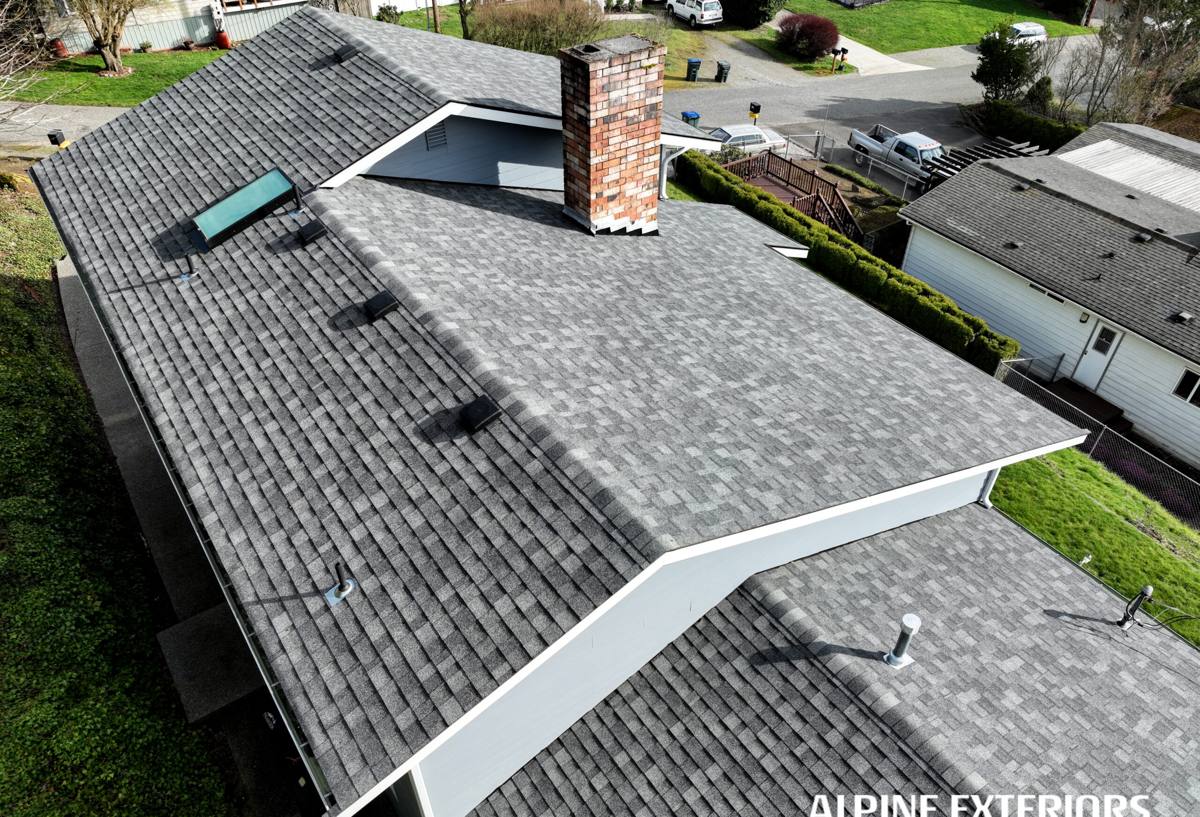
Signs a Sunnyland Roof Needs Replacement, Not Just Repair
Not every roof problem calls for a full replacement, and we'll tell you plainly when a repair is the honest answer. But there's a point where patching becomes a losing game — you're spending money to delay the same outcome. Here's what usually tips a roof from "repair" to "replace" territory:
- Granule loss heavy enough that you can see bare asphalt mat on multiple slopes, not just one worn spot
- Shingles that are curling, cupping, or cracking across a wide area rather than isolated storm damage
- Moss growth that has been scraped or treated repeatedly but keeps returning within a season or two
- Soft spots or sagging in the roof deck when walked, which usually means moisture has reached the sheathing
- Flashing around chimneys, vents, or valleys that's rusted, lifted, or was never properly step-flashed to begin with
- A roof already past 20-25 years old (for composition shingle) showing any of the above, since patch repairs on aging material rarely hold
- Daylight visible through the attic or consistent staining on interior ceilings after rain
If your roof shows one or two of these in isolation, a repair may genuinely be the right call. If you're seeing several at once, replacement is usually the more cost-effective path over the next five years.
What a Correct Roof Replacement Actually Involves
Tear-Off and Deck Inspection
We remove the old roofing down to the deck rather than layering over it. This is the only way to actually see the condition of the sheathing underneath — and in a moisture-heavy area like Sunnyland, hidden deck rot under an old roof is common enough that skipping this step is a real risk. Any damaged or soft sheathing gets replaced before anything new goes down.
Underlayment and Water Barrier
Given how much driving rain this area gets off the bay, we don't treat underlayment as an afterthought. Synthetic underlayment across the full roof, with self-adhered ice-and-water barrier at eaves, valleys, and any low-slope transitions, gives the roof a real second line of defense if wind-driven rain ever gets past the primary roofing surface.
Ventilation
A roof replacement is the right time to fix ventilation problems, because a poorly ventilated attic traps moisture that condensates on the underside of the deck — which then feeds the same moss and mildew issues you're trying to solve on the outside. We check intake at the soffits and exhaust at the ridge and correct imbalances as part of the job, not as a separate upsell.
Roofing Material Installation
Nail patterns, exposure, and fastening all need to match manufacturer specs for wind and rain performance — this matters more here than in drier climates because a roof installed to minimum spec has less margin when a real winter storm rolls through.
Flashing and Detail Work
Most roof leaks don't happen in the open field of shingles — they happen at transitions: chimneys, skylights, sidewalls, valleys, and vent penetrations. We use step flashing and counter-flashing at these points rather than relying on sealant alone, since sealant is a maintenance item, not a permanent fix.
Roofing Material Options for Sunnyland Homes
There's no single "best" material for every house — it depends on your roof's pitch, your home's age and style, and your budget. Here's an honest comparison of what we typically install in this neighborhood:
| Material | Typical Lifespan Here | How It Handles This Climate | Maintenance Burden |
|---|---|---|---|
| Architectural asphalt composition | 20-30 years | Good all-around performance; needs periodic moss treatment | Low to moderate |
| Standing seam metal | 40-50+ years | Sheds moss and moisture very well; handles driving rain cleanly | Low |
| Synthetic/composite shake | 30-40 years | Resists moisture absorption better than real wood; good for older-home aesthetics | Low to moderate |
| Cedar shake (natural) | 20-30 years with upkeep | Attractive but absorbs moisture and is a higher moss risk without consistent maintenance | High |
We're upfront that natural cedar shake, while it fits the look of some of the older homes in this area, carries a real maintenance commitment given how much moisture this climate delivers. If you want the appearance without the upkeep, synthetic shake products have closed a lot of that gap. For most straightforward replacements, architectural composition shingle remains the best balance of cost and performance, and standing seam metal is worth serious consideration on lower-slope sections or homes where long-term, low-maintenance performance matters more than upfront cost.
Our Roof Replacement Process
1. Inspection and Written Estimate
We walk the roof (weather permitting) and the attic, document what we find, and give you a written estimate that breaks down material and labor — not a vague lump sum.
2. Material Selection
We'll walk through the tradeoffs above based on your specific roof and budget, not push a single product line.
3. Scheduling and Prep
We schedule around Whatcom County's weather windows where possible and protect landscaping, gutters, and siding before tear-off begins.
4. Installation
Most straightforward Sunnyland-sized roofs are a one-to-three-day job depending on size, pitch, and material. We keep the site controlled — tarped and contained — rather than leaving the deck exposed overnight during an active tear-off.
5. Cleanup and Final Walkthrough
Magnetic sweep for nails, full debris haul-off, and a walkthrough where we point out what was done and answer questions before we consider the job finished.
Moss, Moisture, and Long-Term Roof Health
Moss isn't just a cosmetic issue in this part of Whatcom County — it's a moisture management problem. Moss holds water against the shingle surface long after rain has stopped, and its root structure works into shingle granules and seams over time. A new roof installed without addressing what caused moss growth in the first place — usually shade, poor drainage, or debris buildup in valleys — will grow moss again on the same schedule as the old one.
Part of a correct replacement includes zinc or copper strips at the ridge on roofs prone to heavy moss return, proper valley design that doesn't trap needles and debris, and honest advice about tree cover if overhanging branches are a major contributor. None of this is complicated, but it's the kind of detail that separates a roof that stays clean for a decade from one that's mossy again in three years.
Why a Crew That Already Works Sunnyland Matters
Sunnyland has a real mix of housing stock — older homes from decades past alongside newer construction — and each era comes with its own roofing quirks: different deck materials, different original flashing details, different attic ventilation setups. A crew that works this neighborhood regularly has already seen how these houses were built and what tends to go wrong with them, which means fewer surprises once tear-off starts.
There's also a practical side to local familiarity: knowing Bellingham's permitting requirements, understanding typical weather windows for this specific stretch of coastline, and being able to respond quickly if a tarp needs checking during a wind event. That kind of responsiveness is hard to get from a crew that's just passing through the area for one job.
What to Ask Before You Hire a Roofer
Whether you go with us or anyone else, these are the questions worth asking before signing a contract:
- Are you licensed and insured in Washington State, and can you provide proof?
- Will the estimate be written and itemized, or verbal and vague?
- Does the crew do full tear-off, or is overlay ever proposed as a shortcut?
- What underlayment and ice/water barrier products are included, and where are they placed?
- Is ventilation checked and corrected as part of the job, or ignored entirely?
- What's the manufacturer's warranty, and is it a full workmanship warranty from the crew as well?
- How is debris and old material disposed of, and is a nail sweep included?
- Can they explain, specifically, how the roof they're proposing will hold up to moss and driving rain in this area?
A contractor who can answer all of these clearly and without hesitation is usually one worth trusting with the job.
Ready When You Are
If your Sunnyland roof is showing its age, or you just want an honest read on how many years it has left, we're happy to take a look. The estimate is free, there's no pressure to commit on the spot, and you'll get a clear picture of what your roof needs and why. Use the form below to get started.