 Bellingham Roofing
 Metal Roofing Built for York's Corner of Whatcom County
York sits close enough to Bellingham Bay that salt air is a real factor in how a roof ages, and far enough into the Pacific Northwest weather pattern that driving rain and long stretches of overcast, damp days are simply normal. A roof here doesn't fail because of one bad storm. It fails slowly, through years of moisture finding small gaps, fasteners loosening, and moss quietly working into seams that were never sealed correctly in the first place. Metal roofing, installed correctly, handles that combination better than most other roofing materials available to homeowners today.
This page is specifically about metal roofing for homes in and around York. We're not going to give you a generic rundown of metal roofing that could apply to any city in the country. We want to walk through what this material needs to do in this particular climate, what a correct installation actually involves, and why the details matter more here than they would in a drier part of the state.
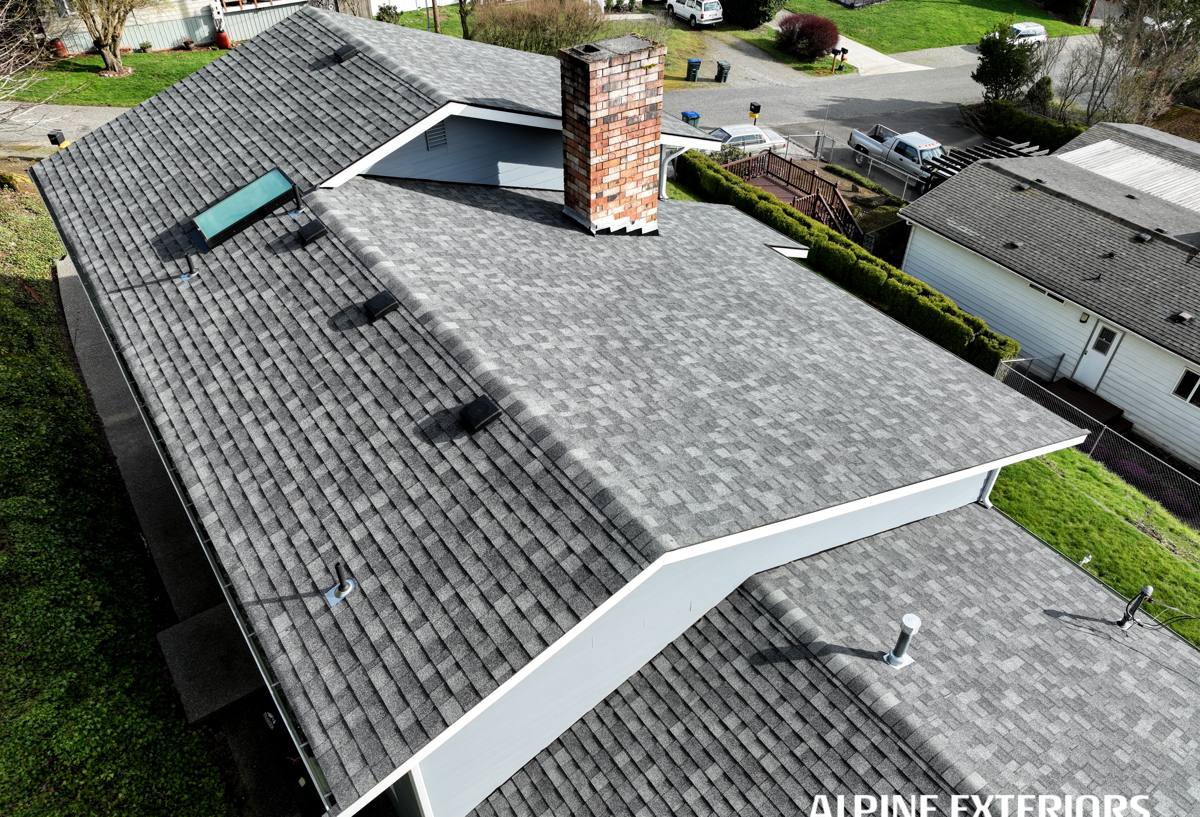
What Bellingham's Climate Actually Does to a Roof
It helps to be specific about the forces at work, because they're not identical to what you'd deal with even one county over.
Salt Air
Properties closer to the water deal with airborne salt that settles on every exterior surface, including the roof. Salt accelerates corrosion on unprotected or poorly coated metal, and it can degrade fasteners and flashing faster than it degrades the roofing panels themselves. This is why fastener and flashing selection matters as much as the panel material — a roof is only as resistant to salt exposure as its weakest component.
Driving Rain
Whatcom County doesn't just get rain, it gets rain pushed sideways by wind off the Sound. That matters because a roof doesn't only need to shed water that falls straight down — it needs to resist water being driven up under laps, around penetrations, and into any gap in the flashing detail. Roofs that look fine in a light, straight-down rain can still leak during a wind-driven storm if the underlayment and flashing weren't built with that in mind.
Moss and Organic Growth
Long stretches of damp, shaded weather give moss and algae plenty of time to establish themselves, especially on roof sections that stay shaded through the day or sit under overhanging trees. Moss holds moisture against the roof surface far longer than the surrounding air would otherwise allow, and on some materials that trapped moisture leads to slow degradation. Metal roofing doesn't feed moss the way organic-based materials can, and its smooth, non-porous surface makes it much harder for moss to get a foothold in the first place.
Why Metal Roofing Fits York Homes Specifically
Put those three factors together — salt, wind-driven rain, and moss pressure — and you get a fairly clear picture of what performs well locally. Metal roofing, when it's the right product properly installed, addresses all three:
- Non-porous panel surfaces give moss and algae very little to grip onto compared to shingles or wood shakes
- Continuous panel runs and properly lapped seams resist wind-driven rain far better than smaller, individual roofing units
- Quality coatings and correctly matched fasteners hold up to salt air exposure for decades rather than years
- Steep or moderate pitch roofs common in this area shed water quickly off a smooth metal surface
- Snow and heavy rain slide off rather than accumulating and adding weight or trapping moisture
None of that is automatic just because a roof is metal. A poorly installed metal roof can still leak, still corrode at the fasteners, and still trap moisture at bad transitions. The material gives you an advantage, but the installation is what actually delivers it.
Metal Roofing Options: How They Compare
Not every metal roofing product is the same, and the right choice depends on your home's style, roof pitch, and budget. Here's how the common options compare for a York property.
| Type | Best For | Moss/Algae Resistance | Typical Lifespan |
|---|---|---|---|
| Standing Seam | Modern homes, low-to-moderate pitch, homeowners wanting a clean look and minimal exposed fasteners | Excellent — smooth, continuous panels with concealed fasteners | 40-70 years |
| Exposed-Fastener Metal Panel | Budget-conscious projects, outbuildings, steeper roofs | Good, though exposed fasteners need periodic inspection | 30-45 years |
| Stone-Coated Steel Shingle/Tile | Homes wanting a traditional shingle or tile look with metal's durability | Good, though granule-coated texture holds slightly more debris than smooth panel | 40-60 years |
| Metal Shake Panels | Homes replicating a wood-shake look without the moisture issues wood carries | Good | 40-60 years |
For most York homes we work on, standing seam is the product that best matches the local climate demands — it has the fewest penetration points, the best water-shedding profile, and the least surface texture for organic growth to latch onto. That said, the right call always depends on your specific roof, and we'll walk through the trade-offs honestly rather than push one product for every job.
What a Correct Metal Roof Installation Actually Involves
Metal roofing has a reputation for being low-maintenance, and it is — but only when the installation underneath the visible panels is done right. Most of the problems we get called out to fix on metal roofs trace back to shortcuts taken during install, not the metal itself.
Deck Inspection and Prep
Before any panel goes down, the roof deck needs to be sound. Soft spots, rot, or delamination from long-term moisture exposure have to be addressed first — installing a new roof over a compromised deck just hides the problem and shortens the life of everything above it.
Underlayment
In a climate with this much sustained moisture, underlayment isn't optional padding — it's the roof's actual backup water barrier. We use underlayment rated for the wind-driven rain conditions common here, with particular attention to eave and valley areas where water concentrates.
Fastening and Panel Layout
Panels need to be run and lapped in a way that accounts for prevailing wind direction, and fasteners need to be matched to the panel material to avoid galvanic corrosion — a real issue when the wrong metal fastener is paired with the wrong panel type in a salt-air environment. This is one of the most commonly skipped details on lower-quality installs.
Flashing at Penetrations and Transitions
Chimneys, vents, skylights, and roof-to-wall transitions are where the vast majority of roof leaks originate, metal or otherwise. Flashing at these points has to be formed and layered correctly, not just caulked and hoped for. Sealant is a backup, not a primary water barrier.
Ventilation
Metal roofs perform best with proper attic ventilation underneath them. Without it, condensation can form on the underside of the panels in cold, damp conditions, which defeats part of the purpose of switching to a moisture-resistant roofing material in the first place.
Our Process for York Roofing Projects
We keep the process straightforward because a roof replacement is stressful enough without added confusion about what's happening and when.
- Initial inspection and consultation. We look at your current roof, the deck condition, ventilation, and any trouble spots — including moss buildup or shaded areas prone to moisture retention.
- Honest recommendation. We tell you what your roof actually needs, not the most expensive option available. If your roof doesn't need full replacement, we'll say so.
- Written estimate. Clear scope of work, product selection, and pricing before anything is scheduled.
- Deck prep and repair. Any soft or damaged decking gets addressed before a single panel is installed.
- Underlayment and flashing installation. The parts you won't see once the job is done are the parts that determine whether it holds up.
- Panel installation. Installed to manufacturer specification with fasteners and layout matched to local wind and rain exposure.
- Final walkthrough. We go over the finished roof with you, including basic care and what to watch for going forward.
Maintenance: What York Homeowners Should Actually Watch For
One of the real advantages of metal roofing is how little ongoing maintenance it needs compared to other materials. That doesn't mean zero attention — it means the attention required is simple and infrequent.
- Clear debris (needles, leaves, small branches) from valleys and around penetrations once or twice a year
- Keep gutters clear so water isn't backing up under the eave edge during heavy rain
- Watch for early moss growth in shaded sections and address it before it spreads, rather than after
- After major windstorms, do a visual check for lifted flashing or loosened fasteners
- Trim back overhanging branches that keep sections of the roof shaded and damp longer than the rest
- Avoid pressure washing the roof surface — it can drive water under laps and damage coatings
Cost Factors for a York Metal Roof
Every roof is different, so we're not going to throw out a flat number that doesn't mean much without seeing your project. What we can do is walk through the factors that actually move the price up or down, so an estimate makes sense when you get one.
| Factor | Why It Matters |
|---|---|
| Roof size and pitch | More surface area and steeper pitches both increase material and labor time |
| Panel type | Standing seam typically costs more upfront than exposed-fastener panel, reflecting the added labor and material for concealed fastening |
| Deck condition | Rot or soft decking discovered during tear-off adds repair cost before new roofing goes on |
| Number of penetrations | Chimneys, skylights, and vents each require custom flashing work |
| Tear-off vs. overlay | Full tear-off costs more than overlay but is usually the right call for long-term performance, especially where moisture has already affected the old roofing |
| Access and roof complexity | Multiple valleys, dormers, or difficult access can add labor time |
Metal roofing generally costs more upfront than asphalt shingles, but the trade-off is a much longer service life and far less exposure to the moss and moisture issues that shorten a shingle roof's lifespan in this climate. We'll lay out the real numbers for your specific roof during the estimate — no guessing required on your end.
Why Hiring a Crew That Already Works in York Matters
Roofing crews that mostly work drier, inland climates sometimes bring installation habits that don't hold up here. Underlayment choices, fastener selection, and flashing details that are "good enough" in a low-moisture region can fall short against sustained Whatcom County rain and salt air exposure. A crew that regularly works in York and the surrounding Bellingham neighborhoods already knows which roof sections tend to hold moss the longest, which orientations take the brunt of wind-driven rain, and which flashing details actually need extra attention in this specific environment — not just in theory, but from doing the work here repeatedly.
That local familiarity doesn't replace good workmanship, but it does mean fewer surprises, fewer callbacks, and a roof that's built for the conditions it will actually face rather than the conditions a generic installation guide assumes.
Get a Straightforward Estimate
If you're weighing metal roofing for a York home, we're happy to take a look, explain what your roof actually needs, and give you a clear, honest estimate — no pressure, no upsell. Reach out using the form below to get started.