 Bellingham Roofing
 Storm Damage Looks Different on a York Roof
When people think "storm damage," they picture a single dramatic event — a windstorm that peels off shingles overnight. That happens here too, but in York and the rest of Bellingham, storm damage is usually a slower story. It's the cumulative effect of driving rain off Bellingham Bay, salt-laden air working into fasteners and flashing, and a moss season that runs longer than most of the country ever deals with. A roof here rarely fails all at once. It fails one small opening at a time, and by the time water shows up on a ceiling, the actual damage has usually been building for months.
That's the case for treating storm damage repair on a York home as its own kind of job, not a generic patch-and-go visit. The roof needs to be evaluated for what the local climate does to it specifically, not just what a single storm event did on the surface.
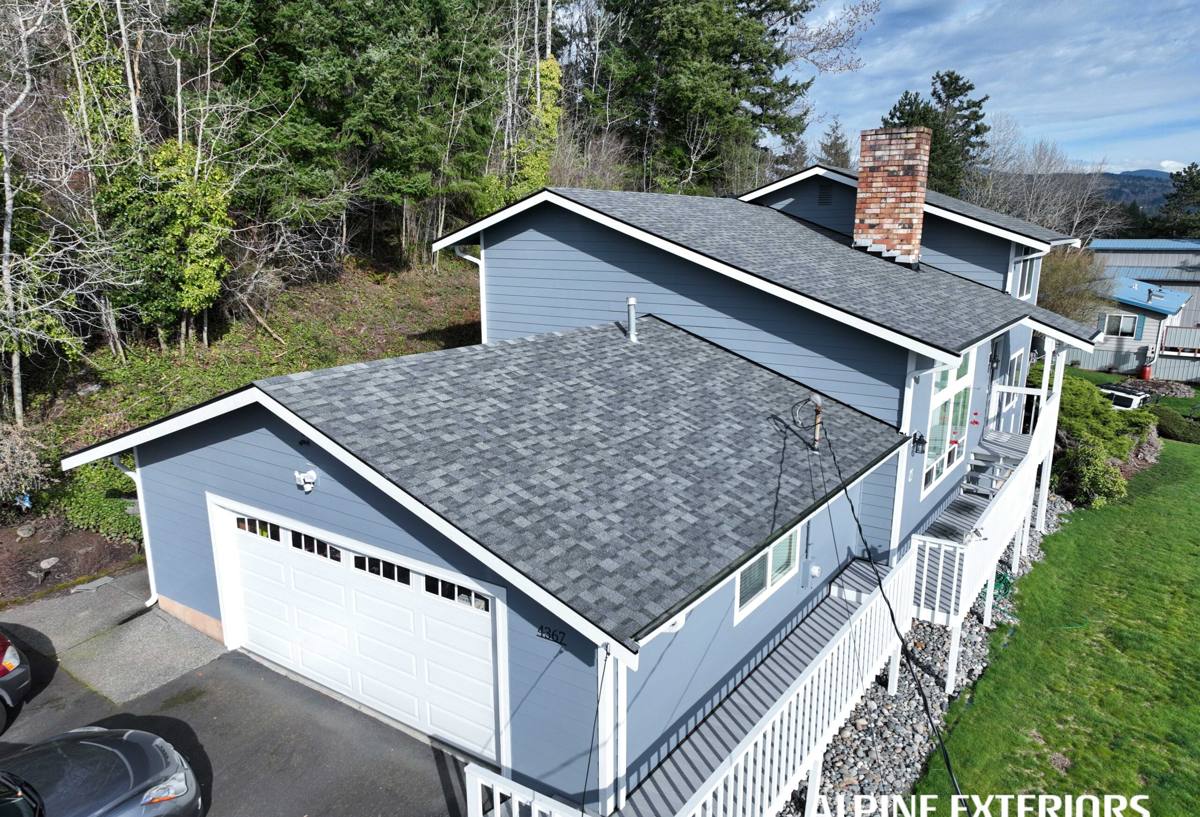
What Whatcom County Weather Actually Does to a Roof
Wind and Driving Rain
Bellingham doesn't get the straight-line hurricane winds of some regions, but it gets frequent, sustained wind off the water combined with heavy rain — a combination that pushes water sideways and upward under roofing materials rather than letting it run straight down and off. Shingles, ridge caps, and flashing that would hold up fine in a dry windstorm can leak here because the wind is driving rain into every gap, seam, and nail line.
Salt Air and Metal Fatigue
Proximity to Bellingham Bay means a steady low-level exposure to salt air, which is harder on exposed metal than most homeowners realize. Flashing, valley metal, nail heads, and gutter hardware corrode faster near the water than they would inland. Corrosion doesn't announce itself — it just quietly reduces the amount of protection a fastener or flashing seam is actually providing, until a storm finds the weak spot.
A Moss Season That Never Really Ends
Whatcom County's mild, wet climate is close to ideal for moss growth, and shaded roof sections in neighborhoods like York can stay damp for weeks at a stretch. Moss holds moisture directly against the roofing material, lifts shingle edges as it grows, and traps grit that accelerates granule loss. A roof with an established moss problem is already weakened before a storm ever arrives — the storm just exploits the damage that moss already started.
Where Storm Damage Actually Shows Up
Not all storm damage is obvious from the ground, and some of the most common failure points on Bellingham roofs are easy to miss during a quick visual check.
- Lifted or creased shingles along ridgelines and roof edges, where wind uplift is strongest
- Flashing separation around chimneys, skylights, and roof-to-wall transitions, often the first place driving rain finds a way in
- Granule loss from wind-driven grit and moss growth, which shortens the life of the underlying shingle
- Clogged or damaged gutters that force water to back up under the roof edge instead of draining away
- Punctures or bruising from wind-blown branches and debris, especially under mature trees
- Soft or discolored decking visible from inside the attic, which signals water has already been getting through for a while
Our Storm Damage Repair Process
A storm damage call gets handled differently than a routine repair, because the priority is stopping active water intrusion first and doing the permanent fix second.
- Full roof and attic inspection. We look at the whole roof system, not just the spot the homeowner noticed, and check the attic for moisture, staining, or soft decking that points to a longer-running problem.
- Documentation. We photograph and note the damage clearly enough to support an insurance claim if the homeowner decides to file one.
- Temporary protection. If there's active leaking or exposed decking, we get it covered and weathertight the same visit so the situation doesn't get worse while repairs are scheduled.
- Permanent repair. Once materials are on hand and matched to the existing roof, we complete the actual repair — replacing damaged shingles, resealing or replacing flashing, and correcting any moisture-damaged decking underneath.
- Final walkthrough. We go over what was found, what was fixed, and what to watch going forward, including any moss or drainage issues that contributed to the damage in the first place.
Repair or Replace? How We Make That Call
Not every storm-damaged roof needs full replacement, and we don't default to recommending one. The decision comes down to a few practical factors we walk through with the homeowner directly.
| Factor | Favors Repair | Favors Replacement |
|---|---|---|
| Extent of damage | Isolated to one section or slope | Spread across multiple areas of the roof |
| Roof age | Well within its expected service life | Already near or past typical lifespan |
| Decking condition | Solid, dry decking under the damaged area | Soft, rotted, or repeatedly wet decking |
| Moss and moisture history | Minor, manageable moss growth | Long-term moss damage affecting multiple sections |
| Material availability | Existing shingles can be closely matched | Discontinued product or major color mismatch |
When a repair is the honest answer, that's what we recommend. When the roof's condition means a repair would just be a short-term fix on a roof that's already failing elsewhere, we'll say that too, along with why.
Materials and Methods Suited to This Climate
Flashing and Fasteners
Given the salt air exposure in Bellingham, we pay close attention to the metal and fasteners used in any repair, not just the shingles. Flashing and hardware that hold up well in drier inland climates can corrode faster here, so matching the repair materials to the coastal conditions matters as much as matching the shingle color.
Sealants and Underlayment
Storm repairs in a high-moisture climate depend on getting the underlayment and sealant work right, since that's what protects the decking if wind-driven rain does get past the surface layer again in the future. We treat this as a core part of the repair, not an afterthought once the visible shingles are back in place.
Moss Treatment as Part of the Repair
If moss contributed to the damage, we address it as part of the job rather than leaving it to come back in the same spot next season. That can mean removing established growth carefully to avoid further granule loss, and discussing longer-term moss control options with the homeowner.
Insurance Claims and Storm Damage
Many storm damage repairs in Bellingham are at least partially covered by homeowners insurance, but coverage depends heavily on the cause of the damage and the condition of the roof beforehand. Our documentation from the initial inspection is written to be useful for an adjuster, showing what the damage is and giving an honest read on how it likely occurred. We're not a public adjuster and don't promise claim outcomes, but we'll give you a clear, accurate picture of the roof's condition so you're working from real information when you talk to your insurer.
Why a Crew That Already Works York Matters
Storm damage repair goes better when the crew doing it already understands the specific pressures a York roof deals with — the wind patterns off the bay, how long moss stays active in shaded yards in this neighborhood, and which flashing details tend to fail first on local homes. That local familiarity means less time spent diagnosing the obvious and more time spent actually fixing the problem correctly the first time.
It also matters for response time. After a storm moves through Whatcom County, a fast temporary fix can be the difference between a contained repair and a much bigger interior damage claim. Being local means we can typically get someone out to stop active leaking sooner rather than later.
Reducing Storm Damage Before the Next One Hits
A lot of storm damage on Bellingham roofs is preventable, or at least reducible, with some basic seasonal upkeep. This is worth doing whether or not you've had recent storm damage.
- Keep gutters and downspouts clear so wind-driven rain has somewhere to go instead of backing up under roof edges
- Have moss growth addressed before it spreads across a full slope, not after
- Trim back tree limbs that overhang the roof, since falling and rubbing branches are a common source of storm-related punctures
- Ask for a flashing check around chimneys and skylights during any routine roof inspection, since that's where most driving-rain leaks originate
- Get a roof looked at after any significant windstorm, even if there's no visible interior leak yet
None of this eliminates storm damage entirely — Bellingham's climate is what it is — but it goes a long way toward keeping small issues from turning into major repairs.
Get a Straight Answer on Your Roof
If you're in York and dealing with a leak, missing shingles, or damage after a recent storm, we're glad to come take a look and give you an honest read on what's actually going on and what it will take to fix it right. There's no pressure and no obligation — just a clear assessment from a crew that knows what this climate does to a roof. Use the form below to request your free estimate.